

5 Ways To Transfer Files Between Macs [Quick Guide]

Before we dive in

Before we dive in, let's make sure you stay safe online. We created SpyHunter because your security matters to us.

Protect your computer today — download SpyHunter right here! Check out our top tips below to keep your computer safe and secure.

Download SpyHunter

Ever found yourself needing to transfer files quickly between two Mac computers and not sure which method to use?

Whether you’re dealing with large video files, a bunch of photos, or just some documents, there are several fast and efficient ways to get the job done.

This guide will explore various methods such as AirDrop, Thunderbolt, Bluetooth, and more, each suited for different types of file sizes and situations.

What are the best methods to transfer files between two Macs?

When you need to move files between Mac computers quickly, several options stand out depending on your setup and requirements.

AirDrop offers cable-free convenience for smaller file sizes, while direct cable transfers, particularly through Thunderbolt, provide a high-speed solution for larger data volumes.

Additionally, Bluetooth can be beneficial for mid-range file sizes when Wi-Fi isn’t an option.

Method 1: Using AirDrop for instant file sharing

AirDrop is a quick and convenient way to transfer files between Macs without cables when both Macs are connected to the same network. It is usually a good option for files with a relatively small total file size.

To use AirDrop, follow these steps:

  1. Ensure both Macs are turned on and awake.
  2. Verify that Bluetooth and Wi-Fi are active on both devices and they are no further than 30 feet from each other.
  3. Open the Finder, and hit Command + Shift + R to launch AirDrop.
  4. Wait for the other Mac to appear in the AirDrop window, then drag files you want to share and drop them to the recipient’s icon.
  5. On the receiving Mac, accept the incoming files.
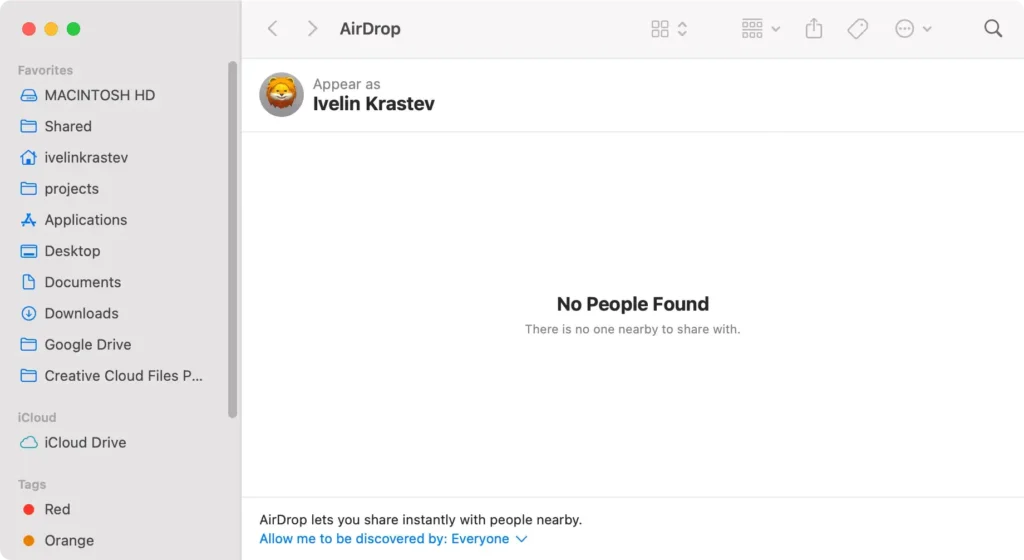
air drop files finder window

This method is particularly effective for quickly transferring small to medium-sized files such as documents and photos.

Method 2: Direct cable transfer using Target Disk Mode

A Thunderbolt cable is highly efficient for fast data transfers involving large files, such as video projects or entire system backups. Depending on the ports you have available, you can also use a traditional USB or USB-C cable.

If either Mac is running macOS 11 or later, a Thunderbolt cable is essential due to the operating system’s enhanced security features.

To set up a cable connection between two Macs for file transfer, follow these steps:

  1. Ensure both Macs are turned on and awake.
  2. On the computer that is going to receive the files, open the Apple menu, then go to System Settings > General.
  3. Select Startup Disk in the right part of the window, then click Restart in Target Disk Mode. If the Mac receiving the files is powered off, simply boot it while holding down T to start directly in Target Disk Mode.
restart in target disk mode in system settings
  1. Once the target Mac finishes booting up, the other computer will see the target as a new disk icon on the desktop.
  2. Simply open a Finder window and drag the files you want onto the new disk icon, then wait for the transfer to complete.
  3. Once you are done, use the power button on the target Mac to shut it down, then remove the cable.

This wired method significantly speeds up the transfer process compared to wireless methods, making it ideal for substantial data transfers.

Method 3: Wireless transfer via Bluetooth

If AirDrop isn’t available and you don’t have a suitable cable, Bluetooth provides a viable alternative for file transfer between Macs. Although slower than AirDrop and much slower than Thunderbolt, it can be useful in certain situations. To use Bluetooth for file transfers:

  1. Make sure Bluetooth is turned on on both devices under System Settings > Bluetooth.
  2. Open Bluetooth File Exchange, found under the Applications > Utilities folder.
  3. Choose the file you want to share and click Send.
  4. Select a device from the list. If you’re using this to browse files on another Mac, by default, the shared folder should be the Public folder inside the Users folder.
  5. Double-click on any file to retrieve it to the other Mac.
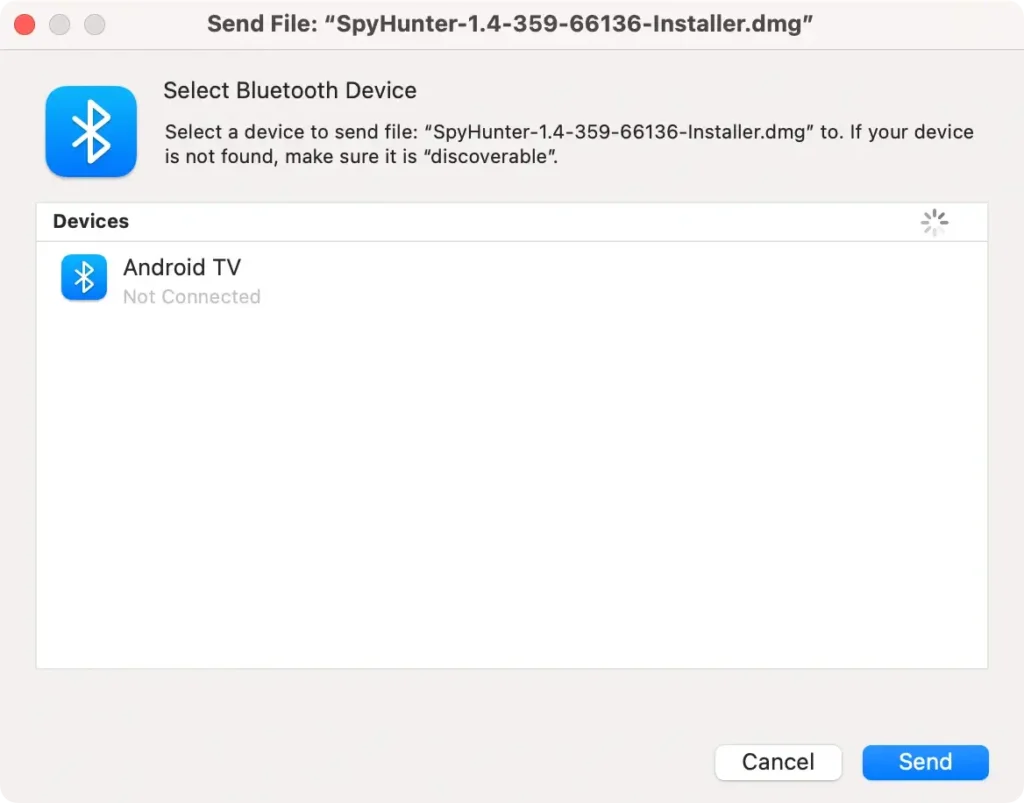
send files wirelessly through bluetooth

This method is advisable for non-urgent transfers of smaller files when other faster methods are unavailable.

Method 4: Use external storage

Using external storage devices like USB flash drives or external disk drives is an effective way to transfer files from one Mac to another.

Simply copy the files you want to transfer on the USB thumb drive or external hard drive, then connect it to the other Mac and transfer the files using Finder.

This method is particularly useful if you’re dealing with huge files or if you need a quick and reliable transfer without relying on internet connectivity.

External storage devices are also handy for keeping a backup copy of your important files.

Method 5: Use cloud services

A cloud storage service provides a seamless and efficient way to transfer files across different devices without the need for physical storage devices or complex network configurations.

They offer the flexibility to access and share files from anywhere, at any time, provided there is internet connectivity.

You can pick from a wide range of both free and paid cloud storage services, depending on your needs, including iCloud, Google Drive and OneDrive.

These services typically entail high levels of security to protect data during transfers and at rest and are very convenient when sharing files with people who are far away and no direct connection is possible.

Ensure extra security when transferring files with SpyHunter

When you are transferring files from someone else’s computer to your Mac, it doesn’t hurt to have an extra layer of security and protection, in the form of a reliable anti-malware app like SpyHunter.

Download SpyHunter here and install it on your system if you are worried about potential malware in any files you share between computers.

SpyHunter can detect and remove malicious files and has a real-time guard that can catch and remove any threat or malicious file before it has a chance to deploy on your Mac.
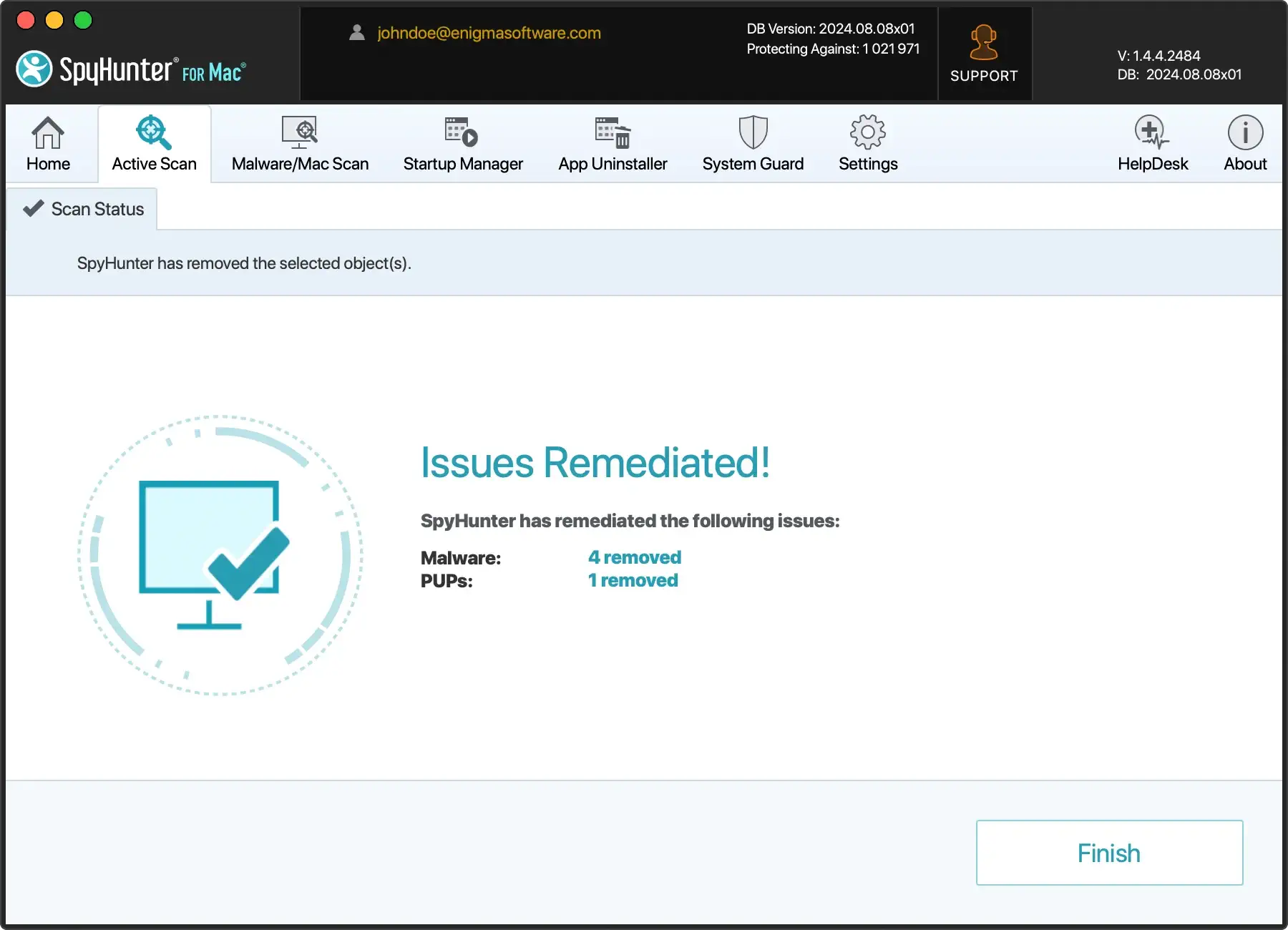
remove malware, viruses, and potentially unwanted programs with spyhunter for mac

Using a Time Machine backup to migrate computers

For Mac users, leveraging a Time Machine backup is an excellent choice for migrating a large amount of data, including system settings, applications, and files, to a new machine.

After creating a Time Machine backup on an external drive, connect this drive to your new Mac. Use the Migration Assistant tool found in the Utilities folder to transfer data.

This method is not only comprehensive but also preserves the integrity and hierarchy of your files and system settings.

Troubleshooting common issues in Mac file transfers

Transferring files between Macs can occasionally hit snags, such as slow transfer speeds or failed attempts.

To troubleshoot, start by ensuring both Macs are up to date with the latest macOS version. Outdated software can lead to compatibility problems.

Next, check the network settings if you’re using a network-based method like AirDrop or File Sharing. A simple reboot of both Macs and your router can resolve hidden network issues.

If problems persist, especially with large files, consider using cable-based methods like Thunderbolt or USB, which provide more stability and speed for substantial data transfers.

Solving connectivity problems during cable transfers

If you’re encountering connectivity issues during a cable transfer from one Mac to another using USB or Thunderbolt, first ensure that the cable is not damaged and is properly connected to both devices.

For transfers using Target Disk Mode, ensure both Macs support this feature and hold down the ‘T’ key during system start-up on the Mac being used as an external drive.

Always check that the proper filesystem permissions are in place to allow for file sharing and transfers.

Share this post on your favorite social media
Keep Your Mac Fast and Secure
Optimize your Mac and stay malware-free with SpyHunter

For a better understanding of our policies, please review our Free Trial Offer below, EULA, and Privacy/Cookie Policy.

SpyHunter Free Trial: Important Terms & Conditions

The SpyHunter Trial version includes, for one device, a one-time 7-day Trial period for SpyHunter 5 Pro (Windows) or SpyHunter for Mac, offering comprehensive malware detection and removal functionality, high-performance guards to actively protect your system from malware threats, and access to our technical support team via the SpyHunter HelpDesk. You will not be charged upfront during the Trial period, although a credit card is required to activate the Trial. (Prepaid credit cards, debit cards, and gift cards are not accepted under this offer.) The requirement for your payment method is to help ensure continuous, uninterrupted security protection during your transition from a Trial to a paid subscription should you decide to purchase. Your payment method will not be charged a payment amount upfront during the Trial, although authorization requests may be sent to your financial institution to verify that your payment method is valid (such authorization submissions are not requests for charges or fees by EnigmaSoft but, depending upon your payment method and/or your financial institution, may reflect on your account availability). You can cancel your Trial by contacting EnigmaSoft’s payment processor (identified in your confirmation email) or EnigmaSoft directly no later than two business days before the 7-day Trial period expires to avoid a charge coming due and being processed immediately after your Trial expires. If you decide to cancel during your Trial, you will immediately lose access to SpyHunter. If, for any reason, you believe a charge was processed that you did not wish to make (which could occur based on system administration, for example), you may also cancel and receive a full refund for the charge any time within 30 days of the date of the purchase charge. See FAQs.

At the end of the Trial, you will be billed upfront immediately at the price and for the subscription period as set forth in the offering materials and registration/purchase page terms (which are incorporated herein by reference; pricing may vary by country per purchase page details) if you have not timely canceled. Pricing typically starts at $72 for 3 months (SpyHunter Pro Windows) and $42 for 3 months (SpyHunter for Mac). Your purchased subscription will be automatically renewed in accordance with the registration/purchase page terms, which provide for automatic renewals at the then applicable standard subscription fee in effect at the time of your original purchase and for the same subscription time period, provided you’re a continuous, uninterrupted subscription user. Please see the purchase page for details. Trial subject to these Terms, your agreement to EULA/TOS, Privacy/Cookie Policy, and Discount Terms. If you wish to uninstall SpyHunter, learn how.

For payment on the automatic renewal of your subscription, an email reminder will be sent to the email address you provided when you registered before your next payment date. At the onset of your trial, you will receive an activation code that is limited to use for only one Trial and for only one device per account. Your subscription will automatically renew at the price and for the subscription period in accordance with the offering materials and registration/purchase page terms (which are incorporated herein by reference; pricing may vary by country per purchase page details), provided that you are a continuous, uninterrupted subscription user. For paid subscription users, if you cancel, you will continue to have access to your product(s) until the end of your paid subscription period. If you wish to receive a refund for your then current subscription period, you must cancel and apply for a refund within 30 days of your most recent purchase, and you will immediately stop receiving full functionality when your refund is processed.

For CALIFORNIA CONSUMERS, please see the notice provisions:
NOTICE TO CALIFORNIA CONSUMERS: Per the California Automatic Renewal Law, you may cancel a subscription as follows:

  1. Go to www.enigmasoftware.com and click the "Login" button at the top right corner.
  2. Log in with your username and password.
  3. In the navigation menu, go to "Order/Licenses." Next to your order/license, a button is available to cancel your subscription if applicable. Note: If you have multiple orders/products, you will need to cancel them on an individual basis.

Should you have any questions or problems, you can contact our EnigmaSoft support team by phone at +1 (888) 360-0646 (USA Toll-Free) / +353 76 680 3523 (Ireland/International) or by email at support@enigmasoftware.com.
How do you cancel a SpyHunter Trial? If your SpyHunter Trial was registered via MyCommerce, you can cancel the trial via MyCommerce by logging into the MyAccount section of MyCommerce (see your confirmation email for further details). You can also contact MyCommerce by phone or email to cancel. To contact MyCommerce via phone, you can call +1-800-406-4966 (USA Toll-Free) or +1-952-646-5022 (24x7x356). You can contact MyCommerce by e-mail at ordersupport@mycommerce.com. You can easily identify if your trial was registered via MyCommerce by checking the confirmation emails that were sent to you upon registration. Alternatively, all users may also contact EnigmaSoft Limited directly. Users can contact our technical support team by emailing support@enigmasoftware.com, opening a ticket in the SpyHunter HelpDesk, or calling +1 (888) 360-0646 (USA) / +353 76 680 3523 (Ireland/International). You can access the SpyHunter HelpDesk from SpyHunter's main screen. To open a support ticket, click on the "HelpDesk" icon. In the window that appears, click the "New Ticket" tab. Fill out the form and click the "Submit" button. If you are unsure of what "Problem Type" to select, please choose the "General Questions" option. Our support agents will promptly process your request and respond to you.

———

SpyHunter Purchase Details
You also have the choice of subscribing to SpyHunter immediately for full functionality, including malware removal and access to our support department via our HelpDesk, typically starting at $42 for 3 months (SpyHunter Basic Windows) and $42 for 3 months (SpyHunter for Mac) in accordance with the offering materials and registration/purchase page terms (which are incorporated herein by reference; pricing may vary by country per purchase page details). Your subscription will automatically renew at the then applicable standard subscription fee in effect at the time of your original purchase subscription and for the same subscription time period, provided you’re a continuous, uninterrupted subscription user and for which you will receive a notice of upcoming charges before the expiration of your subscription. Purchase of SpyHunter is subject to the terms and conditions on the purchase page, EULA/TOS, Privacy/Cookie Policy and Discount Terms.

———

General Terms
Any purchase for SpyHunter under a discounted price is valid for the offered discounted subscription term. After that, the then applicable standard pricing will apply for automatic renewals and/or future purchases. Pricing is subject to change, although we will notify you in advance of price changes.
All SpyHunter versions are subject to your agreeing to our EULA/TOS, Privacy/Cookie Policy, and Discount Terms. Please also see our FAQs and Threat Assessment Criteria. If you wish to uninstall SpyHunter, learn how.