macOS Sequoia Wi-Fi Issues? Try These 12 Fixes

Before we dive in

Before we dive in, let's make sure you stay safe online. We created SpyHunter because your security matters to us.

Protect your computer today — download SpyHunter right here! Check out our top tips below to keep your computer safe and secure.

Download SpyHunter

Experiencing Wi-Fi issues after upgrading to macOS Sequoia?

Many Mac users have reported problems with Wi-Fi networks dropping or failing to connect, leaving them without stable internet access.

These connection issues can be frustrating, especially when your Mac refuses to stay connected to your Wi-Fi network despite a seemingly strong signal.

In this post, we’ll explore the most effective solutions to fix macOS Sequoia Wi-Fi problems and help you get back online.

Follow along as we troubleshoot and resolve these internet issues step by step.

Is your Mac’s Wi-Fi the problem? Here’s how to check

The first thing to do is to determine whether your Mac is the actual source of the problem. Sometimes, WiFi problems can stem from your network, router, or even a specific app.

Here’s how to quickly check if your Mac is at fault:

  1. Check if another device, such as your phone or tablet, can connect to the same Wi-Fi network.
  2. If the issue happens in one app, open a web browser or another app that requires internet access and check if they can connect.
  3. Power cycling your router can fix many Wi-Fi problems. Turn it off using the power switch, wait for about 10 seconds, then turn it back on. Once your router has fully rebooted, try connecting your Mac again.

If none of this helped, it’s time to focus on fixing the macOS Sequoia Wi-Fi network issues.

Why won’t my Mac connect to Wi-Fi on macOS Sequoia?

There are several reasons why your Mac might have trouble connecting to Wi-Fi after installing macOS Sequoia.

Here are some of the most common causes:

  1. Your Wi-Fi network is out of range.
  2. The router is malfunctioning.
  3. There are issues with your internet connection.
  4. Problems with the Wi-Fi network itself.
  5. macOS Sequoia bugs or software glitches.

Identifying the root cause can help you choose the right solution and get your Wi-Fi connection back on track.

How to fix macOS Sequoia Wi-Fi not working

If you’re facing persistent internet issues on macOS Sequoia, try these detailed solutions to restore a stable and reliable internet connection.

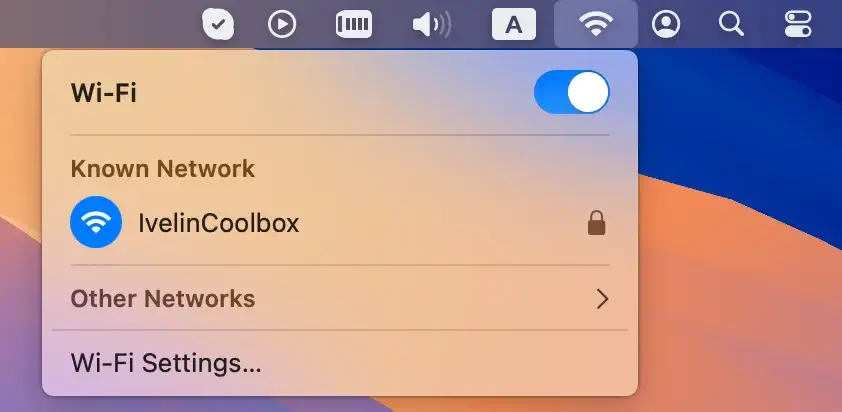
1. Turn Wi-Fi off and on again

This simple trick can often reset any Wi-Fi network issues caused by temporary system glitches. By toggling Wi-Fi off and on, you refresh your network, potentially fixing the problem.

  1. Click on the Wi-Fi icon in the menu bar.
  2. Toggle the Wi-Fi off and wait for 10–15 seconds to let the current internet connection fully disconnect.
  3. Turn the Wi-Fi on again and allow your Mac to reconnect to the network.
network dropdown menu

2. Restart your Mac

Restarting your Mac clears system caches and temporary files that could be affecting Wi-Fi performance. It also refreshes the network hardware connections.

Click the Apple menu in the menu bar and choose Restart.
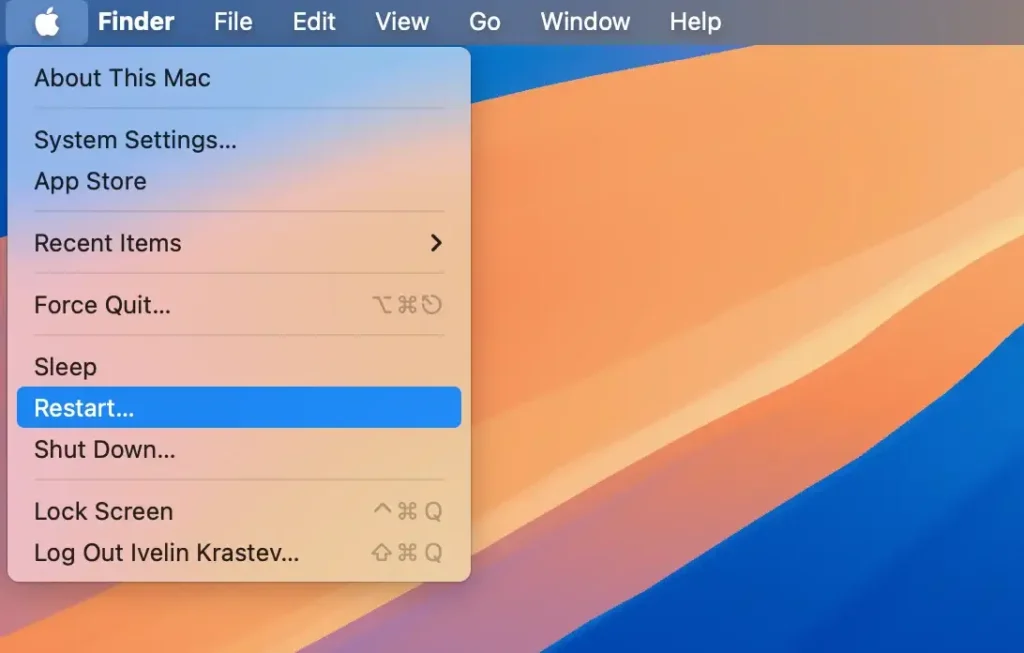
reboot macos from apple menu bar

Once your Mac reboots, reconnect to your preferred network. If your internet connection is restored, your issue has likely been caused by a temporary software glitch.

3. Flush the DNS cache

Flushing the DNS cache helps clear outdated or corrupted network data that may be causing Wi-Fi issues. This process can resolve problems with loading web pages or connecting to certain websites.

  1. Open Terminal from Applications > Utilities.
  2. Enter the following command: sudo dscacheutil -flushcache; sudo killall -HUP mDNSResponder
  3. Press Return and enter your admin password when prompted.
  4. Reboot your device and attempt to reconnect to your network.
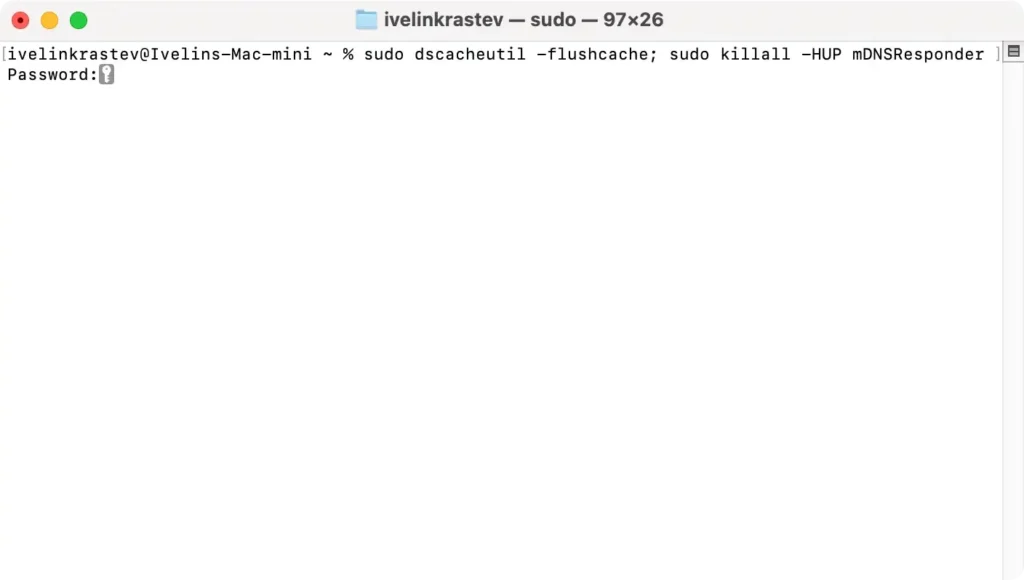
dscacheutil command in terminal

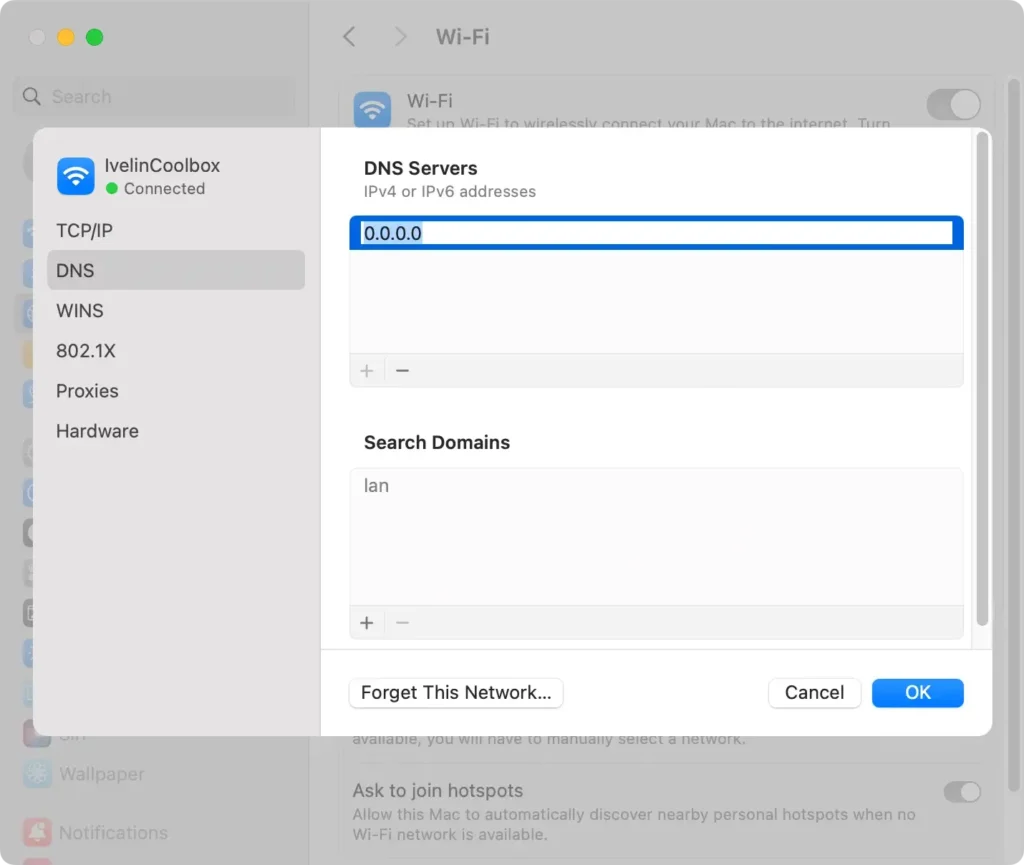
4. Change your DNS servers

If your network is unstable, switching to reliable DNS servers (like Google’s DNS or Cloudflare’s DNS) can often resolve issues related to slow network access or dropped connections.

  1. Go to System Settings > Network and select Wi-Fi.
  2. Click Details next to your active network and scroll down to DNS.
  3. Delete the current DNS entries and add the following DNS addresses for Google’s DNS:
    • 8.8.8.8
    • 8.8.4.4
  4. Alternatively, for Cloudflare DNS, use:
    • 1.1.1.1
    • 1.0.0.1
change dns provider

5. Forget and re-add the Wi-Fi network

Forgetting and reconnecting to your network can resolve issues where your Mac may have stored corrupt network data.

This clears out any cached settings or network filters that might have been causing issues with the connection.

  1. Go to System Settings > Wi-Fi, then select Details next to your connected network.
  2. Choose Forget This Network and confirm your selection.
  3. After forgetting the network, reconnect by selecting the WiFi network from the list and entering the password.
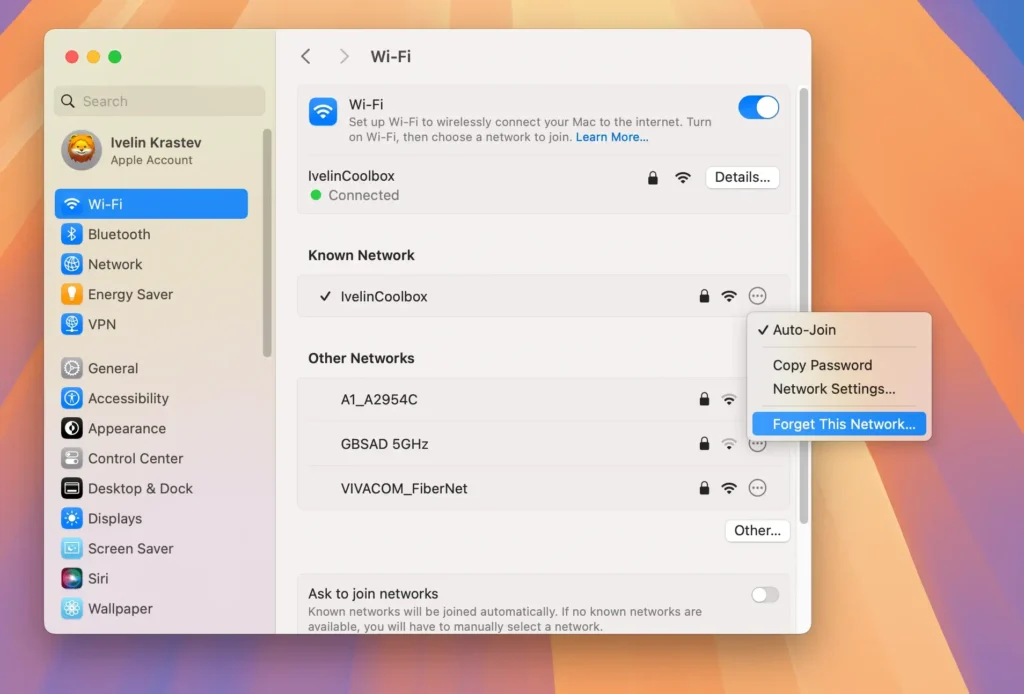
wi-fi network settings

6. Turn off Firewall temporarily

Your Mac’s firewall is designed to protect against unwanted incoming connections, but it can also block essential internet traffic.

Temporarily disabling it can help determine if the firewall is causing the issue.

  1. Open System Settings > Network > Firewall.
  2. Toggle off the Firewall setting to deactivate it temporarily.
  3. Test your Wi-Fi connection to see if the problem is resolved.
macos firewall network settings

7. Check third-party apps and extensions

Many users report that certain third-party apps or extensions, such as a VPN provider or security software, can interfere with your internet and cause problems. Turning off these apps can resolve the issue.

Try turning off such apps and extensions and testing the ethernet connection again. If you cannot close or disable an app, uninstall it.

Also, make sure that you update all of your apps to ensure they do not cause any conflicts.

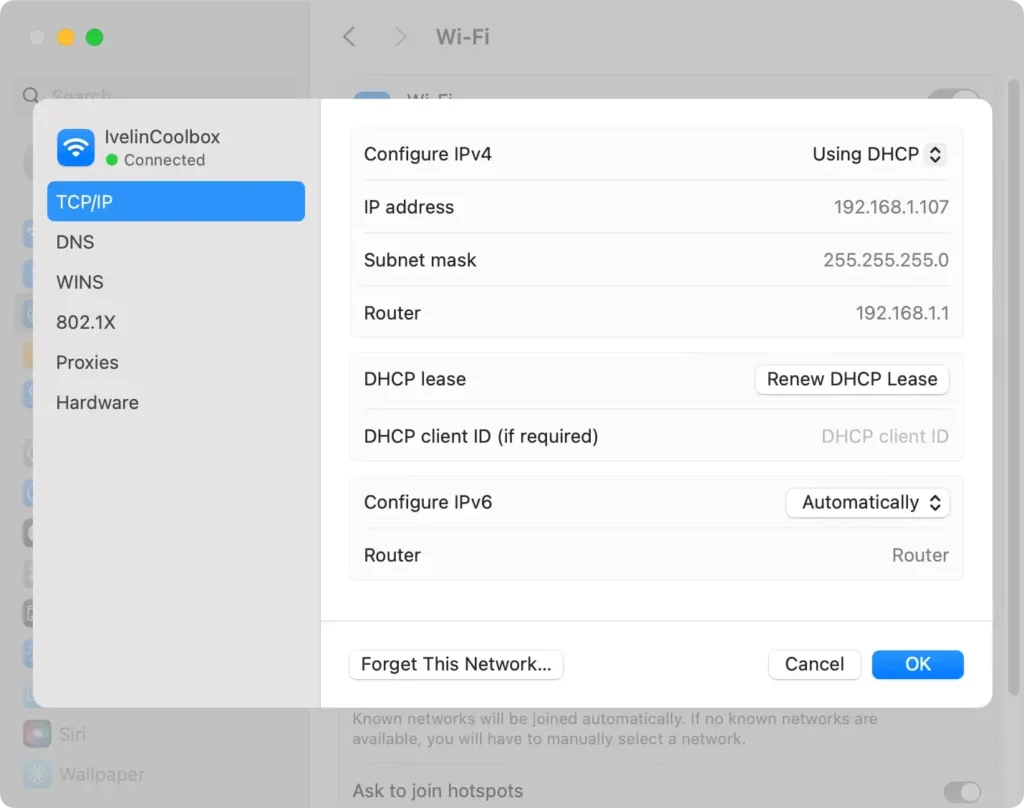
8. Update the DHCP lease

Refreshing your DHCP lease can renew your Mac’s IP address, potentially solving connection issues that stem from the internet configuration. To do this:

  1. Open System Settings > Wi-Fi.
  2. Select the problematic Wi-Fi connection.
  3. Click Details and select TCP/IP in the sidebar.
  4. Click the Renew DHCP Lease button.
renew dhcp lease settings on mac computer

9. Disconnect external USB devices

Certain USB devices connected to your Mac—especially USB 3.0 devices—can interfere with Wi-Fi signals. If you’re experiencing WiFi issues, try disconnecting external devices.

Simply unplug all USB devices from your Mac and check if your connection improves. If the issue is resolved, one of the devices might be causing interference. Reconnect them one by one to identify the culprit.

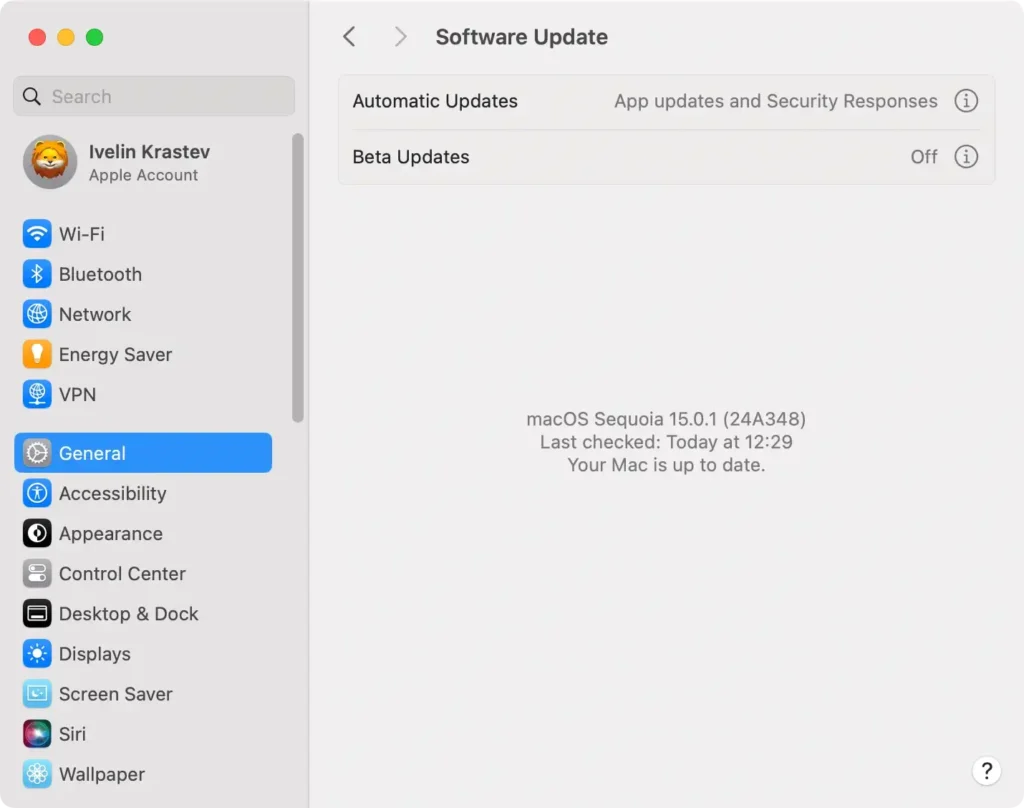
10. Install the latest macOS Sequoia

Keeping your macOS up to date ensures that any bugs introduced in earlier versions are patched.

  1. Navigate to System Settings > General > Software Update.
  2. Check for any available updates.
  3. Download and install any macOS updates.
  4. Restart your device.
macos sequoia update in macos software update window

11. Set private Wi-Fi address to fixed

The private Wi-Fi Address feature helps improve privacy, but it can sometimes cause connectivity issues on certain Wi-Fi networks. Setting it to a fixed address can resolve these problems.

  1. Navigate to System Settings > Wi-Fi.
  2. Select Details next to your network.
  3. Set the private address of the network to Fixed.
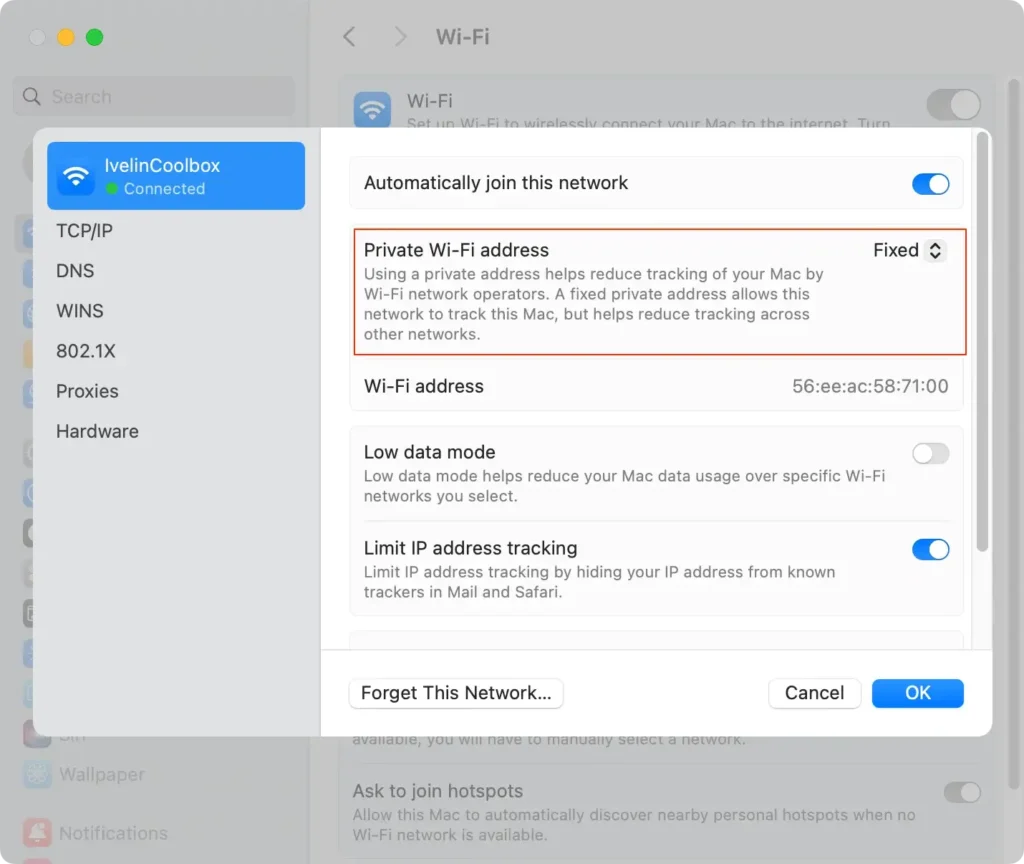
private wi-fi address settings

12. Reset system configuration files

If none of the above solutions work, deleting the System Configuration files can resolve deep-seated network issues.

  1. Open a Finder window.
  2. Press Command + Shift + G.
  3. Type the following path into the search box: /Library/Preferences/SystemConfiguration/
  4. Delete the following files:
    • com.apple.airport.preferences.plist
    • com.apple.wifi.message-tracer.plist
    • com.apple.network.identification.plist
    • com.apple.network.eapolclient.configuration.plist
    • NetworkInterfaces.plist
    • preferences.plist
  5. Reboot your Mac and reconnect to your WiFi.
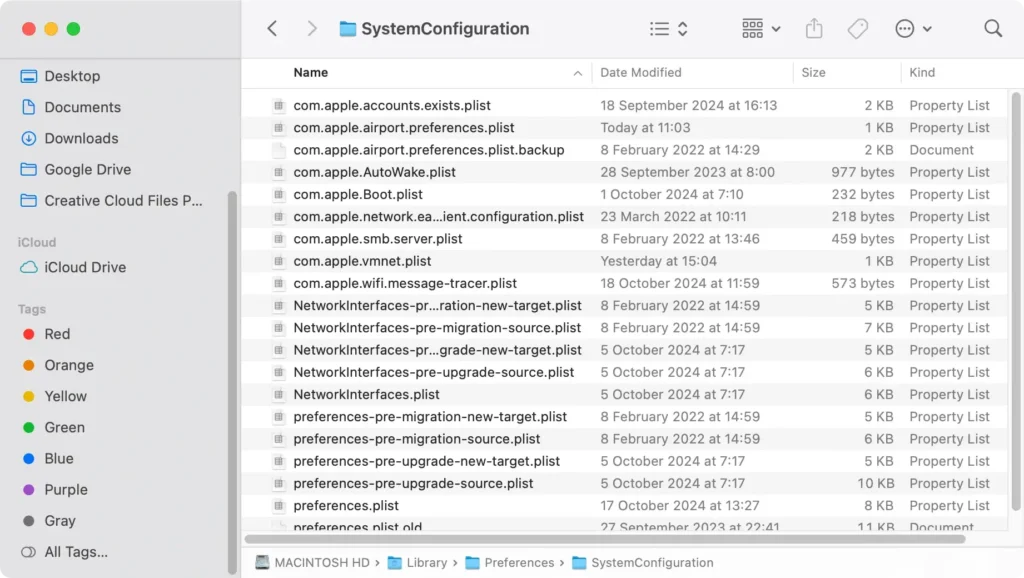
network configuration files

By following these steps, you should be able to resolve most WiFi problems on macOS Sequoia and restore a stable internet connection to your device.

Share this post on your favorite social media
Keep Your Mac Fast and Secure
Optimize your Mac and stay malware-free with SpyHunter

For a better understanding of our policies, please review our Free Trial Offer below, EULA, and Privacy/Cookie Policy.

SpyHunter Free Trial: Important Terms & Conditions

The SpyHunter Trial version includes, for one device, a one-time 7-day Trial period for SpyHunter 5 Pro (Windows) or SpyHunter for Mac, offering comprehensive malware detection and removal functionality, high-performance guards to actively protect your system from malware threats, and access to our technical support team via the SpyHunter HelpDesk. You will not be charged upfront during the Trial period, although a credit card is required to activate the Trial. (Prepaid credit cards, debit cards, and gift cards are not accepted under this offer.) The requirement for your payment method is to help ensure continuous, uninterrupted security protection during your transition from a Trial to a paid subscription should you decide to purchase. Your payment method will not be charged a payment amount upfront during the Trial, although authorization requests may be sent to your financial institution to verify that your payment method is valid (such authorization submissions are not requests for charges or fees by EnigmaSoft but, depending upon your payment method and/or your financial institution, may reflect on your account availability). You can cancel your Trial by contacting EnigmaSoft’s payment processor (identified in your confirmation email) or EnigmaSoft directly no later than two business days before the 7-day Trial period expires to avoid a charge coming due and being processed immediately after your Trial expires. If you decide to cancel during your Trial, you will immediately lose access to SpyHunter. If, for any reason, you believe a charge was processed that you did not wish to make (which could occur based on system administration, for example), you may also cancel and receive a full refund for the charge any time within 30 days of the date of the purchase charge. See FAQs.

At the end of the Trial, you will be billed upfront immediately at the price and for the subscription period as set forth in the offering materials and registration/purchase page terms (which are incorporated herein by reference; pricing may vary by country per purchase page details) if you have not timely canceled. Pricing typically starts at $72 for 3 months (SpyHunter Pro Windows) and $42 for 3 months (SpyHunter for Mac). Your purchased subscription will be automatically renewed in accordance with the registration/purchase page terms, which provide for automatic renewals at the then applicable standard subscription fee in effect at the time of your original purchase and for the same subscription time period, provided you’re a continuous, uninterrupted subscription user. Please see the purchase page for details. Trial subject to these Terms, your agreement to EULA/TOS, Privacy/Cookie Policy, and Discount Terms. If you wish to uninstall SpyHunter, learn how.

For payment on the automatic renewal of your subscription, an email reminder will be sent to the email address you provided when you registered before your next payment date. At the onset of your trial, you will receive an activation code that is limited to use for only one Trial and for only one device per account. Your subscription will automatically renew at the price and for the subscription period in accordance with the offering materials and registration/purchase page terms (which are incorporated herein by reference; pricing may vary by country per purchase page details), provided that you are a continuous, uninterrupted subscription user. For paid subscription users, if you cancel, you will continue to have access to your product(s) until the end of your paid subscription period. If you wish to receive a refund for your then current subscription period, you must cancel and apply for a refund within 30 days of your most recent purchase, and you will immediately stop receiving full functionality when your refund is processed.

For CALIFORNIA CONSUMERS, please see the notice provisions:
NOTICE TO CALIFORNIA CONSUMERS: Per the California Automatic Renewal Law, you may cancel a subscription as follows:

  1. Go to www.enigmasoftware.com and click the "Login" button at the top right corner.
  2. Log in with your username and password.
  3. In the navigation menu, go to "Order/Licenses." Next to your order/license, a button is available to cancel your subscription if applicable. Note: If you have multiple orders/products, you will need to cancel them on an individual basis.

Should you have any questions or problems, you can contact our EnigmaSoft support team by phone at +1 (888) 360-0646 (USA Toll-Free) / +353 76 680 3523 (Ireland/International) or by email at support@enigmasoftware.com.
How do you cancel a SpyHunter Trial? If your SpyHunter Trial was registered via MyCommerce, you can cancel the trial via MyCommerce by logging into the MyAccount section of MyCommerce (see your confirmation email for further details). You can also contact MyCommerce by phone or email to cancel. To contact MyCommerce via phone, you can call +1-800-406-4966 (USA Toll-Free) or +1-952-646-5022 (24x7x356). You can contact MyCommerce by e-mail at ordersupport@mycommerce.com. You can easily identify if your trial was registered via MyCommerce by checking the confirmation emails that were sent to you upon registration. Alternatively, all users may also contact EnigmaSoft Limited directly. Users can contact our technical support team by emailing support@enigmasoftware.com, opening a ticket in the SpyHunter HelpDesk, or calling +1 (888) 360-0646 (USA) / +353 76 680 3523 (Ireland/International). You can access the SpyHunter HelpDesk from SpyHunter's main screen. To open a support ticket, click on the "HelpDesk" icon. In the window that appears, click the "New Ticket" tab. Fill out the form and click the "Submit" button. If you are unsure of what "Problem Type" to select, please choose the "General Questions" option. Our support agents will promptly process your request and respond to you.

———

SpyHunter Purchase Details
You also have the choice of subscribing to SpyHunter immediately for full functionality, including malware removal and access to our support department via our HelpDesk, typically starting at $42 for 3 months (SpyHunter Basic Windows) and $42 for 3 months (SpyHunter for Mac) in accordance with the offering materials and registration/purchase page terms (which are incorporated herein by reference; pricing may vary by country per purchase page details). Your subscription will automatically renew at the then applicable standard subscription fee in effect at the time of your original purchase subscription and for the same subscription time period, provided you’re a continuous, uninterrupted subscription user and for which you will receive a notice of upcoming charges before the expiration of your subscription. Purchase of SpyHunter is subject to the terms and conditions on the purchase page, EULA/TOS, Privacy/Cookie Policy and Discount Terms.

———

General Terms
Any purchase for SpyHunter under a discounted price is valid for the offered discounted subscription term. After that, the then applicable standard pricing will apply for automatic renewals and/or future purchases. Pricing is subject to change, although we will notify you in advance of price changes.
All SpyHunter versions are subject to your agreeing to our EULA/TOS, Privacy/Cookie Policy, and Discount Terms. Please also see our FAQs and Threat Assessment Criteria. If you wish to uninstall SpyHunter, learn how.