

Can Malware Spread Through WiFi? (Safety Tips Included)

Before we dive in
Before we dive in, let's make sure you stay safe online. We created SpyHunter because your security matters to us.
Protect your computer today — download SpyHunter right here! Check out our top tips below to keep your computer safe and secure.

Can WiFi really act as a gateway for viruses and malware to infect your devices? This question might stir images of futuristic cyber threats, yet it reflects a very real concern in today’s increasingly wireless world.
The convenience of WiFi access also opens up new avenues for cybercriminals to exploit, necessitating a deeper understanding of the risks involved and the measures we can take to protect ourselves.
By debunking common myths and uncovering the facts, this article aims to equip you with the knowledge to navigate the potential perils of WiFi usage—enhancing your online security in an era where virtual threats are constantly evolving.
Does WiFi really transmit viruses and malware?
It sounds like something out of a sci-fi movie, but the reality is that, yes, WiFi can indeed serve as a conduit for viruses and malware to spread across devices.
Unlike the ethernet cable and local area network wire of the past, WiFi’s wireless nature allows for internet access across other devices without physical connections. This convenience, however, comes with its own set of risks.
Cybercriminals have adapted to this wireless era, finding innovative methods to exploit WiFi networks for malicious purposes. Like all technological advancements, WiFi networks have vulnerabilities that can be exploited as an entry point to gain access to your device.
Common techniques hackers use to spread malware over WiFi
Understanding how hackers exploit WiFi networks to disseminate malware can help individuals and organizations strengthen their cybersecurity posture. This knowledge highlights the ingenuity behind these attacks and underlines the importance of implementing strong security measures to protect against them.
The role of unsecure networks in malware dissemination
Unsecured WiFi networks are prime targets for attackers looking to spread malware. These networks often lack strong encryption, making it easier for hackers to intercept data and inject malicious software.

For example, when someone connects to an unsecured public WiFi network, their device becomes an easy target. The hacker can then use this opportunity to send malware directly to the unprotected device. It’s the equivalent of leaving your front door unlocked, inviting criminals to easily enter your home.
Understanding man-in-the-middle (MITM) attacks
A man-in-the-middle (MITM) attack is a common technique where the hacker positions themselves between the victim’s device and the network connection. In a WiFi scenario, this allows the hacker to intercept, send, and receive data meant for the victim without either party knowing.
This interception can lead to the deployment of malware directly onto the victim’s device. To combat this, using encrypted connections and avoiding sensitive transactions on public WiFi can be effective steps.
Exploitation of network vulnerabilities
Network vulnerabilities such as outdated firmware or unsecured network endpoints offer hackers easy access to systems. By exploiting these weak spots, attackers can bypass security measures to install malware.
This is akin to finding a window left open in an otherwise secure building. Keeping software and firmware up to date and applying security patches promptly are critical in preventing such exploitation.
How fake WiFi hotspots distribute malware
Creating a fake WiFi hotspot is a popular method for cybercriminals to spread malware. These hotspots, often with convincing names, trick users into connecting their devices.
Once connected, the attacker can push malware to the device. The simplicity of this attack is in its reliance on human error; we often connect to WiFi without considering the potential risk.
To mitigate this risk, it’s advised to verify the legitimacy of a WiFi network before connecting. Additionally, employing security solutions can offer an extra layer of defense by detecting and removing malware before it can cause harm.
Each of these techniques highlights the ingenuity and adaptability of cybercriminals. The common thread among these methods is the exploitation of weak security practices and human error.
By being aware of these techniques and implementing strong, proactive security measures, users can significantly reduce their risk of falling victim to WiFi-based malware attacks.
Can ransomware spread over WiFi?
Many users wonder whether ransomware—one of the most dreaded kinds of malware—can spread over WiFi.
The short version of the answer is, both yes and no. While ransomware is usually not coded to have capabilities that help it propagate over WiFi, a malicious actor could compromise a device on a network through WiFi, then transmit a ransomware payload to the device and launch that payload.
In that sense, while ransomware does not traditionally spread over WiFi the way a worm may propagate itself over a network, it can be transmitted over WiFi to a device that has previously been compromised by a malicious actor.
How to identify if your device has been compromised
Realizing your device has been compromised might not always be as straightforward as dealing with a broken screen. Unlike physical damage, the signs of a malware infection can be subtle yet have significant implications for your device’s functionality and your personal privacy.
Let’s break down these indicators into easily digestible insights.
Unexpected device behavior and performance issues
When a device starts acting out of the ordinary, it could signal an underlying problem. Malware often disrupts normal operations, leading to performance issues that weren’t present before.
Pay attention to any software or applications that crash unexpectedly or fail to load, as these disturbances could hint at malware interfering with your device’s normal operations.
- Applications crashing or freezing without a clear cause.
- Increased loading time for programs or files.
- Unexpected system restarts or shutdowns, suggesting the presence of malware executing unauthorized commands.
Unusual data usage patterns
Malware, such as spyware and adware, operates by sending and receiving data online, potentially leading to inflated data usage.
This type of malware silently operates in the background, stealing personal information or displaying unwanted ads without your consent. If your data usage seems unusually high, consider it a possible indication of a malware infection.
- Check your monthly data usage stats to spot any unusual increases.
- Look for apps or software that you did not install, as these may be consuming your data in the background.
- Be wary of significant changes in data consumption patterns, especially if there’s no obvious explanation.
Deciphering security and system alerts
Legitimate security and system alerts play a vital role in informing you of potential threats and maintaining the health of your computer. However, malware often mimics these alerts to trick users into installing more malicious software, and you may even see fake alerts for ransomware attacks.
If you receive a security alert, verify its authenticity by checking the source. Authentic alerts should direct you to the security software already installed on your device, not prompt you for immediate downloads or credit card information.
Be especially cautious of pop-ups that appear while browsing the internet, as these are commonly served up by an infected website and are used by threat actors to spread malware.
Steps to protect your devices and network from malware
Why updating your devices matters in preventing attacks
Keeping your device and operating system updated is a critical step in protecting against malware attacks. Developers continuously identify and fix security vulnerabilities that hackers exploit to gain unauthorized access.
Regular updates fortify your device’s defenses, making it harder for malicious actors to breach your system. Enable automatic updates on all devices to ensure you’re always protected against the latest threats.
Using SpyHunter as a third-party security solution
Using third-party security software, such as SpyHunter, is critical in safeguarding your devices and network against malware.
SpyHunter offers comprehensive protection by detecting and eliminating threats in real-time, providing an all-encompassing security approach. SpyHunter specializes in identifying and removing aggressive and sophisticated malware types.
Download SpyHunter for free here and follow the on-screen instructions to complete the installation process. Once the install is complete, you can use SpyHunter’s scanner to detect any malware found on your Mac.
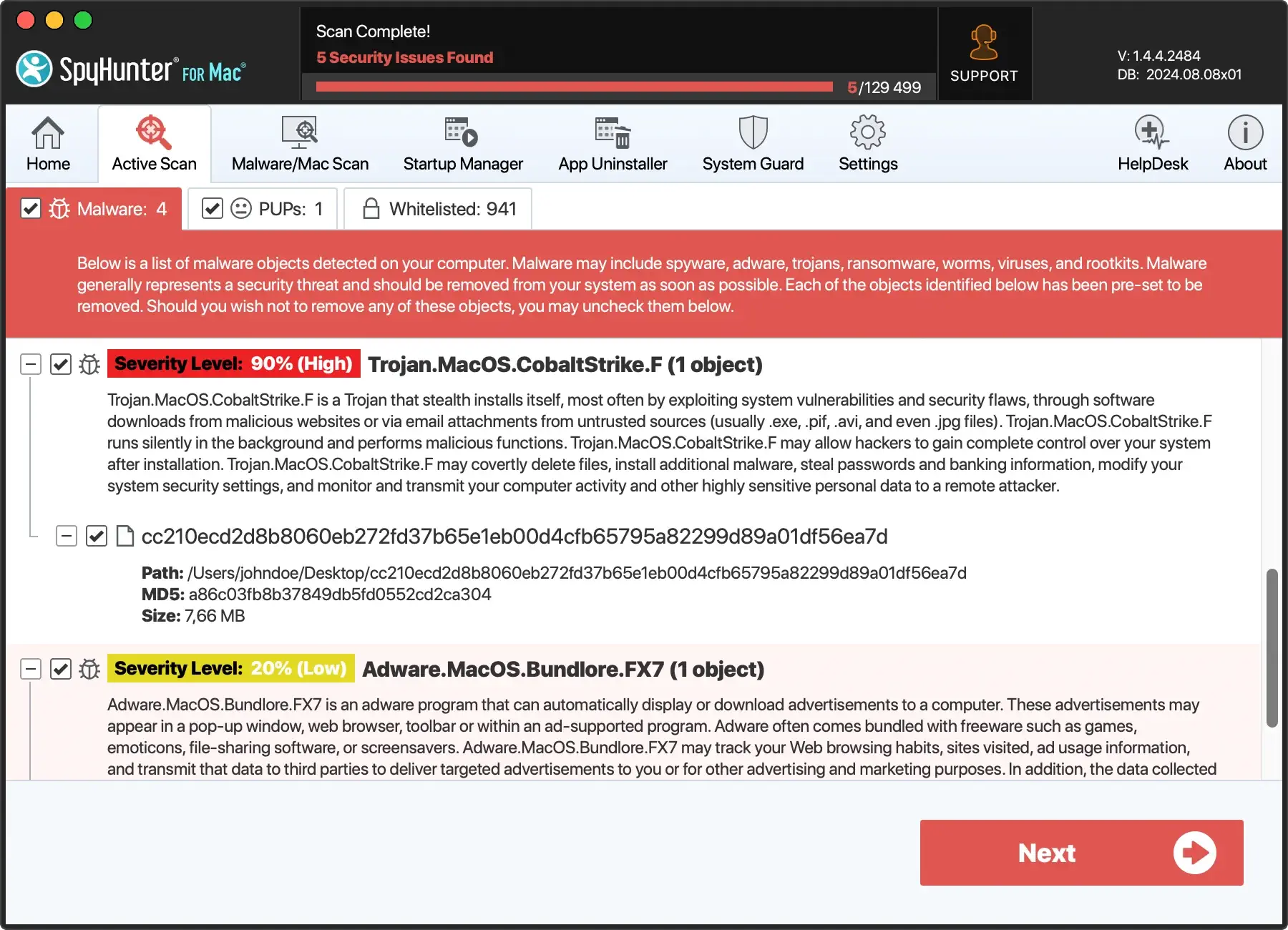
The program’s automated removal process will sweep any undesirable files clean, whether they are malware or potentially unwanted applications.
SpuHunter’s regular updates ensure your threat definitions always keep up with the newly emerging threats and your Mac is safe from evolving malware.
Safe practices when connecting to public WiFi
Public WiFi networks, while convenient, are hotbeds for potential malware attacks. However, you can still enjoy the convenience of public WiFi with minimal risk by following these precautionary steps:
- Use a VPN: A Virtual Private Network (VPN) encrypts your online activity, making it difficult for hackers to intercept your data or track your movements online.
- Disable auto-connect: Ensure your device does not automatically connect to WiFi networks. This will prevent your device from unknowingly connecting to potentially unsafe networks.
- Turn off file sharing: Before connecting to a public network, disable file-sharing options on your device to block unauthorized access to your data.
- Avoid sensitive transactions: Refrain from performing sensitive transactions like banking or shopping on public WiFi to avoid exposing your personal and financial information.
- Connect to secure sites: When browsing the web, make sure the websites you visit have SSL certificates (indicated by HTTPS in the URL), ensuring a secure connection.
These simple yet effective practices can significantly reduce your risk of becoming infected with malware when using public WiFi networks.
Enhancing home WiFi security against malware
Your home WiFi network is just as susceptible to malware attacks as any public WiFi hotspot. Protecting it requires diligence and the implementation of strong security measures:
- Change default settings: Replace the default username and password of your WiFi router with strong, unique credentials to prevent unauthorized access attempts.
- Update regularly: Keep your router’s firmware up to date to protect against vulnerabilities that could be exploited by hackers.
- Enable encryption: Use WPA3 or at least WPA2 (Wi-Fi Protected Access) encryption to safeguard the data transmitted over your network from potential interception and misuse.
- Disable remote access: Turn off any features that allow remote management of your router to block hackers from modifying your wi-fi network security settings from afar.
By adopting these practices, you protect your personal devices and secure your entire home network against malware threats.
The importance of using strong passwords and encryption
Strong passwords and encryption play essential roles in securing your online presence. Passwords act as the first line of defense against unauthorized access to your devices and personal information.

Changing the default password and creating complex passwords that include a mix of letters, numbers, and symbols adds a layer of security that is challenging for attackers to break. Encryption, on the other hand, scrambles your data, making it unreadable to anyone who doesn’t have the key.
Utilizing encryption across your devices, especially on WiFi networks, helps protect your information from being intercepted by eavesdroppers or cybercriminals. Implementing both strong passwords and encryption significantly reduces the risk of malicious breaches and data theft.
Tips for safe browsing and email practices
Adopting safe browsing and email practices significantly reduces the risk of malware infections.
Be cautious when clicking on links, especially from unknown sources. These links can lead to malicious websites designed to steal your personal information or install malware on your device.
Similarly, avoid downloading email attachments unless you are certain of the sender’s legitimacy. Using spam filters can also help by automatically detecting and isolating potential threats and filtering out malicious attachments.
Importantly, educate yourself about the latest phishing attacks and techniques, as cybercriminals constantly devise new methods to deceive users into divulging sensitive information.
Wrap up
WiFi offers great convenience in our connected world, but it also poses significant risks. Protecting yourself and your connected devices is crucial.
Public WiFi hotspots are often insecure and targeted by cybercriminals. Using a premium VPN can help encrypt your data, adding a layer of security. Ensure your devices have up-to-date antivirus and antimalware protection, avoid suspicious links, and be aware of phishing emails and common tactics.
Make sure your router’s DNS settings are secure and avoid default passwords.
Secure passwords, two-factor authentication, and regular firmware updates bolster your defenses. Regularly back up your data to secure locations. Stay informed and vigilant to enjoy WiFi benefits while minimizing cyber threats.
