

How To Remove “13 Malware” Chrome Pop-Up Scam (Guide)

Before we dive in
Before we dive in, let's make sure you stay safe online. We created SpyHunter because your security matters to us.
Protect your computer today — download SpyHunter right here! Check out our top tips below to keep your computer safe and secure.

Have you ever seen a pop-up claiming “Your Chrome is severely damaged by 13 Malware!”?
It’s unsettling and enough to make anyone worry about their personal data.
This article will examine the ’13 Malware’ Chrome pop-up scam, teaching you how to identify and tackle these deceptive alerts before they cause any real harm.
From understanding why these alarming notifications and spam ads appear to identifying ways to protect your browser and personal information, we’ll cover practical steps and tips to keep you safe online.
What is the ‘Your Chrome is severely damaged by 13 Malware’ Chrome pop-up scam?
The “Your Chrome is severely damaged by 13 Malware!” pop-up is a deceptive alert designed to mimic a legitimate Google security warning.
This scam targets users by convincing them that their Chrome browser has been compromised by multiple malware infections, namely 13, and urges immediate action.
The notification is crafted to scare users with the risk of data leakage including passwords and personal information.

Typically, this scam originates from adware infections or as a result of visiting high-risk websites.
The ultimate goal is to trick the user into clicking through and installing malicious software or extensions under the guise of rectifying the supposed damage to their browser.
Exploring the features of the ’13 malware’ warning scam
The scam operates by displaying a series of alarming messages and fake virus warnings that claim the browser’s functionality is compromised.
To create a sense of urgency, the scam often includes a counter or a percentage indicating the extent of the damage, making the alert appear more credible at a glance.
Another common feature is the recommendation to download a ‘fix’ which, instead of resolving any actual issues, likely leads to further malware issues or unwanted programs being installed on the user’s system.
This can include adware, which continues to push annoying pop-ups, or even more severe malware that could steal sensitive data.
Why do these ’13 malware’ scam pop-ups appear in Chrome?
Encountering the “Chrome is severely damaged by 13 malware” pop-ups in your browser can be alarming and confusing.
These messages often appear because cybercriminals use sophisticated techniques to exploit vulnerabilities within web browsers or websites.
These scams are crafted to look like legitimate warnings from Google Chrome, suggesting that your device is at risk. They attempt to trick you into downloading harmful software or giving away personal information.
Scammers use this method as a fear tactic, hoping you’ll act hastily to resolve an immediate threat. Typically, these pop-ups are triggered by visiting compromised websites or clicking on infected advertisements.
They can also appear if your system has already been infiltrated by adware or other forms of malware such as browser hijackers, which can change browser settings without your permission.
Common triggers for malicious pop-ups
Understanding what leads to the emergence of malicious pop-ups is key to preventing them. The most typical triggers include:
- Malicious sites: Unsafe websites often contain malicious code that can cause unexpected pop-ups.
- Clicking misleading ads: Advertisements on the internet can be deceptive, leading to harmful sites or triggering direct malware downloads.
- Software vulnerabilities: Outdated browsers or applications can have security holes that cybercriminals exploit to display these scams.
- Previously installed adware: Some deceptive software applications can generate pop-ups across various sites, regardless of their safety. Those apps are usually considered potentially unwanted programs.
Regularly updating your software and avoiding suspicious links are good practices to lessen the risk of encountering these malicious pop-up ads.
Additionally, installing reliable anti-malware software, like SpyHunter, can provide an extra layer of protection by identifying and removing threats that could cause these pop-ups.
Step-by-step guide to remove ’13 Malware’ Chrome pop-ups
Removing the ’13 Malware’ pop-ups from your Chrome browser involves a few crucial steps to clean and secure your system effectively. This guide will walk you through each stage, ensuring you can reclaim your browser and prevent future intrusions.
- Identify and close any suspicious programs running on your computer. To do this, you can check the applications currently running and manually close anything that looks out of the ordinary.
- Reset your Chrome browser settings to default. This action will disable any unwanted extensions that may have been installed without your consent and reset your search engine. Go to the settings menu, select
Advanced, and then chooseReset settings. - Clear your browser’s cache and cookies to remove any stored data that could be used to track your online activity or reinfect your system.
- Check for and uninstall any unfamiliar applications installed on your system. These can be found in the
Applicationsfolder on your Mac. - Run a full system scan using reputable antivirus or anti-malware software to catch and remove any remaining threats. Consider setting your security software to perform regular scans automatically.
This comprehensive approach helps to not only remove the immediate threats but also fortify your system against future attacks.
Use SpyHunter to eliminate malware effectively
SpyHunter is a robust malware removal tool that can stop malware propagated by misleading pages similar to those that display the fake “13 malware” pop-ups.
You can download the app here and then follow the instructions on your screen to install it.
Launch SpyHunter from your Dock and then select a full system scan from the app’s main menu. The scan will display a list of all threats discovered on your Mac.
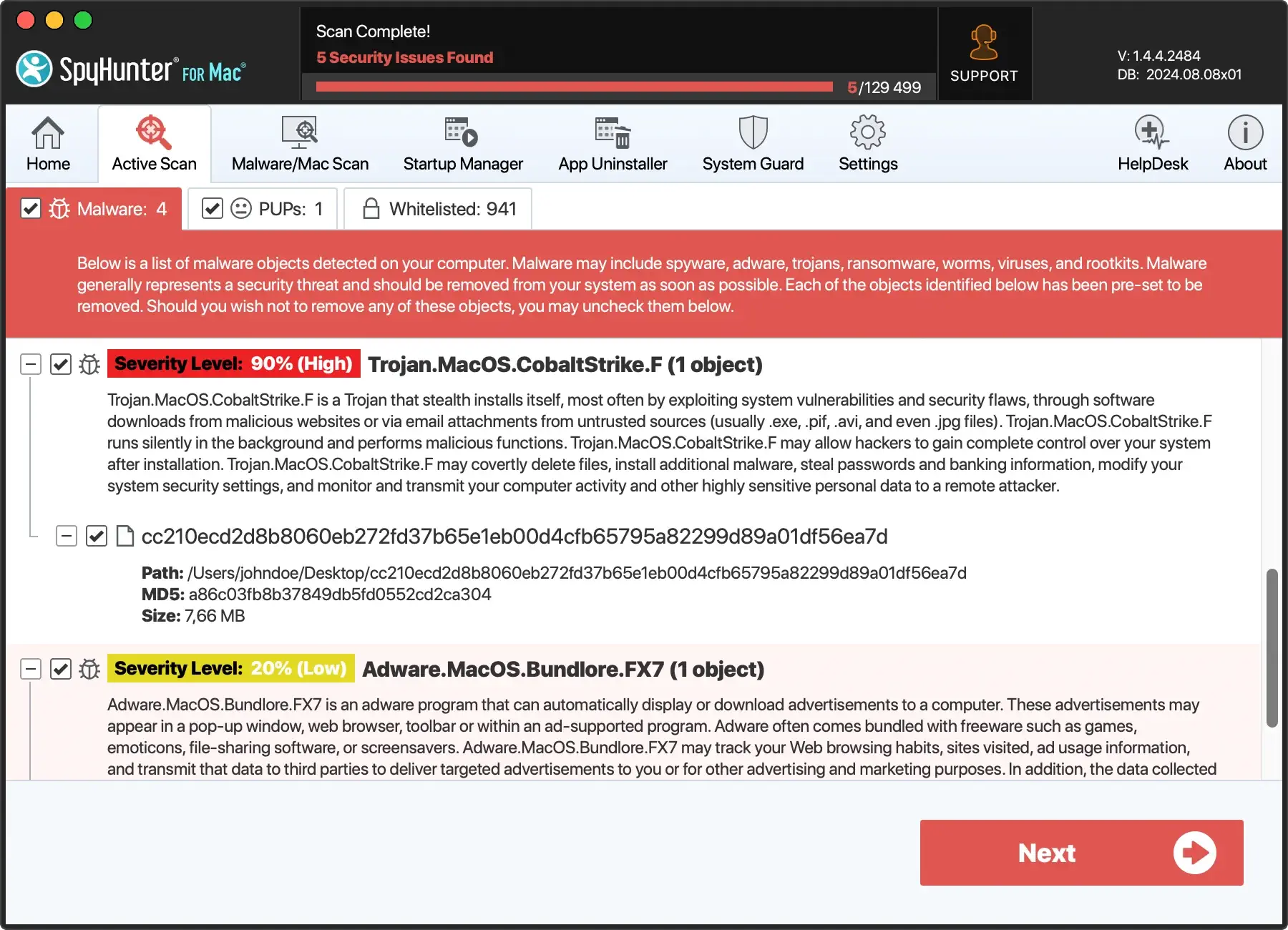
Use the interface to select and automatically remove any malicious programs discovered and enjoy a much safer and more stable user experience.
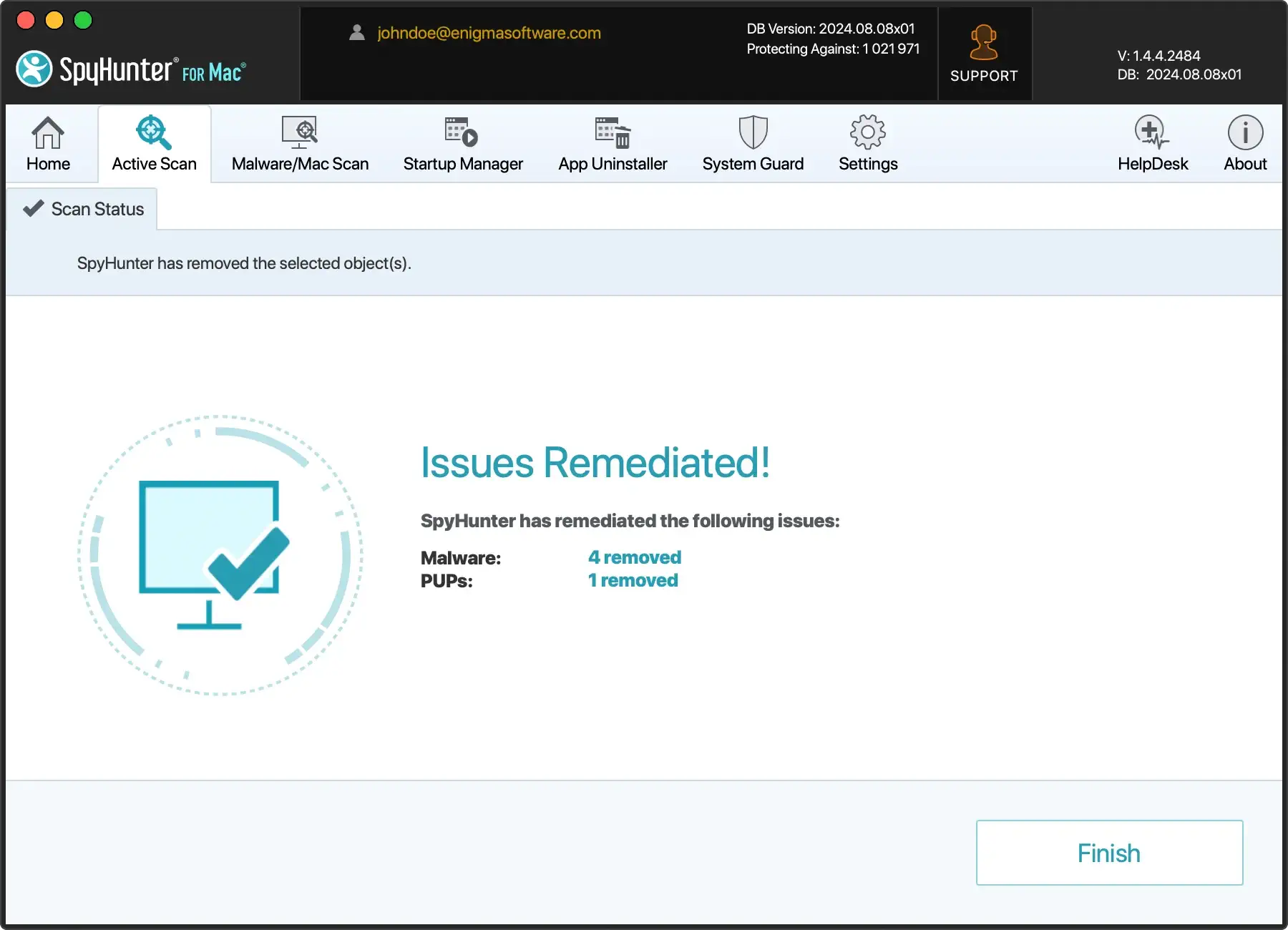
SpyHunter’s active guard component will block potential malware and make sure future threats cannot infect your system in the first place.
How dangerous is the ’13 Malware’ Chrome pop-up scam?
The ’13 Malware’ Chrome pop-up scam presents a significant threat primarily through deception and exploitation of user trust.
Users faced with this scam are misled into believing their Chrome browser is compromised severely.
This misrepresentation can lead to harmful decisions, such as downloading fraudulent antivirus software or further exposing personal data to unauthorized sources.
The scam exploits recognized brand elements, mimicking Google’s security alerts to lend it undeserved credibility. Malicious and aggressive ads of this kind depend on scare tactics.
If a user acts on these false prompts, the risk of actual malware infection increases, potentially leading to broader cybersecurity vulnerabilities within their system.
What damage can ’13 Malware’ scam cause to your computer?
Interacting with the ’13 Malware’ scam can result in various damaging consequences for your computer and personal security.
Primarily, it can trick users into installing malware disguised as legitimate software. This malware may range from relatively harmless adware, which clutters your device with unwanted ads, to more severe threats like spyware, which jeopardizes your private data.
The damage extends beyond the initial deception. Once your system is compromised, sensitive information such as passwords, financial data, and personal identifiers are at risk of theft.
Furthermore, the installed malware could degrade your computer’s performance, lead to data loss, or even lock down system files for ransom.
Such incidents not only disrupt personal and professional use but also entail financial and emotional stress in resolving these issues.
How to avoid fake malware alerts in the future
Protecting yourself from fake malware alerts begins with the ability to identify them.
These false alerts often mimic legitimate security warnings, trying to scare you into hastened actions like downloading unverified software or giving up personal information.
Always verify alerts by directly accessing your security software instead of clicking on pop-up windows.
Using trusted cybersecurity tools or a trusted, well-reviewed and popular ad-blocking browser extension can stop these alerts before you can even land on their pages and load the misleading messages.
Regular updates and safe browsing habits
Regularly updating your software, operating system, and applications is crucial to maintaining security. Updates often include patches that fix vulnerabilities, reducing the potential for malware exploitation.
Enable automatic updates where possible, ensuring you have the latest protections without having to remember to manually update each time.
Enhance your browsing habits by steering clear of suspicious websites and links, which can be gateways to malware and scams.
Use ad blockers to avoid clicking on malicious aggressive ads and practice verifying the security of websites before inputting sensitive information.
What to do if you accidentally clicked on a scam pop-up?
If you’ve clicked on a scam pop-up, immediate action can help minimize potential damage. Scam pop-ups can lead to malware infections or personal data breach.
Taking the right steps swiftly can protect both your information and your device from further harm.
Immediate actions to secure your system post-exposure
First, disconnect your device from the internet. This prevents any potential malware from transmitting your data to a malicious server or downloading additional harmful files.
Next, consider running a full system scan using reliable anti-malware software like SpyHunter.
Change all your passwords, especially if the scam pop-up requested personal information such as login credentials. It’s also advised to enable two-factor authentication for an added layer of security.
Monitor your financial transactions and credit reports closely for any unauthorized activity.
