

Remove Ssj4.io Redirect Virus [Ultimate Guide]

Before we dive in
Before we dive in, let's make sure you stay safe online. We created SpyHunter because your security matters to us.
Protect your computer today — download SpyHunter right here! Check out our top tips below to keep your computer safe and secure.

Ssj4.io is a redirect virus that targets internet users, leading to unwanted browser redirections, intrusive pop-up ads, and potential exposure to malicious websites.
This type of malware primarily affects web browsers, manipulating settings without user consent to drive traffic to specific sites, often for profit.
This article aims to provide a comprehensive overview of the Ssj4.io redirect virus, including its behavior, risks, and detailed steps for its removal and prevention. Let’s get started:
Introduction: Understanding the Ssj4.io redirect virus
Ssj4.io is identified as a malicious domain that imitates legitimate search result pages. This site is a part of a broader category of malware known as browser hijackers.
Ssj4.io reroutes users to its page while providing legitimate search services. However, the interactions on this page lead to potentially dangerous or irrelevant websites, exposing users to unwanted spam, intrusive advertisements, and even security breaches.
The covert nature of this website allows it to perform harmful actions such as turning off security measures, installing other malware types like adware, spyware, and ransomware, and stealing personal data for malicious purposes.
Such attributes underscore the considerable risk Ssj4.io poses to system security, necessitating its prompt elimination from affected systems.
Common symptoms of the Ssj4.io infection
- Unexpected redirection to Ssj4.io or associated pages while browsing.
- Alterations in browser settings without user consent.
- Increased display of intrusive advertisements and spam.
- A slowdown in computer performance due to the resource-intensive actions of the malware.
- Unauthorized collection of personal information such as browsing history, search queries, and login credentials.
Identifying these symptoms early can be crucial in preventing the far-reaching implications of the Ssj4.io infection, including exposure to more severe malware forms and potential data theft.
Immediate actions towards malware removal and system security restoration are highly recommended to protect user privacy and system integrity.
Instructions to remove Ssj4.io redirects
Removing the Ssj4.io redirect virus from your device is crucial for restoring your browser’s security and ensuring a safe online experience.
Follow these detailed instructions to eliminate this intrusive malware and protect your system from future threats.
Pre-removal steps: Backup data and boot into Safe Mode
Before tackling the removal of Ssj4.io or any malicious software, taking preparatory steps can significantly reduce the risk of data loss and streamline the malware removal process:
- Backup Your Important Files: Begin by securing your important data. Use an external hard drive or a cloud storage service to back up documents, photos, and other valuable files. This step ensures your data remains safe in case of any issues during the malware removal.
- Reboot Your Computer into Safe Mode:
- For Windows, you can access Safe Mode by restarting your computer and pressing the F8 key as it boots up. Choose
Safe Modefrom the options presented. - On a Mac, please restart your computer and hold down the Shift key as it boots to enter Safe Mode.
- For Windows, you can access Safe Mode by restarting your computer and pressing the F8 key as it boots up. Choose
Entering Safe Mode limits your computer to essential functions and processes, making identifying and eliminating malware without interference easier.
Step 1: Uninstall suspicious programs from your computer
For Windows users:
- Access
Control Panel/Settings: Open theControl Panelby searching for it in theStartmenu, or open theSettingsapp by clicking the gear icon in theStartmenu. - Navigate to Uninstall a Program: In the
Control Panel, selectProgramsand thenPrograms and Features. In theSettingsapp, go toAppsand find the apps and features section. - Sort and Review Programs: Sort the list of installed programs by the install date to find recent installations easily. Carefully review each program for anything unfamiliar or suspicious.
- Uninstall Suspicious Programs: Right-click on any dubious program and select the uninstall option. Follow the prompts to complete the removal process.
For Mac users:
Start by opening Finder from your dock to begin locating and removing any suspicious applications that might contribute to the Ssj4.io redirection issue.
Navigate to your Applications folder, which houses all the software installed on your Mac. As you scroll through the list, keep an eye out for any applications you don’t remember installing or that strike you as odd or out of place.
When you identify an application that seems suspicious or know you didn’t install it, click on it and drag it to the Trash.
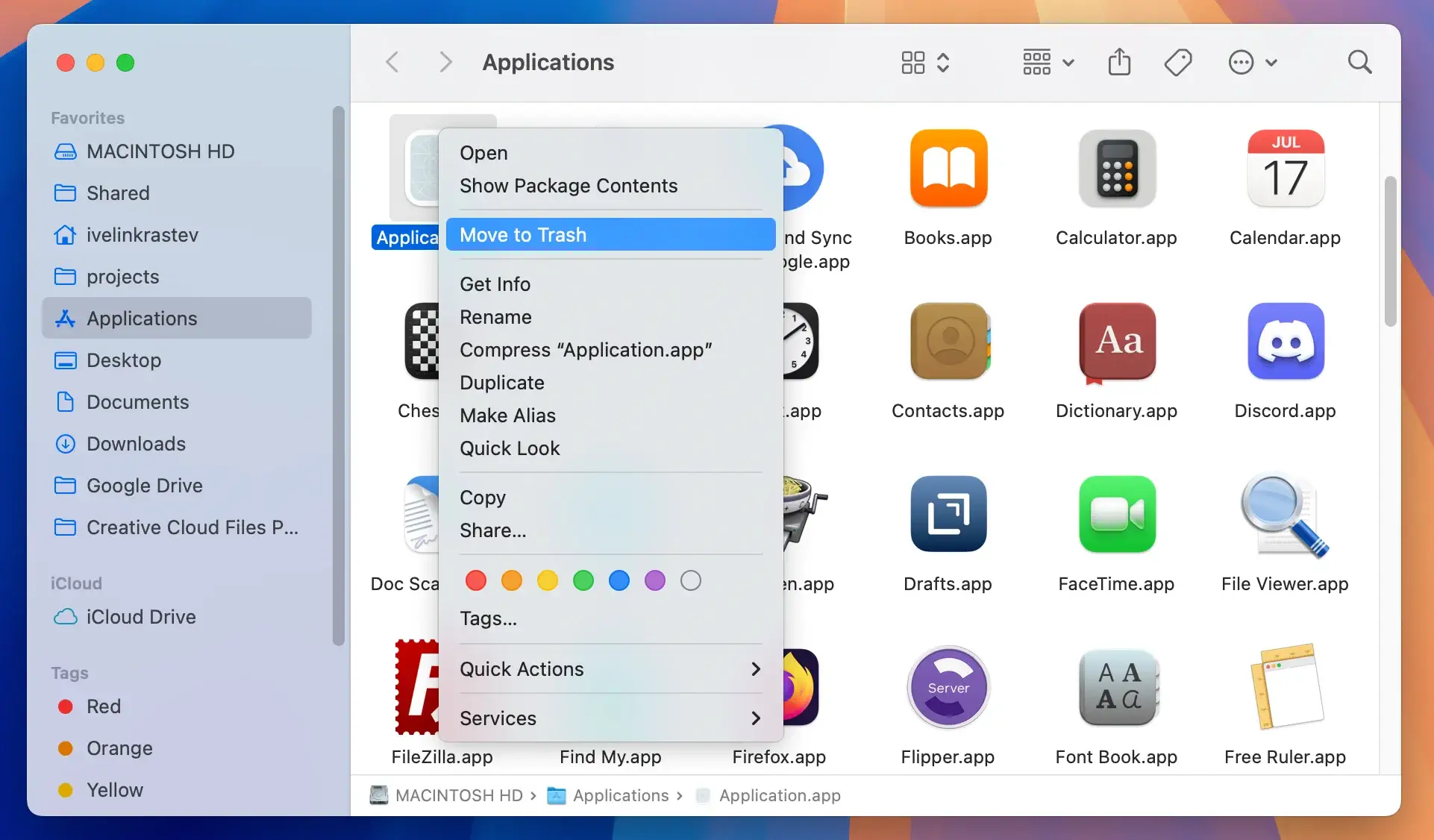
This action is akin to uninstalling the program from your Mac. After you’ve moved all questionable applications to the trash, empty the trash to remove these items from your system.
By following these OS-specific instructions, you can remove any suspicious programs that may be causing the Ssj4.io redirections, helping to secure your system against further unwanted behavior.
Step 2: Remove Ssj4.io from your browsers
Remove Ssj4.io from Chrome
- Open Chrome, go to the browser menu, and select
More tools > Extensions. Remove any unknown extensions that could be related to Ssj4.io. - Navigate to the Chrome menu again, choose
Settings, and go to the privacy and security section. Then, choose the option to clear browsing data. Ensure you select a time range where the issue started occurring, and remove cached images, cookies, and other site data. - Adjust the site settings to block unwanted notifications and pop-ups that could lead to malicious sites.
Eliminate Ssj4.io from Firefox
- Access the Firefox menu, select
Add-ons and themes, then go to the extensions window. Disable and remove extensions that seem out of place or that you don’t recognize. - In the settings window, proceed to the privacy and security option, and under
Clear Data, remove your cached web content and cookies. - Review your permissions for sending notifications and pop-ups, removing any suspicious entries.
Delete Ssj4.io from Edge
- Open Edge, go to the menu, select
Extensions, and turn off unwanted extensions. Then, remove them by clicking theManage Extensionsoption. - Eliminate browsing data, including cached images and files, cookies, and other site data.
- Inspect the Cookies and site permissions settings for unrecognized permissions and remove them.
Step 3: Reset your browsers to default settings
After removing the malicious extensions and data, resetting your browser settings to their original state is a good practice.
This can help eliminate any remaining configurations made by Ssj4.io or associated malware.
Each browser has a slightly different process for resetting, usually found under the settings or advanced settings menu.
Note that this action will erase all customized settings, including saved passwords, bookmarks, and history.
Step 4: Use antivirus software to scan for malware
After completing the manual removal steps, conducting a thorough malware scan is essential to ensure no remnants of Ssj4.io or other malicious software linger within your system.
For this purpose, SpyHunter offers a robust solution for Windows and Mac users, providing a comprehensive toolset for detecting and eradicating malware.
For Windows users: SpyHunter 5
SpyHunter 5 is designed to offer Windows users a deep and detailed system scan capable of identifying hidden threats that manual removal might miss.
Its advanced algorithms and regularly updated database ensure effective detection and removal of malware, offering peace of mind that your system is spotless.
For Mac users: SpyHunter for Mac
Mac users can rely on SpyHunter for Mac to perform an equally thorough scan tailored to the unique vulnerabilities of macOS.
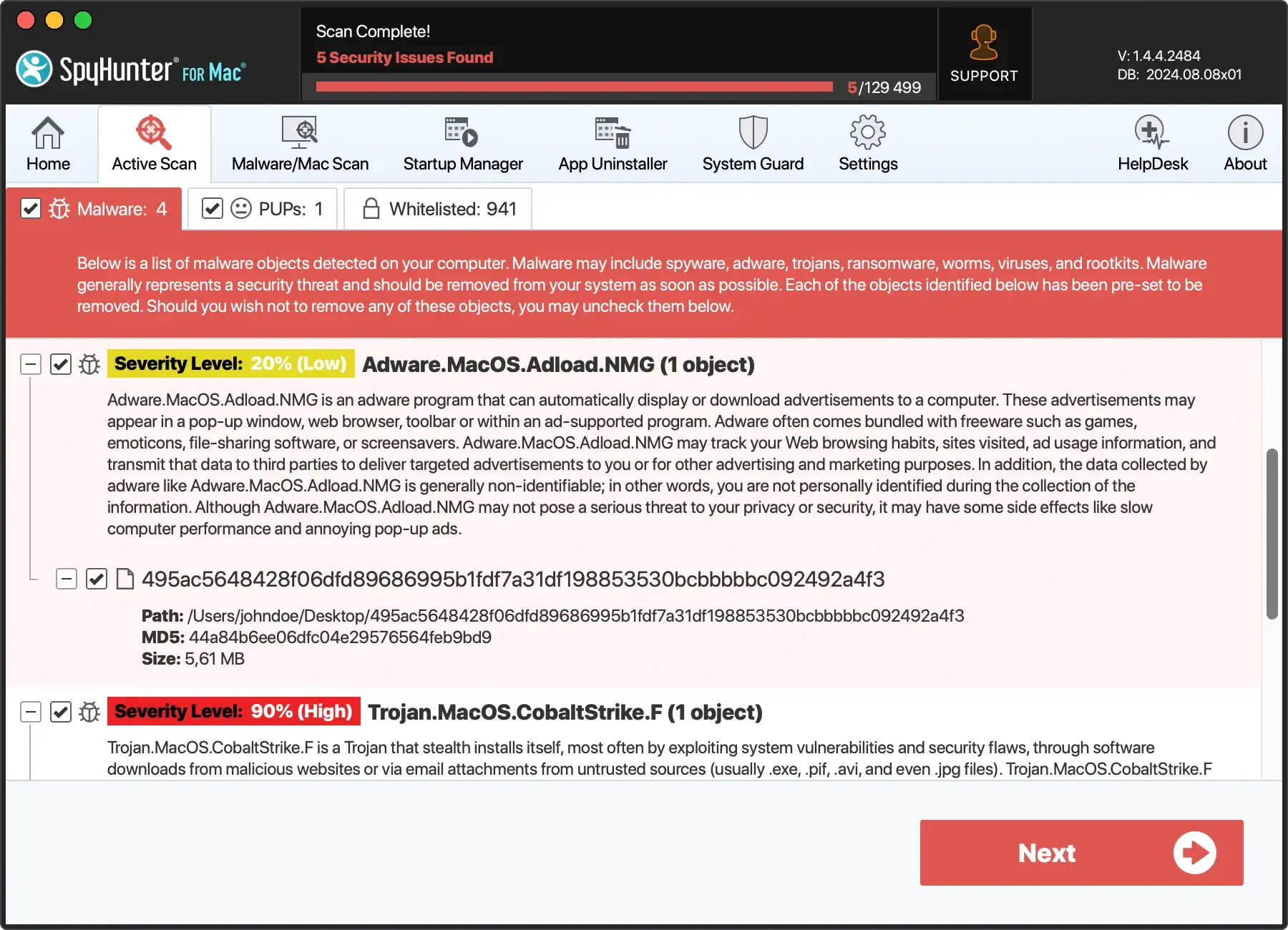
SpyHunter for Mac excels in rooting out adware, browser hijackers, and other malware designed to target Mac systems.
Key features of SpyHunter
- Comprehensive Scans: Both versions of SpyHunter are equipped with powerful scanning engines that delve deep into your system to find malware traces.
- Regular Updates: SpyHunter is constantly updated to recognize the latest malware threats, ensuring your protection is never outdated.
- User-Friendly Interface: Designed with all levels of users in mind, SpyHunter makes it easy to scan for and remove malware without requiring expert knowledge.
Download and scan instructions
- Download SpyHunter for free here to get the version appropriate for your operating system.
- Follow the installation instructions to set up SpyHunter on your computer.
- Open SpyHunter and initiate a full system scan. Allow the software to check your computer for any signs of malware comprehensively.
- Upon completion of the scan, SpyHunter will list all detected malware. Follow the prompts to remove these threats from your system.
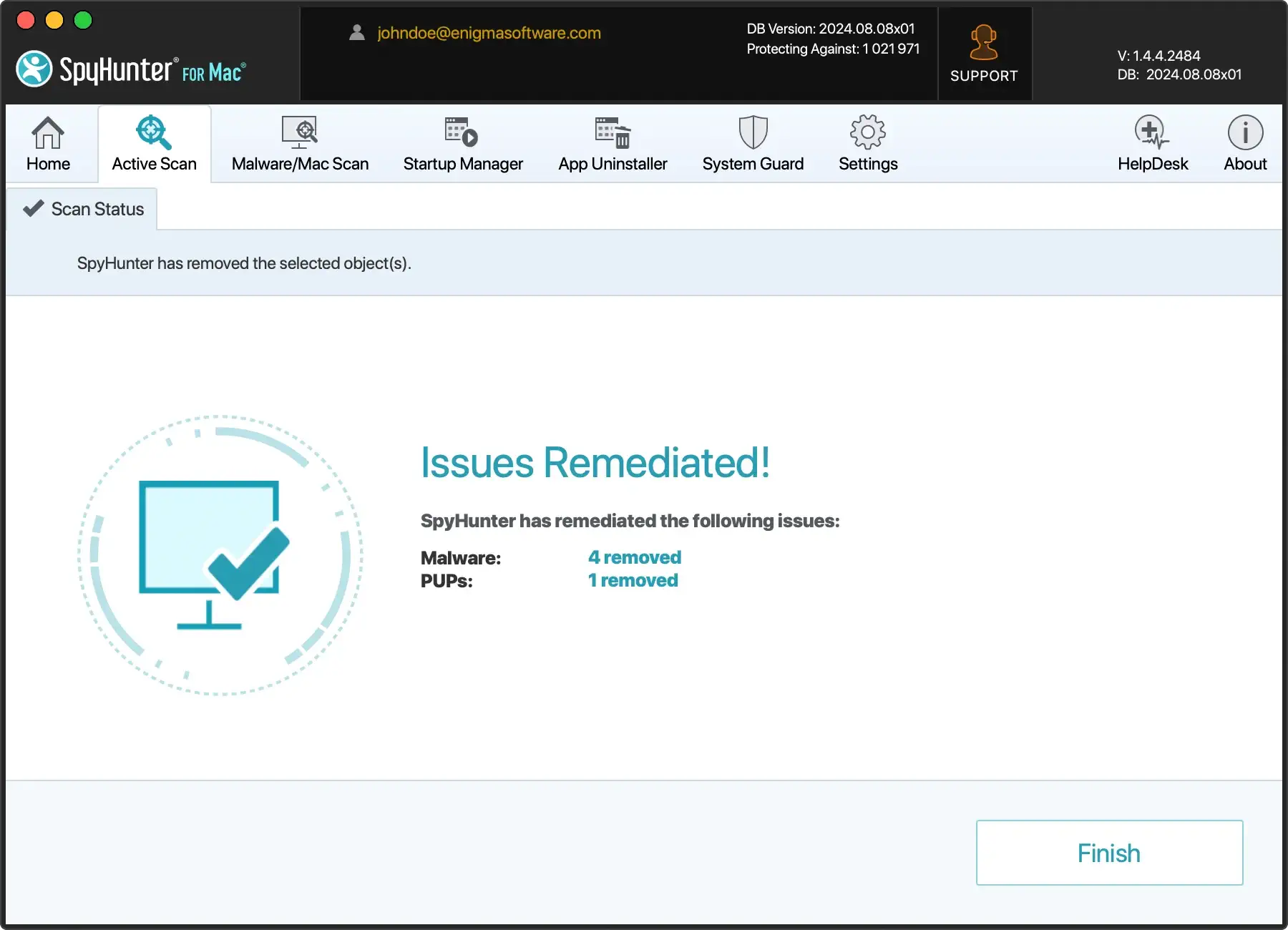
By leveraging SpyHunter, you can ensure your operating system is free from Ssj4.io and other malicious software, safeguarding your system against future infections.
Maintain a secure browsing environment
Adopting safe internet practices and utilizing practical security tools is crucial to protect yourself from future online threats like Ssj4.io and ensure a secure browsing environment.
By understanding the risks and implementing strategic defenses, you can significantly reduce the likelihood of malware infections and safeguard your personal information.
How to prevent future Ssj4.io infections
- Install security updates: Do not delay the installation of security patches and updates, as these often include fixes for critical security vulnerabilities.
- Avoid suspicious downloads: Only download files and software from reputable sources to avoid malicious content.
- Be skeptical of email links and attachments: Treat email content cautiously, mainly if it originates from unknown senders.
- Ad-blocker extensions: Such can prevent malicious ads from executing code that may download malware onto your device.
- Educate yourself on phishing scams: Recognizing the signs of phishing can help you avoid giving out personal information to attackers.
- Monitor your accounts: Regularly checking your accounts for unauthorized activity can help you respond quickly to any security breach.
Recommended security tools and practices
- Utilize robust antivirus software: A comprehensive solution such as SpyHunter can detect and remove many malware threats – Download SpyHunter and protect your computer today.
- Employ a firewall: A firewall acts as a barrier between your computer and the internet, vetting incoming and outgoing traffic to block malicious data packets.
- Use a password manager: Password managers can generate and store complex, unique passwords for your accounts, reducing the risk of account breaches.
- Turn on two-factor authentication (2FA): Adding another layer of security to your accounts can reduce the risk of unauthorized access.
- Create secure backups: Regularly backing up your files ensures that you can recover important data in case of a malware attack or system failure.
Adhering to these practices and leveraging practical security tools can create a robust defense against various online threats.
