

How To Remove Pestylo.app Adware On Mac (Guide)

Before we dive in
Before we dive in, let's make sure you stay safe online. We created SpyHunter because your security matters to us.
Protect your computer today — download SpyHunter right here! Check out our top tips below to keep your computer safe and secure.

Ever noticed your Mac acting up with annoying pop-ups and sluggish performance?
Chances are you might have encountered Pestylo.app, a pesky form of adware that not only disrupts your work but can also risk your personal data.
This article delves into the world of adware, giving you a clearer understanding of how Pestylo’s app affects your computer and your privacy.
We have you covered, from uncovering how this unwelcome guest installs itself to guiding you through a thorough cleanup. Ready to enhance your Mac’s performance and secure your online activities?
Let’s get started on kicking Pestylo.app to the curb.
What is Pestylo.app, and why to remove it?
Pestylo.app is a type of software known as adware, which typically infiltrates computers without the explicit permission of the user.
Once installed, it generates intrusive advertisements such as pop-ups, banners, and redirects that not only disrupt your browsing experience but can also lead to security vulnerabilities.
These ads often link to suspicious websites that could further infect your system with malware or steal sensitive information.

Removing Pestylo.app is crucial for maintaining your device’s security and performance.
Adware like Pestylo.app can significantly slow down your computer, compromise your privacy by tracking your online activities, and expose you to potential scams and phishing attacks.
Additionally, adware removal ensures that your data remains protected from unauthorized access and misuse.
How does Pestylo.app get installed on Macs?
Pestylo.app can infiltrate Mac computers through several deceptive techniques that exploit user inattention and deceptive advertising.
Typically, this unwanted application is installed unknowingly alongside other software, where it is bundled as an additional offer during the installation process.
Users may also inadvertently download and install Pestylo.app by clicking on misleading advertisements that mimic legitimate software prompts or urgent updates.
Common tactics used to distribute Pestylo.app
The distribution strategies for Pestylo.app are varied and often rely on social engineering and misdirection.
Here are some of the most common methods:
- Bundled Software Packages: Pestylo.app is frequently bundled with freeware or shareware. During the installation of the primary software, Pestylo.app sneaks in when users skip over the Custom or Advanced installation options that disclose optional installs.
- Deceptive Adverts: Users might encounter ads that falsely claim their system is at risk or requires urgent updates. Clicking on these ads can trigger an automatic download and installation of Pestylo.app.
- Phishing Emails: These emails might appear as legitimate communications from known services or organizations, urging users to download an attachment or click on a link that leads to the installation of Pestylo.app.
- Fake Download Buttons or Links: On websites hosting content downloads (like media or software), fake buttons or obscured links can deceive users into downloading adware like Pestylo.app instead of their intended software.
Understanding these tactics is crucial in avoiding unintentional downloads and maintaining a clean, optimal functioning system.
Regular vigilance and using reputable cybersecurity software like SpyHunter can help detect and remove such threats efficiently.
How to remove Pestylo.app from your Mac?
Removing Pestylo.app, an intrusive adware, involves a series of targeted steps.
These steps will help ensure that your Mac is free from this specific adware and any associated files that may affect system performance.
Delete Pestylo.app-related files and folders
To effectively remove Pestylo.app from your Mac, you’ll need to locate and delete several types of files associated with the adware.
Begin this process by closing any active applications and ensuring you are logged in with administrative privileges.
- Open
Finderand selectGofollowed byGo to Folder... - Type
/Library/Application Support/and search for any folders containing the name ‘Pestylo’. If found, drag these to the Trash. - Backtrack using
Go to Folder...and type~/Library/LaunchAgents/. Look for files that may have been added by Pestylo.app, such ascom.pestylo.update.plistor similar. Move these files to the Trash. - Repeat step 3 but navigate to
/Library/LaunchAgents/and/Library/LaunchDaemons/directories to remove any remaining components. - Empty your Trash to eliminate the files from your system.
Ensure a thorough cleanup by restarting your Mac to apply the changes and remove any active traces of the adware.
Remove Pestylo.app from Safari and other browsers
Once you’ve taken care of the files on your system, the next step is to clean up your internet browsers, as Pestylo.app often installs unwanted browser extensions.
- Safari: Open Safari, click on
Safariin the menu bar, choosePreferences..., then click on theExtensionstab. Find any extensions related to Pestylo.app, select them, and clickUninstall. - Google Chrome: Open Chrome, click the three dots icon in the upper right corner, go to
More Tools, and thenExtensions. Locate extensions associated with Pestylo and clickRemove. - Mozilla Firefox: Open Firefox, click the menu button in the corner, select
Add-ons and themes, then Extensions. Remove any suspicious extensions linked to Pestylo.app.
Resetting your browsers to their default settings after this cleanup can help ensure that the adware has completely undone all its changes.
Use SpyHunter to detect and remove Pestylo.app
If the manual removal process seems daunting or if Pestylo.app persists, using specialized software like SpyHunter can help detect and eradicate hidden adware components.
- Download SpyHunter for free here.
- Install the software.
- Launch SpyHunter and perform a system scan to detect any adware or malicious elements.
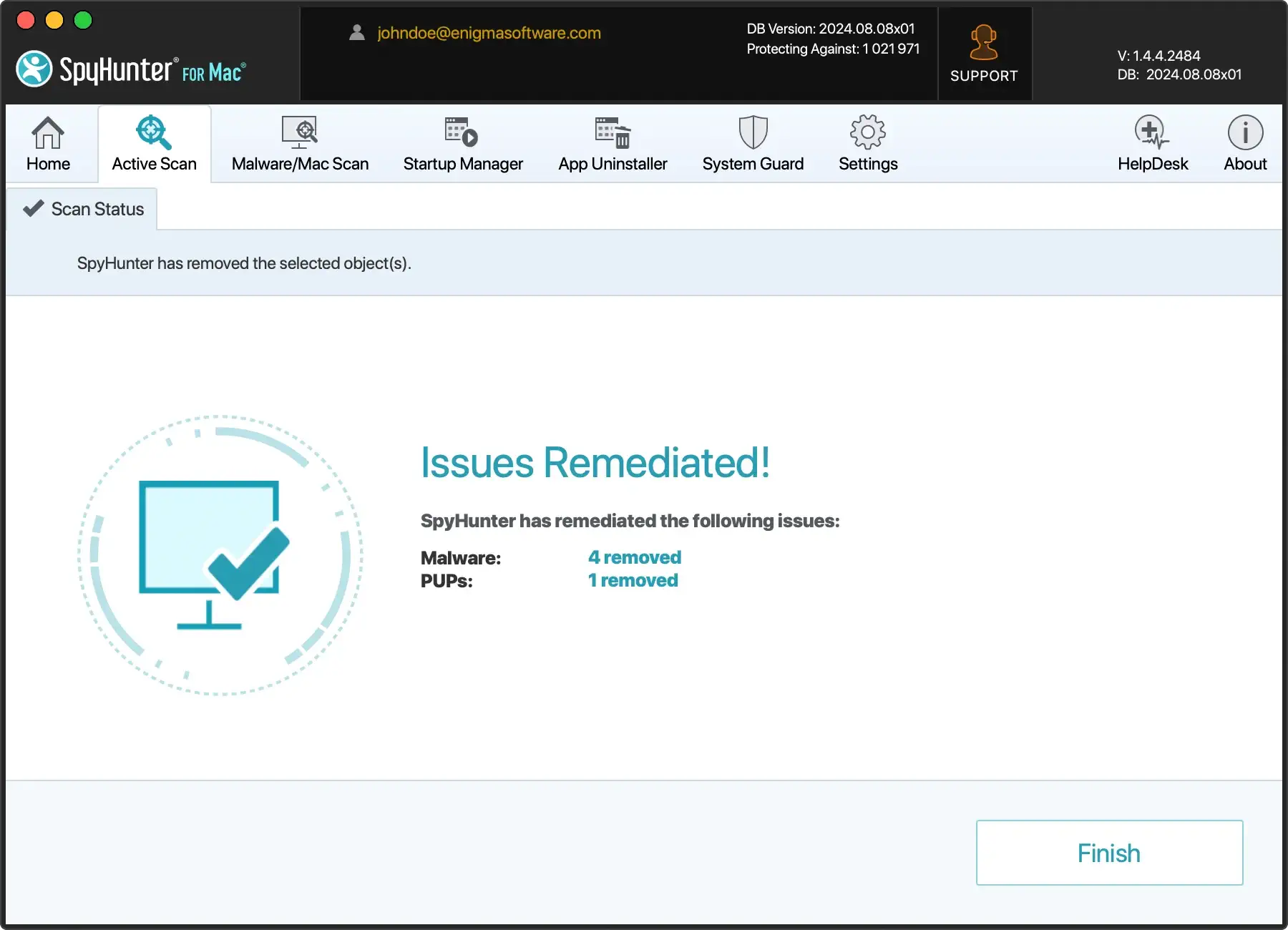
- Examine the scan results and allow SpyHunter to remove the detected adware and any other security threats.
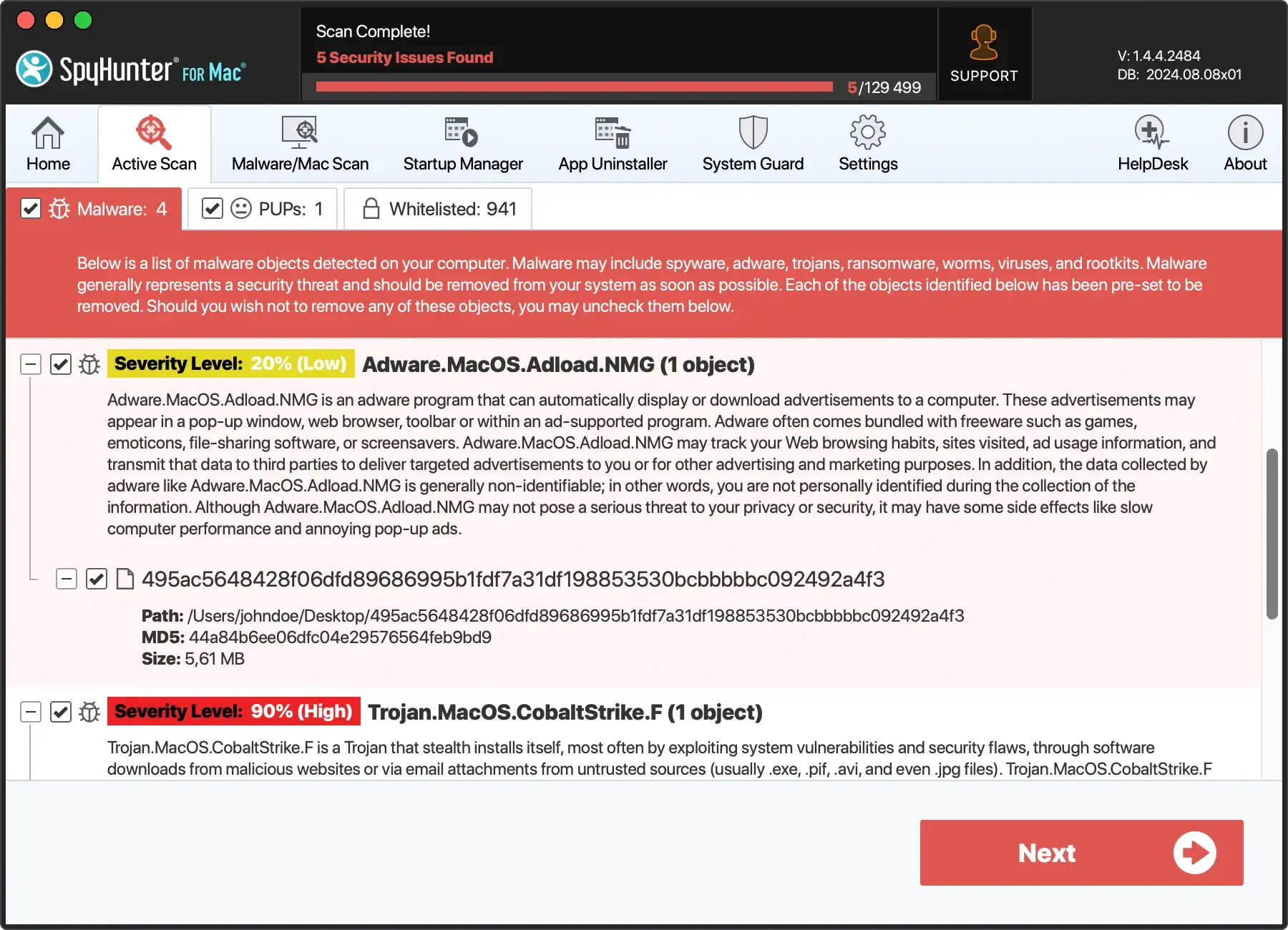
Using SpyHunter not only simplifies the removal process but also offers real-time protection to prevent future infections.
Preventing future adware infections: Tips and tricks
To guard against future adware infections, it’s crucial to engage in safe browsing and software installation habits.
Here are some practical steps you can take:
- Download software from reputable sources: Always ensure that the software you download comes from trustworthy sites or official vendor websites.
- Read user reviews: Before downloading or installing any software, take the time to read reviews and check ratings. These can provide insight into the application’s reliability and whether it includes unwanted extras.
- Opt for custom installation: Always choose the ‘Custom’ or ‘Advanced’ installation options. This allows you to oversee and deselect unwanted software that may be bundled with the program you are installing.
- Keep antivirus software updated: Utilize reliable antivirus software, like SpyHunter, to protect your computer from adware and other malware threats. Regular updates are crucial as they incorporate the latest fixes against new threats.
By adhering to these straightforward tips, you can significantly diminish the risk of adware infections and secure your digital space.
Adjust your browser settings for optimal security
Enhancing browser security is paramount in preventing unwanted adware and malware infections. Here are some ways to optimize your browser settings:
- Update your browser: Always keep your browser updated to the latest version. Browser updates often include security patches that protect against new threats.
- Enable popup blockers: Activate popup blockers to prevent unwanted ads and potentially malicious links from opening up automatically.
- Manage site permissions: Be selective about what websites can access and adjust permissions for locations, notifications, camera, and microphone accordingly.
- Review your extensions: Regularly monitor and remove unnecessary or unfamiliar browser extensions. Extensions can be gateways for adware and other malicious software.
Setting your browser to run under the highest level of security minimizes risks and is an essential step toward safer surfing.
The importance of regular software updates and patches
Keeping your software updated is not just about accessing new features; it’s a vital part of cybersecurity. Updates often fix vulnerabilities that could be exploited by malware to invade your system.
- Enable automatic updates: Most software offers an option to automate the update process, ensuring you are protected with the latest security patches without having to manually install them.
- Update all software regularly. This includes the operating system, applications, plugins, and any tool that connects to the Internet. Many attacks exploit outdated versions, so keeping everything current closes these security gaps.
- Use a reliable update tool: Tools like SpyHunter can help manage software vulnerabilities by not only removing existing threats but also by preventing future malware from exploiting outdated software.
Regular updates are a dependable line of defense against cyber threats, ensuring your systems remain robust against potential security breaches.
