

Remove AnalogInterface Adware from Your Mac (Ultimate Guide)

Before we dive in
Before we dive in, let's make sure you stay safe online. We created SpyHunter because your security matters to us.
Protect your computer today — download SpyHunter right here! Check out our top tips below to keep your computer safe and secure.

AnalogInterface is a type of adware causing trouble for Mac users. It sneaks into systems to show annoying ads and can risk your privacy.
In this article, we talk about what AnalogInterface is, how it gets into Macs, the signs that it’s there, and how it affects you.
We’ll also share how to spot and remove AnalogInterface and protect your Mac from this adware. Let’s dive in:
Understanding AnalogInterface adware
AnalogInterface adware represents a significant threat to Mac OS X.
It’s part of the AdLoad adware family, which means it’s just one of many harmful programs out there targeting Macs.
This sneaky software gets into systems quietly, getting past usual security without needing you to okay it. Once it’s in, it changes system and browser settings to flood you with annoying ads and risky content.
Its capability to affect major browsers, like Safari, Chrome, Firefox, and Opera, makes it a problem that needs to be dealt with quickly.
The risks of AnalogInterface on your system
AnalogInterface, though technically classified as adware, can potentially inflict severe damage on infected Mac systems.

Beyond the annoyance of pop-up ads and browser redirections, this malicious software poses severe risks to user privacy and data security.
AnalogInterface can expose users to identity theft and financial loss by tracking online activities and collecting personal information.
Its operation as a gateway for additional malware exacerbates the threat, emphasizing the urgent need for its removal to safeguard affected systems against further compromise.
AnalogInterface distribution methods
AnalogInterface sneaks into Mac systems using several cunning tactics:
- Deceptive Pop-Ups: Mimicking legitimate software updates or installations, these pop-ups trick users into downloading the adware.
- Software Bundling: AnalogInterface often comes hidden within the installation processes of free, seemingly harmless software.
- Fake Flash Player Installers: A common tactic that exploits trust in updates for widely used plugins to spread the adware.
Understanding these methods is key for Mac users to prevent accidental installation and safeguard their systems against AnalogInterface and similar adware threats.
Symptoms of AnalogInterface infection
If your Mac is infected with AnalogInterface adware, you might notice several telltale signs:
- Unexpected pop-up advertisements appear, often unrelated to the website you’re visiting.
- Random redirects to unfamiliar sites interrupt your web browsing sessions.
- The adware can consume system resources, leading to noticeable slowdowns in your Mac’s performance.
- New, unapproved extensions or toolbars are added to your browser without your consent.
Recognizing these symptoms early can help promptly address the infection and protect your Mac from further harm.
Remove AnalogInterface from Mac
Eliminating AnalogInterface from your Mac is crucial to prevent further privacy infringement and system threats.
Our comprehensive guide facilitates the removal process, ensuring a thorough system cleanup.
Step 1: Delete malicious configuration profiles
Mac configuration profiles can manage settings and preferences for your system and applications. Unfortunately, adware like AnalogInterface can exploit these profiles to maintain persistence and control over your device.
Removing any suspicious profiles is a crucial first step in eradicating the adware.
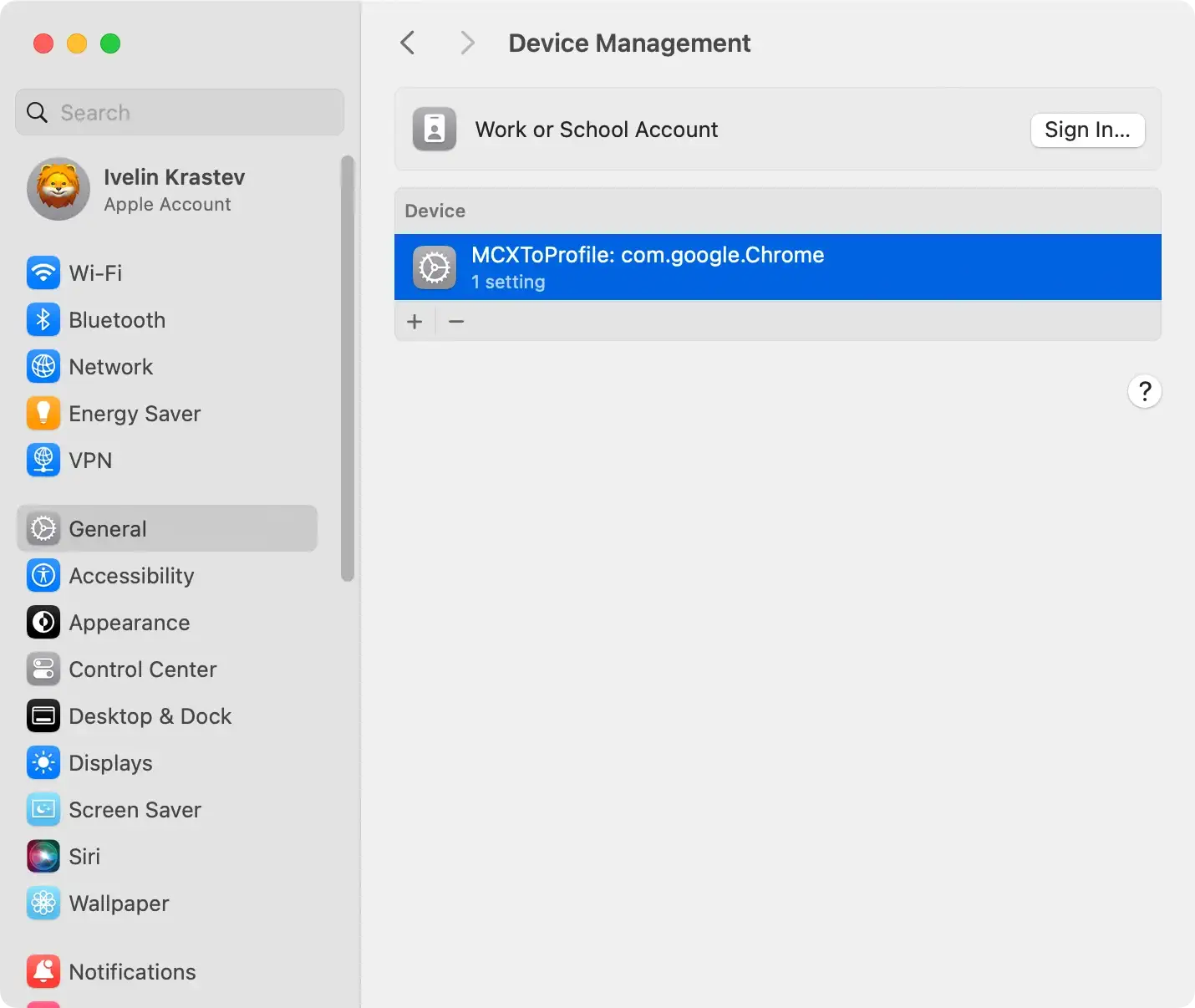
- Open System Preferences: Click on the Apple logo at the top left corner of your screen and select
System Preferences(namedSystem Settingson newer macOS versions). - Navigate to Profiles: If your Mac has any configuration profiles installed, you’ll see a
Profilesicon in the newly opened window. Note that this icon will not appear if there are no profiles installed. - Examine the Profiles: View all installed configuration profiles. Look for any profiles that you don’t recognize or that seem suspicious.
- Delete Malicious Profiles: Select the malicious or unknown profile and click the minus (-) button at the bottom of the list to remove it. You may be prompted to enter your administrator password to confirm the deletion.
- Repeat as Necessary: If there are multiple suspicious profiles, repeat the deletion process for each one.
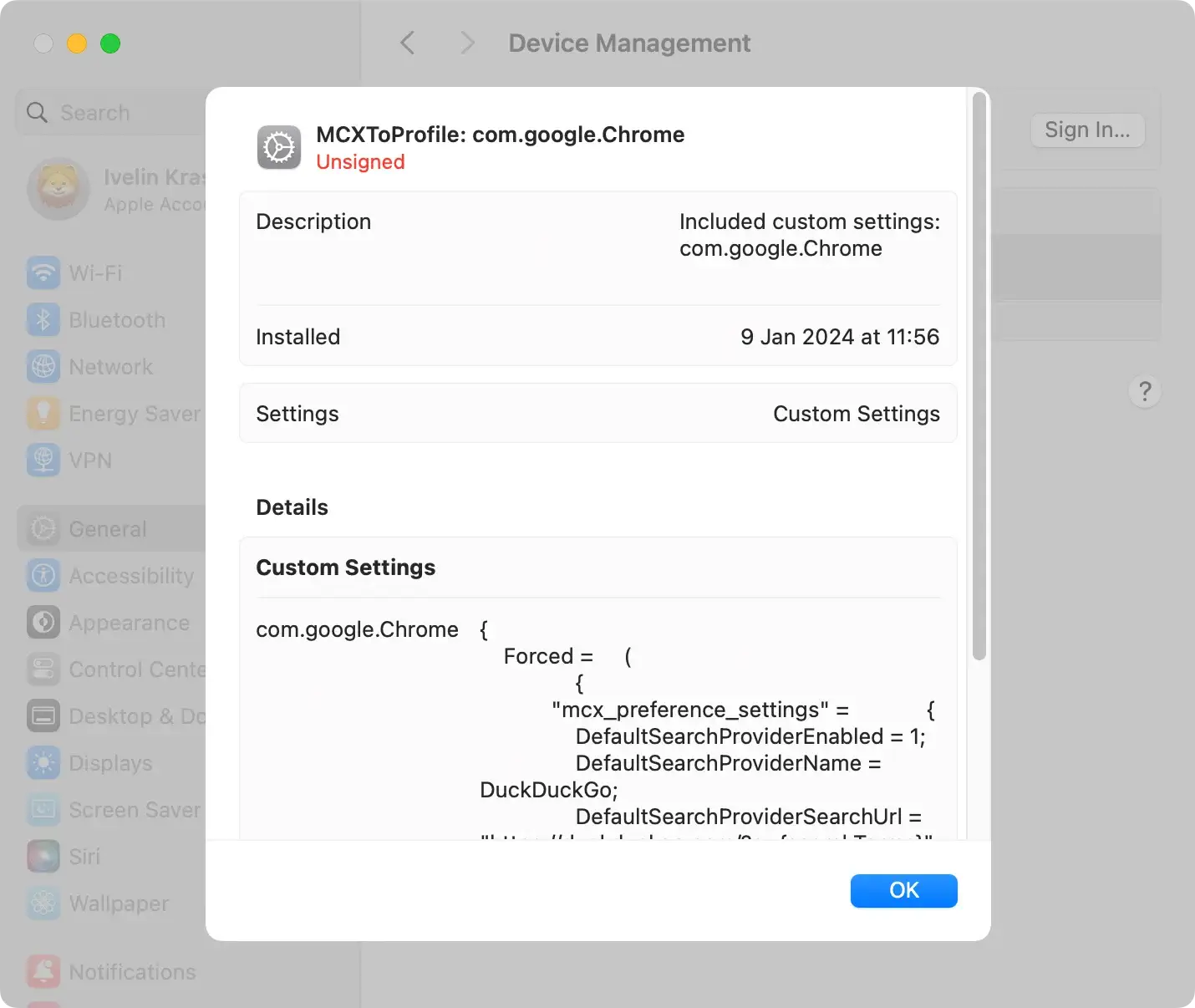
By removing malicious configuration profiles, you cut off one of the ways AnalogInterface adware manipulates your Mac’s behavior. Proceed with the subsequent removal steps to thoroughly cleanse your system of the adware.
Step 2: Remove AnalogInterface applications and related files
After dealing with malicious configuration profiles, the next essential step is identifying and removing any Mac applications associated with AnalogInterface adware.
These applications might be the source of unwanted ads and system performance issues.
- Click on the Finder icon in your Dock to start.
- In the Finder sidebar, click
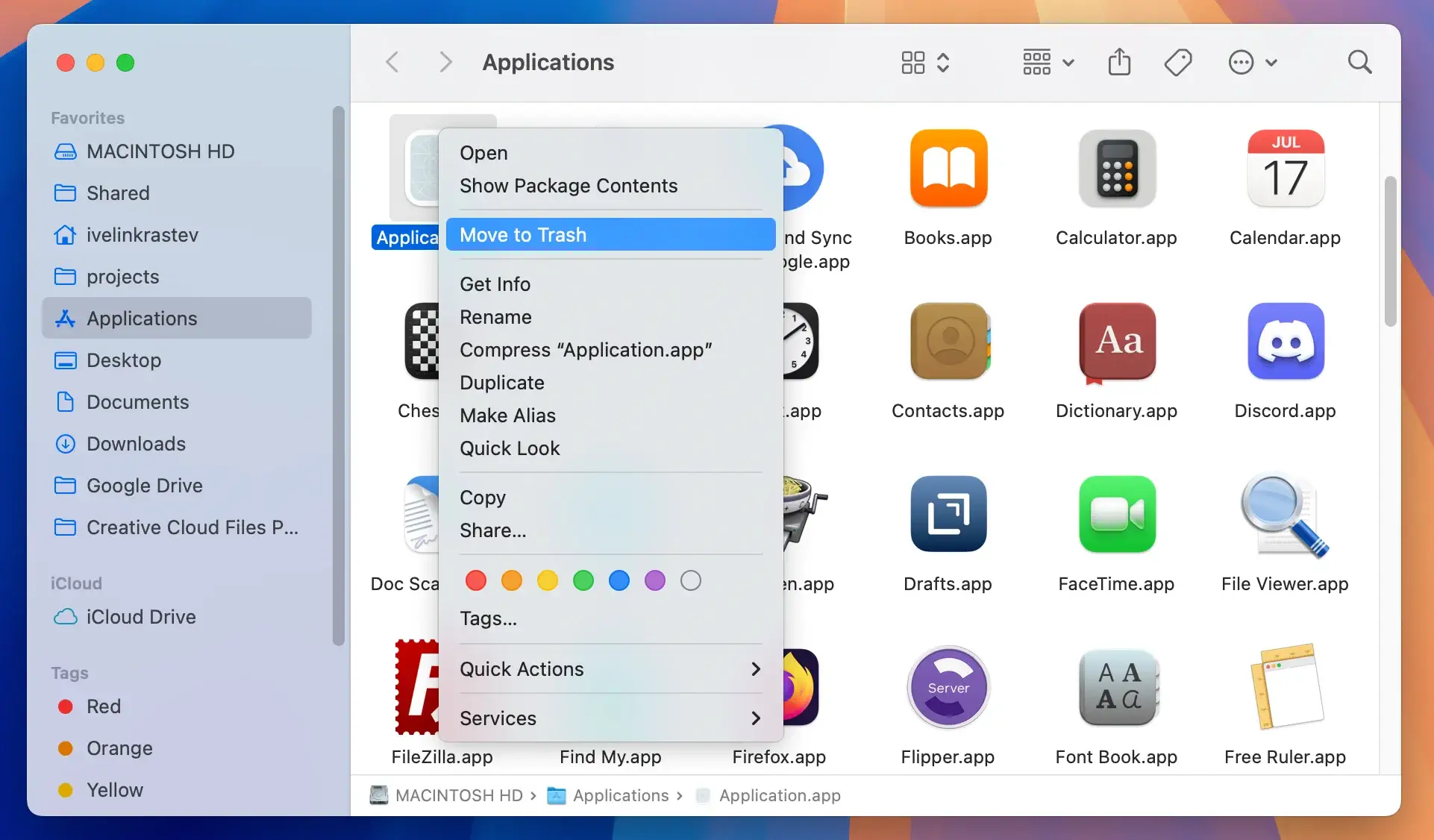
Applicationsto view all installed applications on your Mac. - Look through the list for applications you don’t recognize, didn’t install intentionally, or seem related to AnalogInterface. Adware often masquerades as legitimate software or tools.
- To remove an application, right-click (or Control-click) on the suspicious application and choose Move to Trash from the context menu. Alternatively, drag the application icon to the Trash in your Dock.
- After moving the unwanted applications, empty the Trash to remove the applications permanently. You might be asked to enter your administrator password.
Check for hidden adware components
After uninstalling the associated applications, deleting any files or folders created by AnalogInterface is crucial.
Some adware applications may leave behind support files or hidden components. Use Finder’s Go to Folder feature (Shift + Command + G) and check common locations for leftover files, such as:
~/Library/Application Support/~/Library/Preferences/~/Library/LaunchAgents//Library/StartupItems//Library/Application Support//Library/LaunchDaemons/~/Downloads/
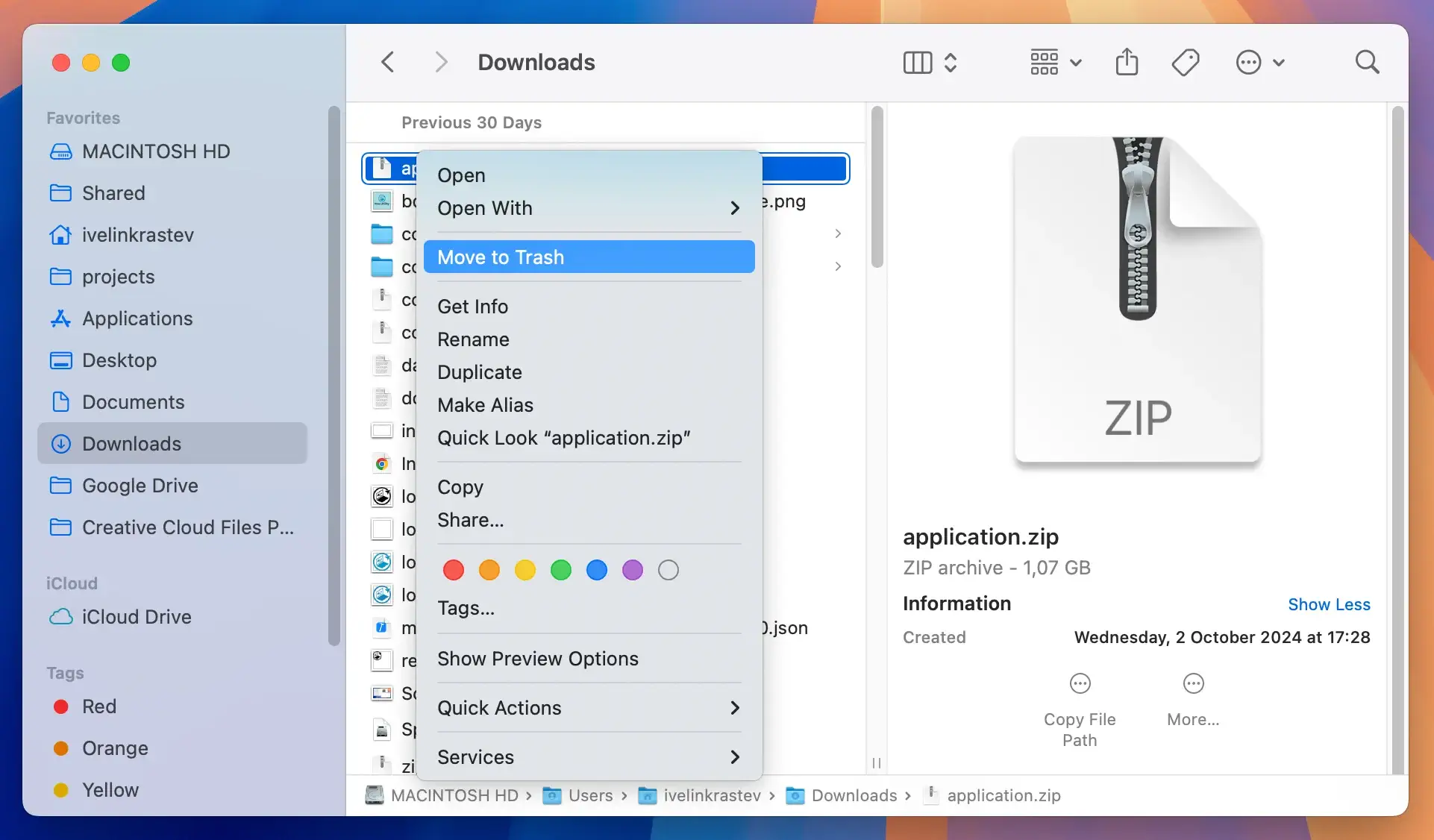
Delete any files and folders linked to AnalogInterface. Again, don’t forget to empty your Trash to ensure these files are permanently removed.
Important reminder
Removing applications and their components can sometimes be tricky, and there’s a risk of accidentally deleting something important to your Mac.
This is where SpyHunter’s App Uninstaller feature comes into play. SpyHunter for Mac makes identifying and removing unwanted applications and their leftovers easier, reducing the risk of harming your system.
Download SpyHunter for free here to safely and efficiently clean up applications associated with AnalogInterface without worrying about leaving harmful residues behind.
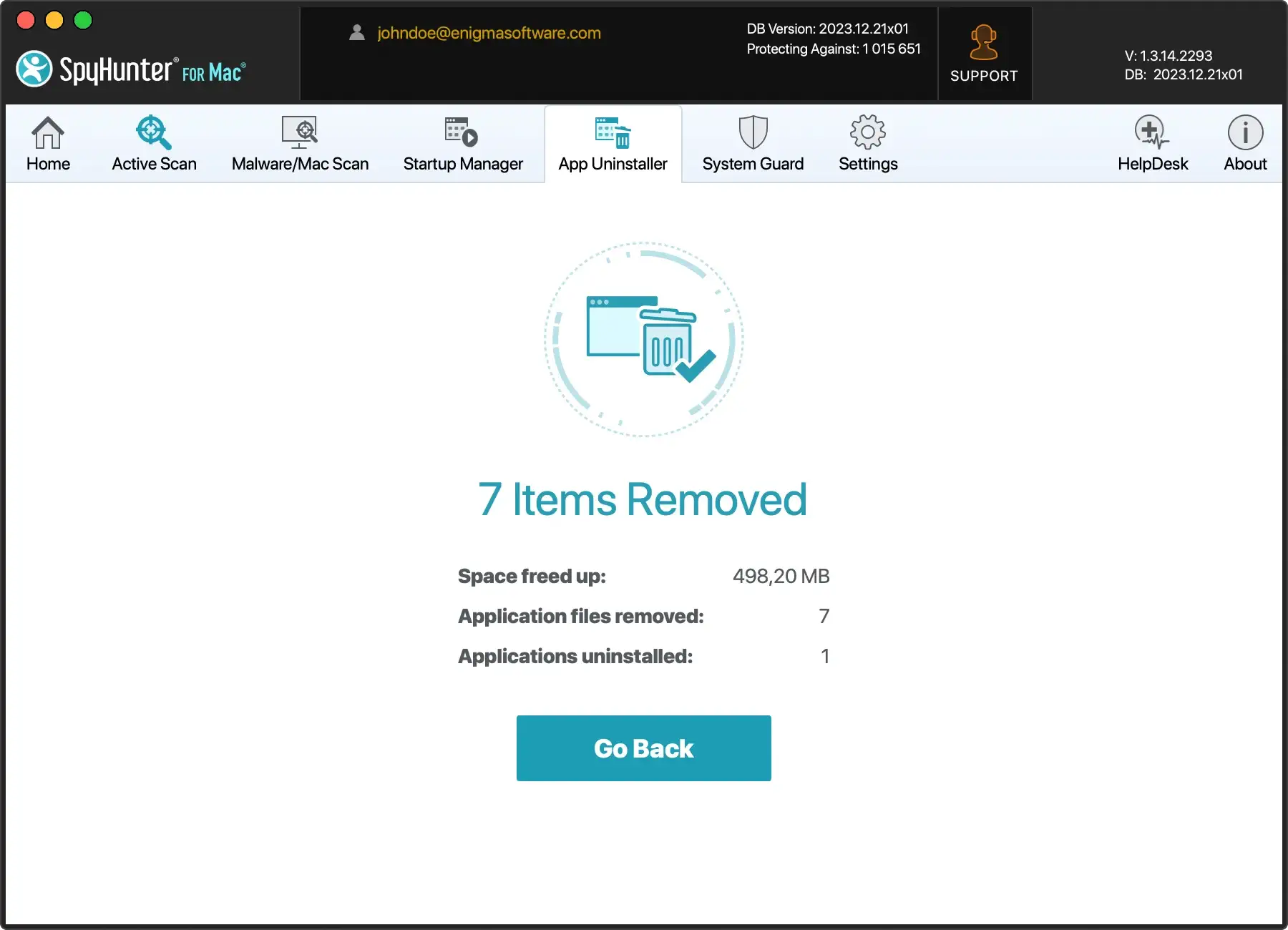
SpyHunter’s App Uninstaller feature ensures that all unwanted application components are identified and removed, offering a safer and more thorough cleaning process.
Step 3: Clean your browsers of AnalogInterface extensions
AnalogInterface can also install unwanted extensions on your browsers. These extensions can cause unwanted ads and redirects, compromising your browsing experience.
Instructions for Safari
- Open Safari, go to
Preferencessection, and then to theExtensionstab. - Look for any extensions related to AnalogInterface or that seem suspicious and uninstall them.
- Consider resetting Safari to its default settings to ensure all changes made by AnalogInterface are reverted.
Instructions for Google Chrome
- Launch Chrome and access
More Toolsfrom the Chrome menu, then locate the extensions settings. - Identify and remove any extensions associated with AnalogInterface or those you do not recognize.
- Reset Google Chrome settings to default as a final step to remove any lurking traces of AnalogInterface.
Instructions for Mozilla Firefox
- Open Firefox and access
Add-onsthrough the open menu. - Inspect and remove AnalogInterface-related extensions.
- Reset Mozilla Firefox settings to revert any modifications made by the adware.
Step 4: Perform a complete malware scan for complete removal
After manually removing configuration profiles and associated applications, a comprehensive malware scan is crucial to remove AnalogInterface and any other hidden threats.
This step is vital in catching any remnants of the adware or additional malware that might have infiltrated your system alongside AnalogInterface.
Using SpyHunter for Mac for a thorough malware scan
SpyHunter for Mac is designed to provide an extensive and detailed scan of your system, identifying and removing any traces of malware, adware, and potentially unwanted programs (PUPs) that could compromise your Mac’s performance and security.
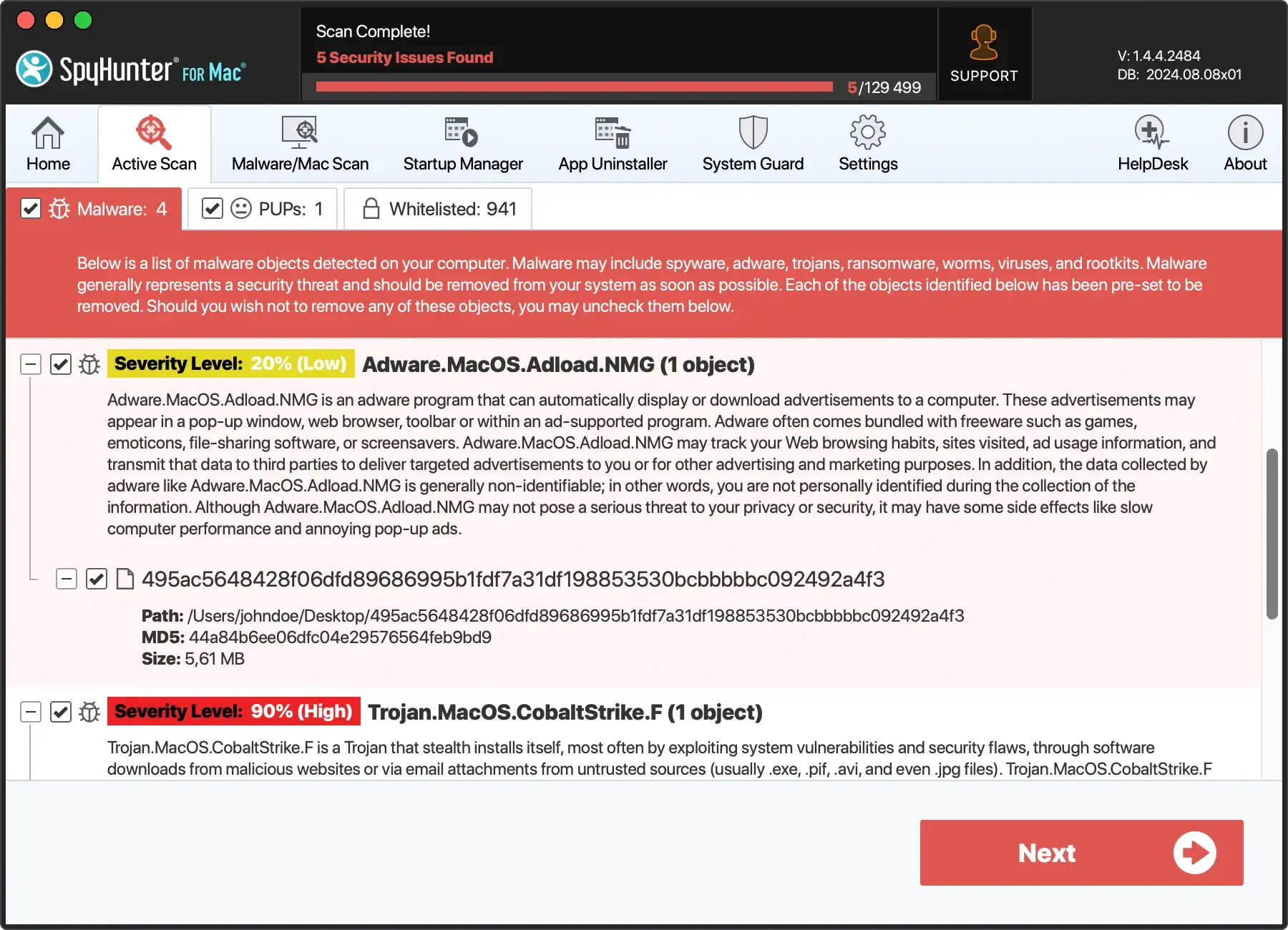
How to use SpyHunter for Mac:
- Download SpyHunter from here to get the latest app version.
- Open the installer and follow the on-screen instructions to install SpyHunter on your Mac.
- Once installed, launch SpyHunter for Mac. Navigate to the scanner section and initiate a full system scan. SpyHunter will search your system for signs of AnalogInterface and other malicious entities.
- SpyHunter will display a list of detected threats after the scan. Review these findings and use SpyHunter to remove them from your system.
- Consider setting up regular scans with SpyHunter for Mac to maintain ongoing protection. Regular scanning can help detect and remove new threats before they can cause significant damage.
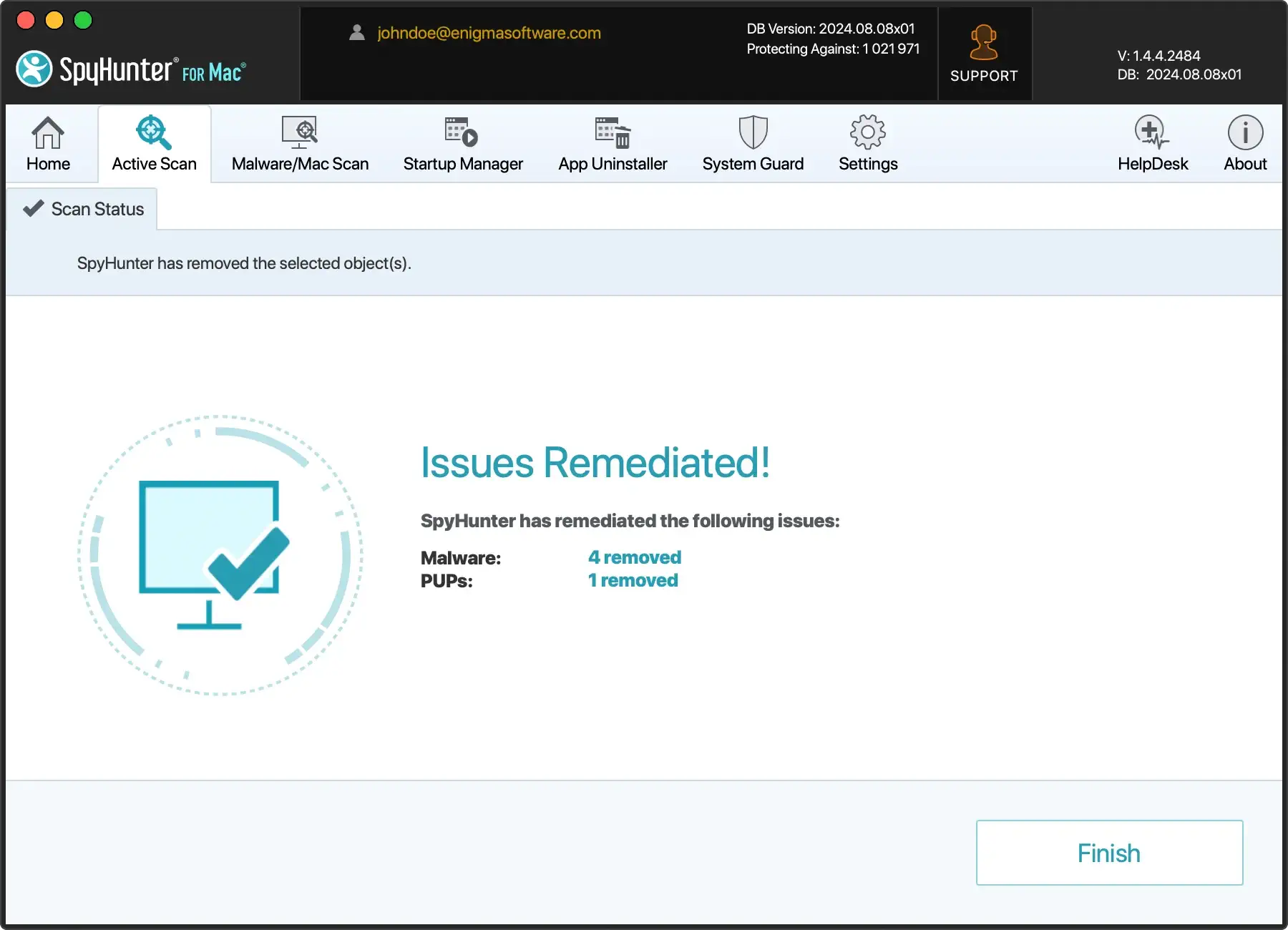
Completing a thorough malware scan with SpyHunter for Mac helps remove AnalogInterface and bolsters your Mac’s defenses against future malware incursions.
SpyHunter’s comprehensive scanning and removal capabilities make it a reliable tool in your cybersecurity arsenal, ensuring your Mac remains secure and performs optimally.
Maintaining a secure Mac after removing AnalogInterface
After removing AnalogInterface adware from your Mac, adopting measures that prevent future infections is vital.
These practices are not just limited to technical adjustments but also include developing a cautious mindset toward software installation and internet browsing.
Best security practices to prevent future infections
- Keep Software Updated: Regularly update your macOS and all installed software. Software developers frequently release updates that patch vulnerabilities, reducing the risk of adware and malware infections.
- Secure Browsing Habits: Exercise caution when clicking links or downloading files from the internet. Verify the authenticity of websites and avoid downloading software from third-party sites or file-sharing platforms.
- Use of Strong Passwords: Implement solid and unique passwords for your accounts and change them occasionally. Consider using a password manager to keep track of your passwords securely.
- Network Security: Secure your Wi-Fi with a strong password and avoid using public Wi-Fi for transactions. If necessary, use a VPN for additional security.
- Enable Firewall: Ensure that your Mac’s built-in firewall is activated. It can help to block incoming connections from unknown or suspicious sources.
Recommended anti-adware software for ongoing protection
For ongoing protection against adware like AnalogInterface, SpyHunter for Mac offers a reliable defense with its precise scanning, removal capabilities, and proactive System Guards.
This software ensures your Mac stays safe from both current and future threats by:
- Efficiently detect and remove adware with its advanced scanning technology.
- Blocking threats in real-time through System Guards, preventing malware from executing.
- Regular updates keep it ready to combat new adware variants.
Simple to use yet powerful in action, SpyHunter for Mac is ideal for keeping your system secure without needing deep technical know-how.
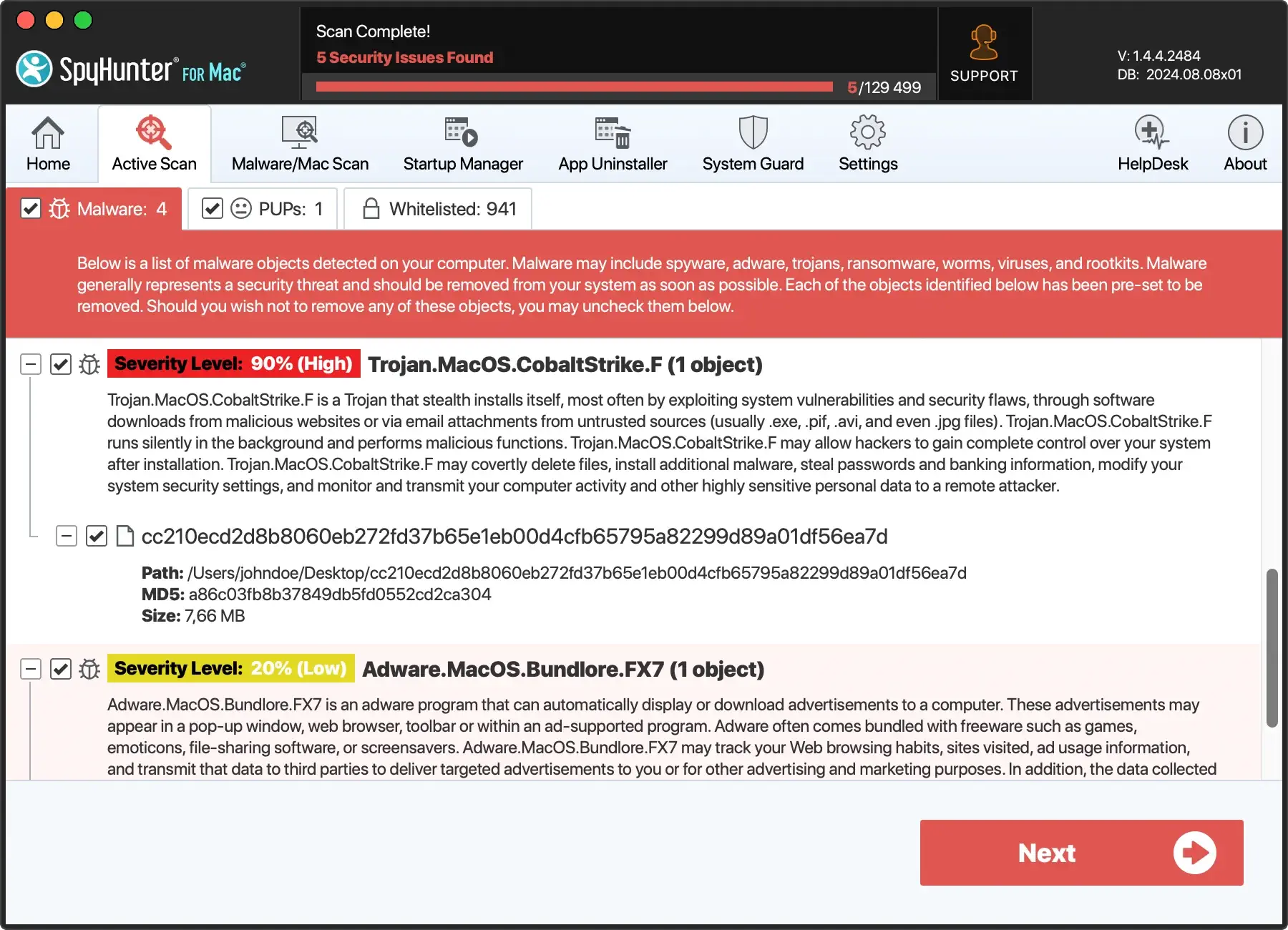
Download SpyHunter today and ensure your Mac’s safety against adware. Enjoy peace of mind with comprehensive protection tailored to the needs of Mac users.
