

Remove Extreme Security Adblocker (Instructions Included)

Before we dive in
Before we dive in, let's make sure you stay safe online. We created SpyHunter because your security matters to us.
Protect your computer today — download SpyHunter right here! Check out our top tips below to keep your computer safe and secure.

Extreme Security Adblocker is a browser extension that claims to enhance browsing by blocking ads but has malicious intents. It disrupts your online experience with unwanted ads that compromise your browsing.
This guide offers practical steps to remove Extreme Security Adblocker, helping you restore secure and smooth browsing. Moving forward:
What is Extreme Security Adblocker?
The Extreme Security Adblocker isn’t your standard adblocking extension. Instead, it’s a browser hijacker that infects your computer system by forcing redirects through unsolicited search engines, injecting irrelevant ads into the websites you visit, and tampering with your browser’s functionality.
How is Extreme Security Adblocker installed?
The Extreme Security Adblocker extension often appears on a user’s computer without explicit knowledge or consent.
This is usually due to deceptive promotional techniques like bundling with other software or through misleading advertisements.
The user is often led to believe they are installing a beneficial program while it inflicts potentially unwanted programs (PUP) or, in this case, a malicious browser hijacker.
Symptoms of its presence
Identifying the presence of the Extreme Security Adblocker extension may be challenging since most of the changes it makes to your browser are relatively covert.
However, there are telltale signs, including:
- Unexpected Ads: Sudden and intrusive advertisements may appear in unexpected places across your browser, disrupting your regular browsing experience.
- Unwanted Redirects: Users might experience unexpected redirects to unrelated websites, a typical behavior exhibited by the Extreme Security Adblocker extension.
- Changes in Default Search Engine: The extension may surreptitiously alter your default search engine, leading to unexpected search results and potentially compromising your browsing privacy.
- Altered Browser Settings: Although the changes made by the Extreme Security Adblocker extension are subtle, observant users may notice alterations in their browser settings, such as modifications to homepage preferences or the appearance of new browser extensions.
Identifying these symptoms promptly is essential to detect the presence of the extension and take appropriate measures to address its impact on your browsing environment.
How does Extreme Security Adblocker get promoted?
The Extreme Security Adblocker extension is commonly promoted through advertisements that appear innocent or beneficial.
These ads can pop up on less reputable websites and easily mislead unsuspecting users into installing the harmful extension.
This process is part of a larger strategy to generate advertising revenue for those distributing the Extreme Security Adblocker.
Identifying unwanted ad behavior by Extreme Security Adblocker
The presence of the Extreme Security Adblocker extension often manifests through distinct types of ad appearances that can significantly disrupt the everyday browsing experience.
Unexpected ad interruptions
One common occurrence is the sudden appearance of interstitial ads, which can disrupt the smooth transition between web pages or overlay content being viewed, causing interruptions.
Moreover, users might notice banner ads appearing unexpectedly on various website locations, deviating from the typical layout.
The unpredictable placement of these ads can be flustering, impacting the overall visual aesthetics of the website.
Invasive pop-up ads
Another type of ad manifestation is the invasive pop-up ads. These ads tend to emerge abruptly and can be challenging to close, potentially leading to accidental clicks.
The aggressive nature of these pop-ups further contributes to a disruptive and frustrating browsing experience.
Overlay ads that block content
Additionally, users may observe the presence of overlay ads that obscure parts of the webpage content.
These overlays can hinder the user’s viewing and interaction with the intended content, creating a less-than-ideal browsing environment.
Recognizing these different ad appearances provides users with insights into the potential impact of the Extreme Security Adblocker extension on their browsing sessions.
Awareness of these manifestations empowers users to promptly identify and address the extension, ensuring a more seamless and enjoyable online experience.
Remove Extreme Security Adblocker from Mac
If you are a Mac user, you must follow a series of steps to remove Extreme Security Adblocker.
That involves restoring your browser settings, using SpyHunter to exterminate unwanted programs, scanning for harmful extensions, and getting rid of persistent spam notifications from your browsers.
Eliminate malicious configuration profiles
To eliminate malicious config profiles from your Mac, start by accessing the System Preferences (named System Settings on newer macOS versions) from the Apple menu at the top-left corner of your screen.
In the opened window, search for the Profiles icon. If this icon is present, it indicates that configuration profiles are installed on your Mac.
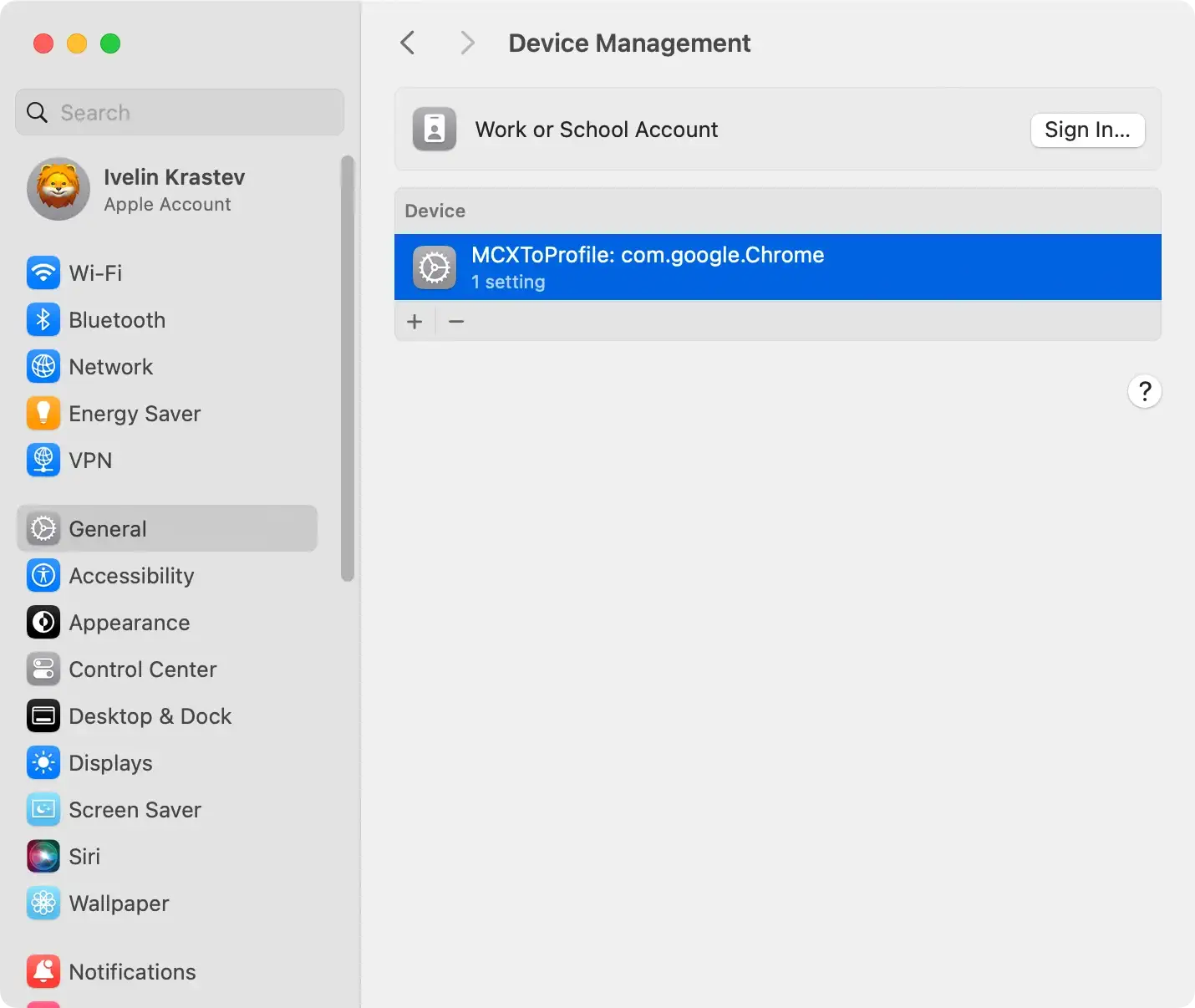
Carefully review each profile, paying close attention to the names and the associated organizations, to identify any that appear suspicious or you don’t recall installing.
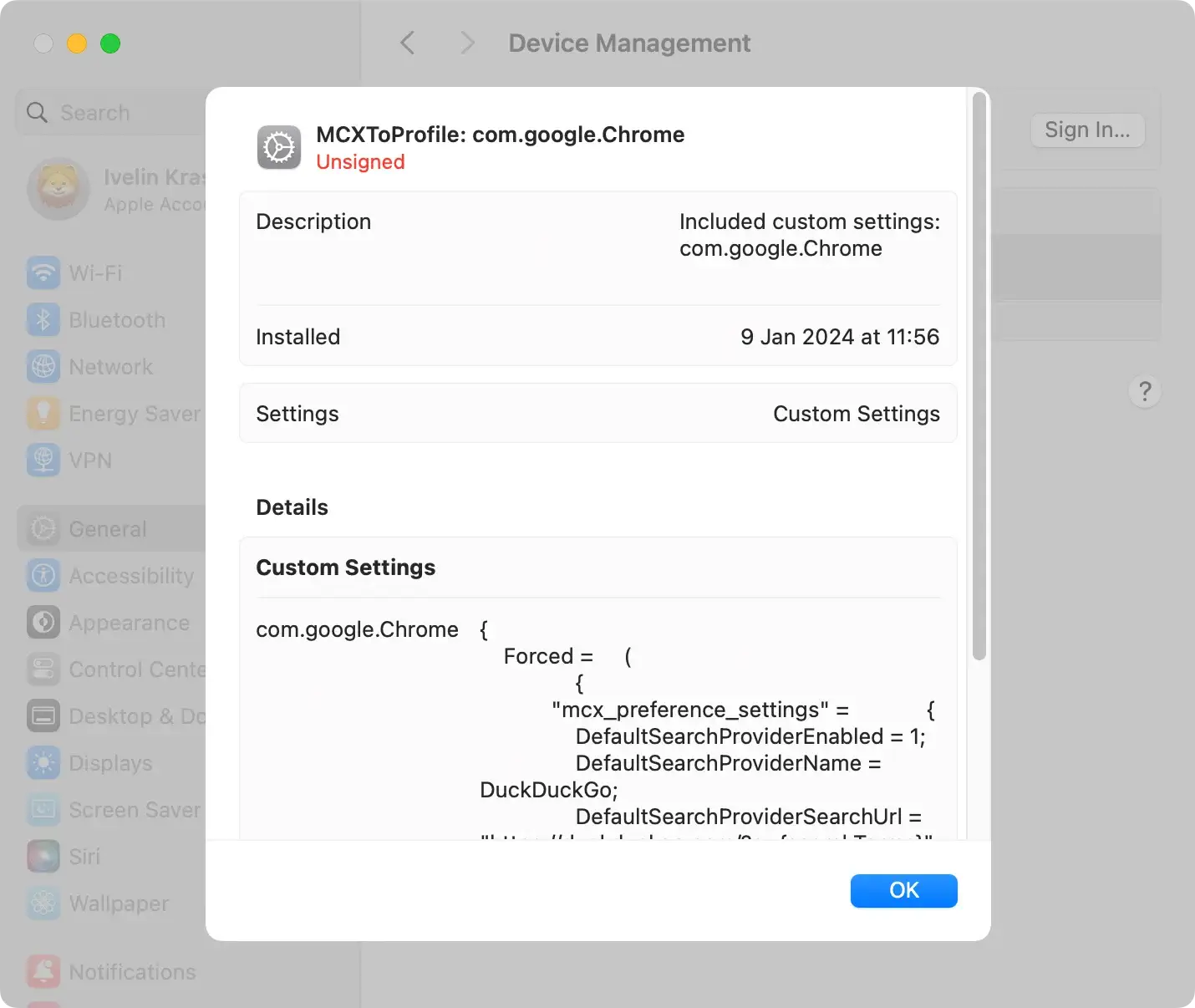
When you find a profile you wish to remove, select it and click the “Minus” (-) button, typically located at the bottom of the list. You’ll be asked to confirm the removal of the selected profile; proceed with the confirmation.
After removing the suspicious profiles, it’s advisable to restart your Mac. This ensures all changes are fully implemented and the system functions as expected without the influence of the removed profiles.
Use SpyHunter for Mac to remove Extreme Security Adblocker
SpyHunter is a well-known security tool for Mac users. It effectively detects and removes unwanted software or programs, including those as malicious as the Extreme Security Adblocker.
A comprehensive scan and removal by SpyHunter can help restore your Mac to a safer state. Here are the steps to help you download, install, and run a scan with SpyHunter:
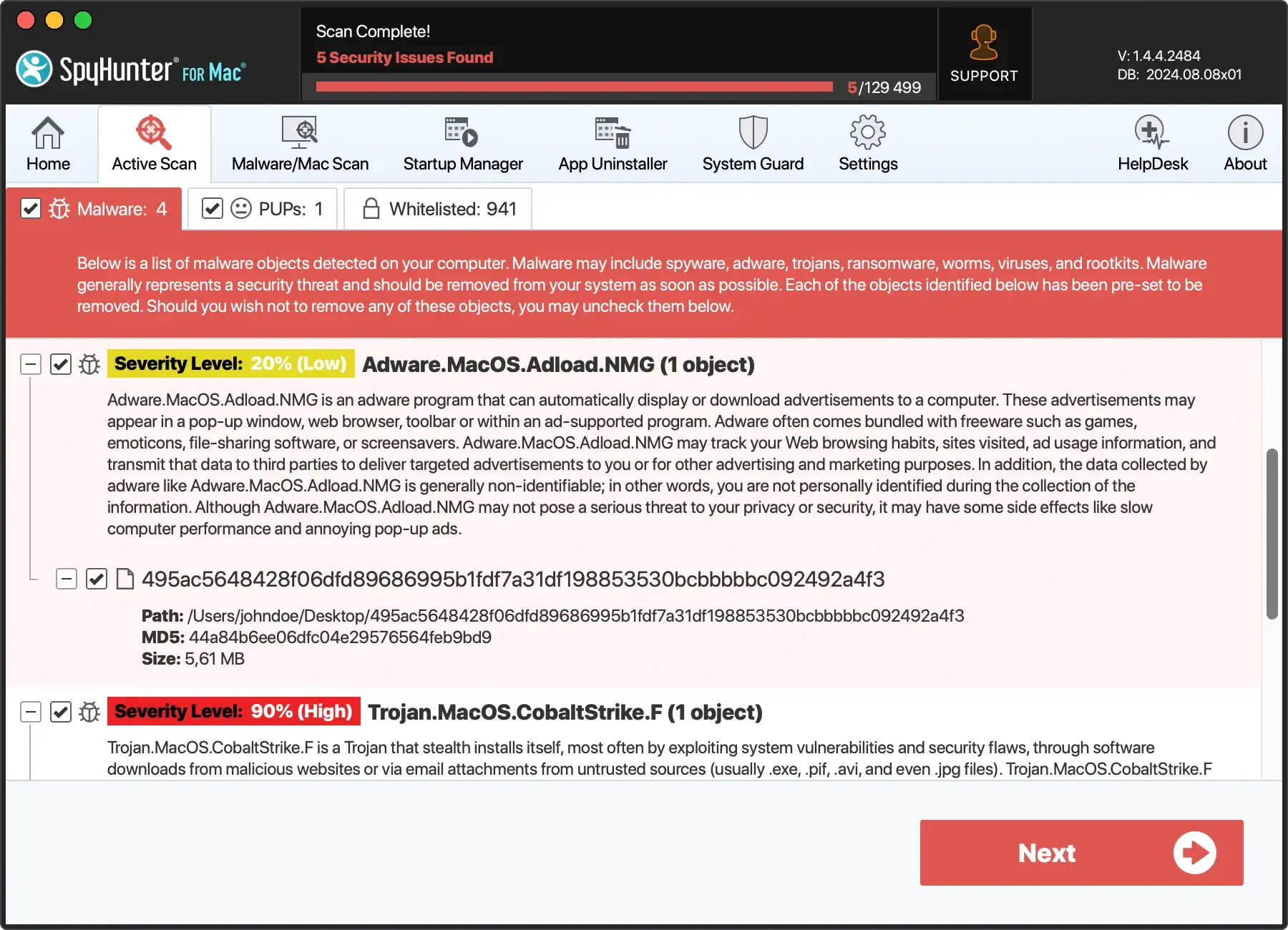
- Download SpyHunter for free here and follow the installation instructions provided by the SpyHunter Installer.
- Once installed, the app will start a scan to detect any malware or potentially unwanted programs on your Mac.
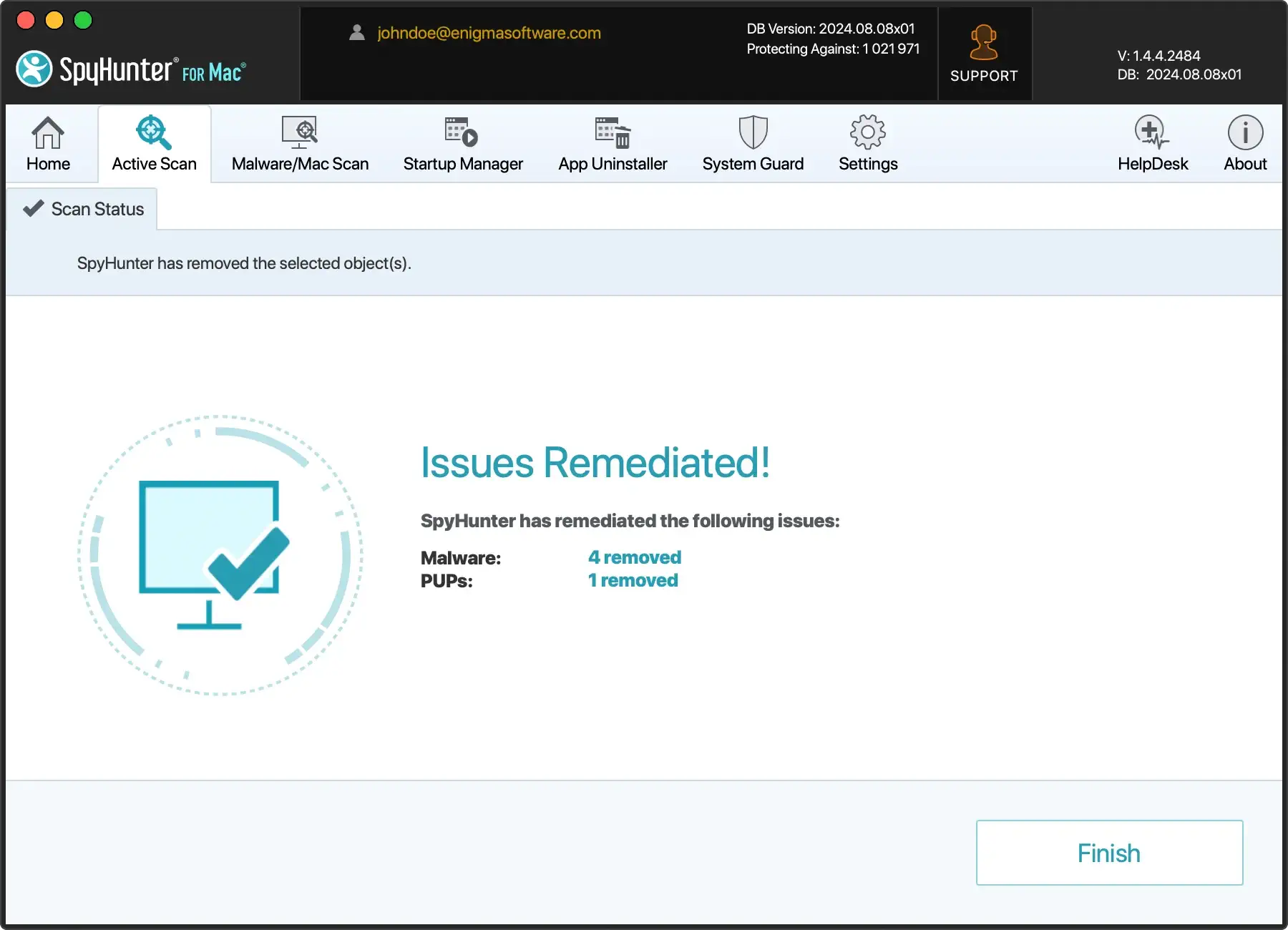
- Upon completion of the scan, SpyHunter will present a list of detected threats. Review this list and authorize SpyHunter to remove the identified malware, effectively cleaning your operating system.
Remove Extreme Security Adblocker from Windows
Getting rid of the Extreme Security Adblocker extension on a Windows system requires a precise approach that primarily involves restoring browser settings and employing dedicated security tools like SpyHunter 5.
Use SpyHunter 5 to remove unwanted programs
SpyHunter 5 is a powerful security tool that can detect and quarantine malicious software protecting your PC.
It can scan your system to identify potentially harmful programs or extensions, including the Extreme Security Adblocker, and subsequently eliminate them.
Remove Extreme Security Adblocker from your browsers
Browser hijackers like Extreme Security Adblocker can be persistent, affecting multiple aspects of your browsing experience. Here’s a comprehensive guide on resetting settings, removing malicious extensions, and tackling spam notifications across popular browsers.
Note: For OS-specific instructions, the steps may vary slightly.
Reset browser settings
Google Chrome:
- Navigate to the Chrome menu (three dots in the top-right corner).
- Select
Settingsand thenAdvanced. - Click
Restore settings to their original defaults. - Confirm the action to reset Chrome.
Mozilla Firefox:
- Click on
Help, thenTroubleshooting Information. - Select
Refresh Firefoxto reset the Firefox settings. - Confirm the action to initiate the refresh of the browser.
Internet Explorer:
- Open
Internet Optionsfrom the gear icon. - Go to the
Advancedtab and clickReset. - Follow the prompts to reset Internet Explorer.
Microsoft Edge:
- Go to
Settingsand chooseRestore settings to their original valuesunderReset Settings. - Confirm the action to reset Microsoft Edge.
Remove malicious extensions
After resetting browser settings, thoroughly inspect and remove any suspicious extensions:
Google Chrome:
- Click on the three dots, go to
More tools, and selectExtensions. - Remove any unfamiliar or questionable extensions.
Mozilla Firefox:
- Open the menu and choose
Add-ons. - Navigate to the
ExtensionsorPluginstab and remove unwanted entries.
Internet Explorer:
- Go to
Manage add-onsand disable or remove any unfamiliar extensions.
Microsoft Edge:
- Access the extensions menu and remove unwanted entries.
Manage spam notifications
If you’re dealing with persistent spam notifications, follow these steps:
Safari:
- Open Safari and go to browser preferences.
- Open the notifications tab.
- Manage or block notifications from suspicious sites.
Google Chrome:
- Access Chrome’s settings and go to the privacy and security section.
- Open the notifications section.
- Block notifications from unwanted sites.
Mozilla Firefox:
- Open the browser preferences and go to
Privacy & Security. - Scroll down to
Permissionsand clickSettings, followed byNotifications. - Block notifications from undesirable sites.
By following these steps, you can regain control of your browser settings and eliminate the impact of the Extreme Security Adblocker hijacker. Regularly monitor your browser settings and extensions to prevent future intrusions.
How to avoid Extreme Security Adblocker?
In the ever-evolving landscape of cyber threats, proactive measures are crucial for maintaining online safety and protecting your devices.
Here are essential practices to enhance your cybersecurity and deter potential threats like the Extreme Security Adblocker extension:
Use robust antivirus software like SpyHunter
Adopting a reliable antivirus solution is paramount in fortifying your cybersecurity defenses.
SpyHunter, available for Mac and Windows users (SpyHunter 5 for Windows), offers advanced features designed to combat a spectrum of cyber threats effectively.
Its cutting-edge detection algorithms and real-time scanning capabilities provide a robust defense against malware. Download SpyHunter and witness its strength for yourself.
Keep software and operating systems up-to-date
Regular updates play a pivotal role in maintaining the security posture of your device. They ensure that any identified vulnerabilities are promptly patched, reducing the risk of exploitation by malware or hackers.
Regularly install updates for your operating system and applications to enhance the overall resilience of your system.
Exercise caution during program installations
Maintain a vigilant approach when installing new programs by carefully reviewing installation screens and license agreements.
This practice helps you identify and prevent the accidental installation of additional software bundled with the primary program, reducing the risk of unwanted or potentially harmful applications.
Install an ad-blocker
Ad-blockers are a defense against disruptive ads and potential threats that may evade antivirus software.
Consider installing a reputable ad-blocker to enhance your overall online security.
Use strong and unique passwords
Enhance the security of your accounts by using strong and unique passwords.
Avoid easily guessable information and opt for a combination of letters, numbers, and symbols.
Additionally, enable two-factor authentication (2FA) whenever possible to add an extra layer of security to your accounts.
Back up your data
Protect your valuable data from malware attacks by establishing a regular backup routine. Confirm the integrity of your backups and store them securely.
Avoid connecting backup drives to potentially infected computers, ensuring a reliable recovery option in case of a security incident.
Exercise caution with unknown links
Mitigate the risk of malware infection by refraining from clicking links or downloading attachments from unknown sources.
Verify the authenticity of the source before taking any action, reducing the likelihood of falling victim to phishing attempts or downloading disguised malware.
Avoid using pirated software
Maintain a strong cybersecurity stance by avoiding pirated software, often distributed through peer-to-peer (P2P) file-sharing platforms.
Removing such software reduces the risk of malware infections, safeguards your data, and adheres to legal and ethical guidelines.
