

Remove Scenic Tab From Your Mac (Step-By-Step Guide)

Before we dive in
Before we dive in, let's make sure you stay safe online. We created SpyHunter because your security matters to us.
Protect your computer today — download SpyHunter right here! Check out our top tips below to keep your computer safe and secure.

Scenic Tab functions as a browser extension, altering your browser’s homepage and the page displayed upon clicking the New Tab button.
If you need to revert these changes and remove Scenic Tab from your Mac, follow the subsequent steps and restore your browser settings seamlessly.
What is Scenic Tab?
Scenic Tab is a browser extension that modifies your browser’s settings upon installation, notably changing your default homepage and new tab page to its own.
Essentially, whenever you open your web browser or a new tab, you’ll find yourself landing on Scenic Tab’s page.
It presents as a tool that provides users with a search form and beautiful background wallpapers on their new tab page to enhance their browsing experience.
Symptoms of Scenic Tab browser hijacker installation
Several changes may occur when the Scenic Tab extension is installed on a computer, which can be noticeable.
The most common signs include the alteration of the browser’s homepage to Scenic Tab and redirecting your browser’s new tab page to Scenic Tab.
Additionally, the physical presence of the “Scenic Tab” browser extension on your computer may also clue you into its installation.
Reasons for browser redirection to Scenic Tab
If your web browsing is regularly diverted to the Scenic Tab new tab page, it’s likely because the Scenic Tab extension has been installed on your system.
This type of software is often disseminated through ads or is coupled with other software, which can lead to cases where users unknowingly install these extensions. This habit of the software can result in users being unsure of how the software was installed on their system.
If you’re uncertain about how this extension got installed, cannot uninstall it, or fear that other unwelcome programs or extensions may be installed on your computer, consult this comprehensive removal guide to safely and adequately remove Scenic Tab.
How to remove Scenic Tab (detailed steps)
Removing malware like Scenic Tab might seem daunting due to the numerous steps and programs utilized.
However, these instructions are written to be clear, comprehensive, and easy to follow, allowing anyone to remove this malware. Please perform all the steps in the correct sequence, and if you ever have doubts or questions, don’t hesitate to ask for assistance.
Eliminate malicious configuration profiles
- Access System Settings: Open the Apple menu in the top-left corner of your screen and select
System Settings(namedSystem Preferenceson older macOS versions). - Locate Profiles: Look for the
Profilesicon in the System Settings window. If you see it, click on it. No configuration profiles are installed if there’s noProfilesicon.
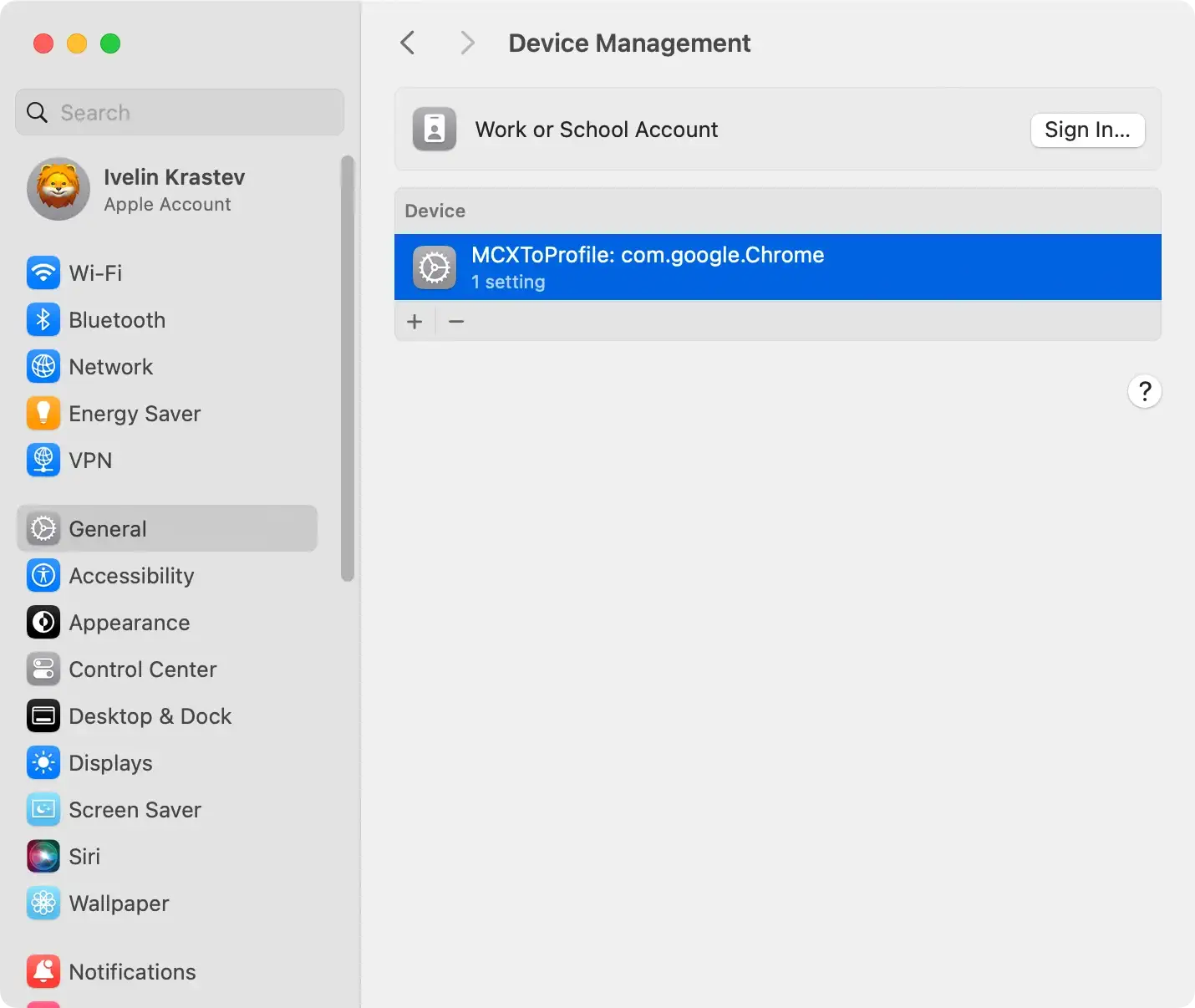
- Identify suspicious profiles: Review the list of profiles to pinpoint any that seem suspicious or that you didn’t intentionally install. Please pay attention to the profile names and the organizations associated with them.
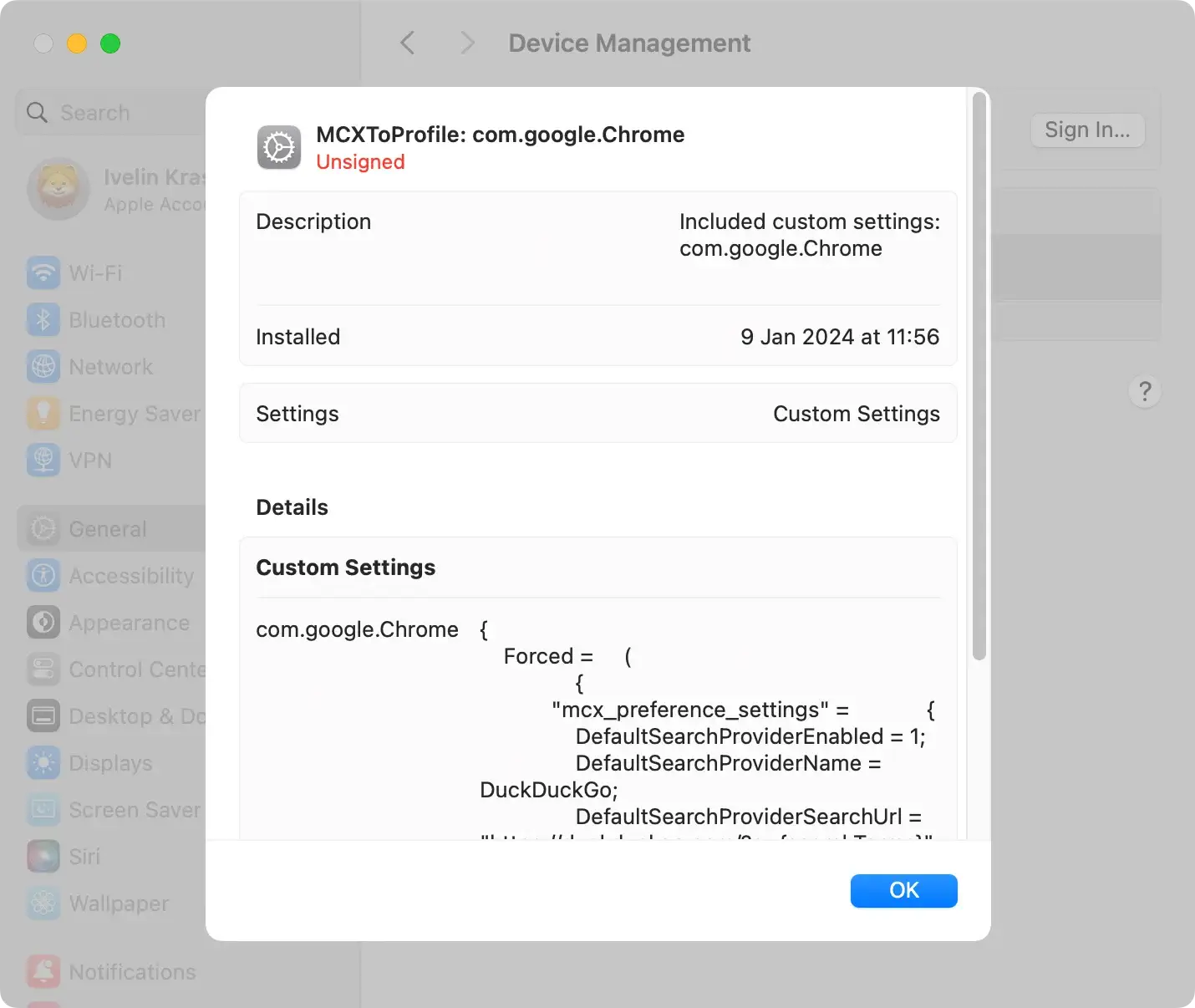
- Remove suspicious profiles: To remove a profile, select it and click the “Minus” (-) button, usually located at the bottom of the profiles list.
- Confirm the removal: A confirmation dialog will appear. Confirm that you want to remove the selected profile.
- Restart your Mac: After removing the profiles, it’s a good practice to restart your Mac to ensure the changes take effect.
Additional Tips
- Regularly check your System Settings for any unfamiliar profiles.
- Be cautious when installing software and avoid granting unnecessary permissions.
- Keep your macOS and security software up to date to benefit from the latest security patches.
Remove the Scenic Tab app
To completely remove Scenic Tab from your system, it’s crucial to delve into the Applications folder on your Mac and systematically eliminate any potential remnants.
Follow these step-by-step instructions to locate and remove harmful applications associated with Scenic Tab:
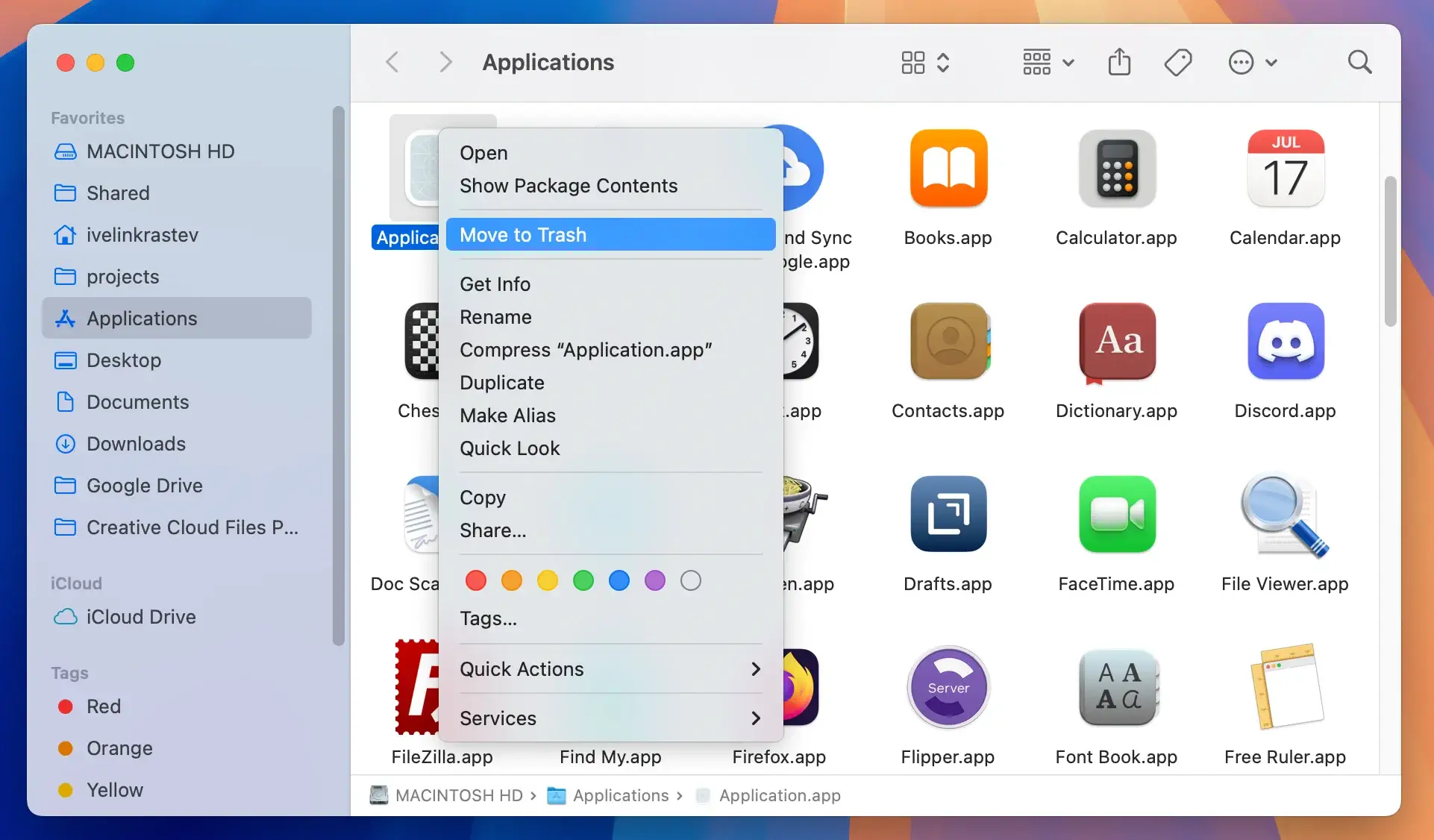
- Access your
Applicationsfolder:- Open the
Finderapp on your Mac. - Navigate to the
Applicationsfolder, usually found in the sidebar.
- Open the
- Identify suspicious applications:
- Scan through the list of installed applications.
- Look for any unfamiliar or suspicious applications that you did not knowingly install.
- Manual uninstallation:
- Right-click on the identified suspicious application.
- Select
Move to Trashfrom the contextual menu.
- Empty the Trash bin:
- Once you’ve moved all unwanted applications to the Trash, right-click the Trash icon in the Dock.
- Choose
Empty Trashto permanently delete the applications.
Automated removal using security software
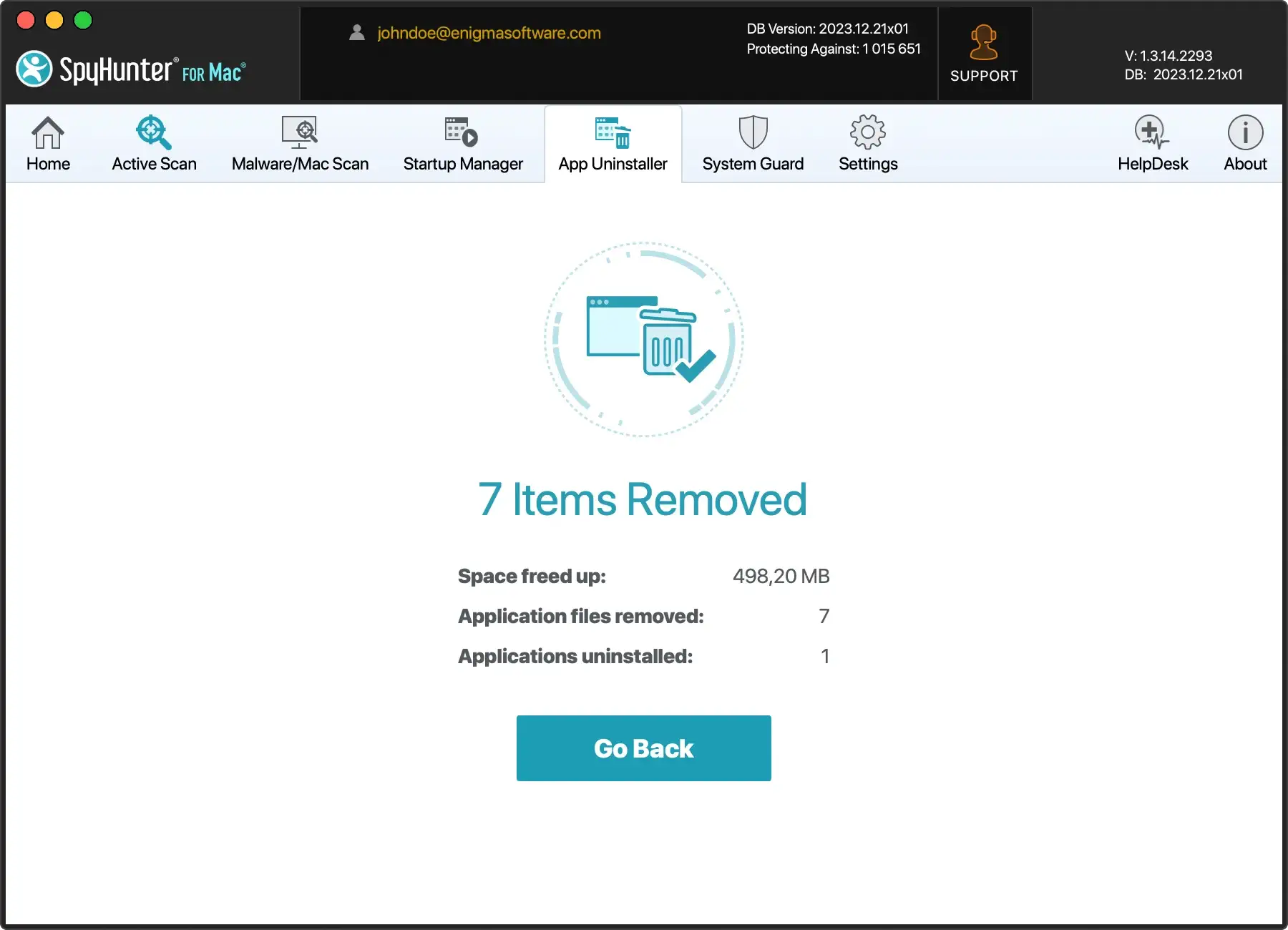
Consider leveraging dedicated security software like SpyHunter for Mac.
- Download SpyHunter and install it.
- Run the App Uninstaller, allowing it to scan your system for applications and their related files and folders.
- Select the applications you want to remove and follow SpyHunter’s instructions.
Use SpyHunter for Mac to remove Scenic Tab
To remove Scenic Tab and any other potentially unwanted software, it’s advised to use a reliable anti-malware tool. An optimal choice would be SpyHunter.
It’s a reliable software that helps eliminate malware and other unwanted programs. Here are the steps to help you download, install, and run a scan with SpyHunter:
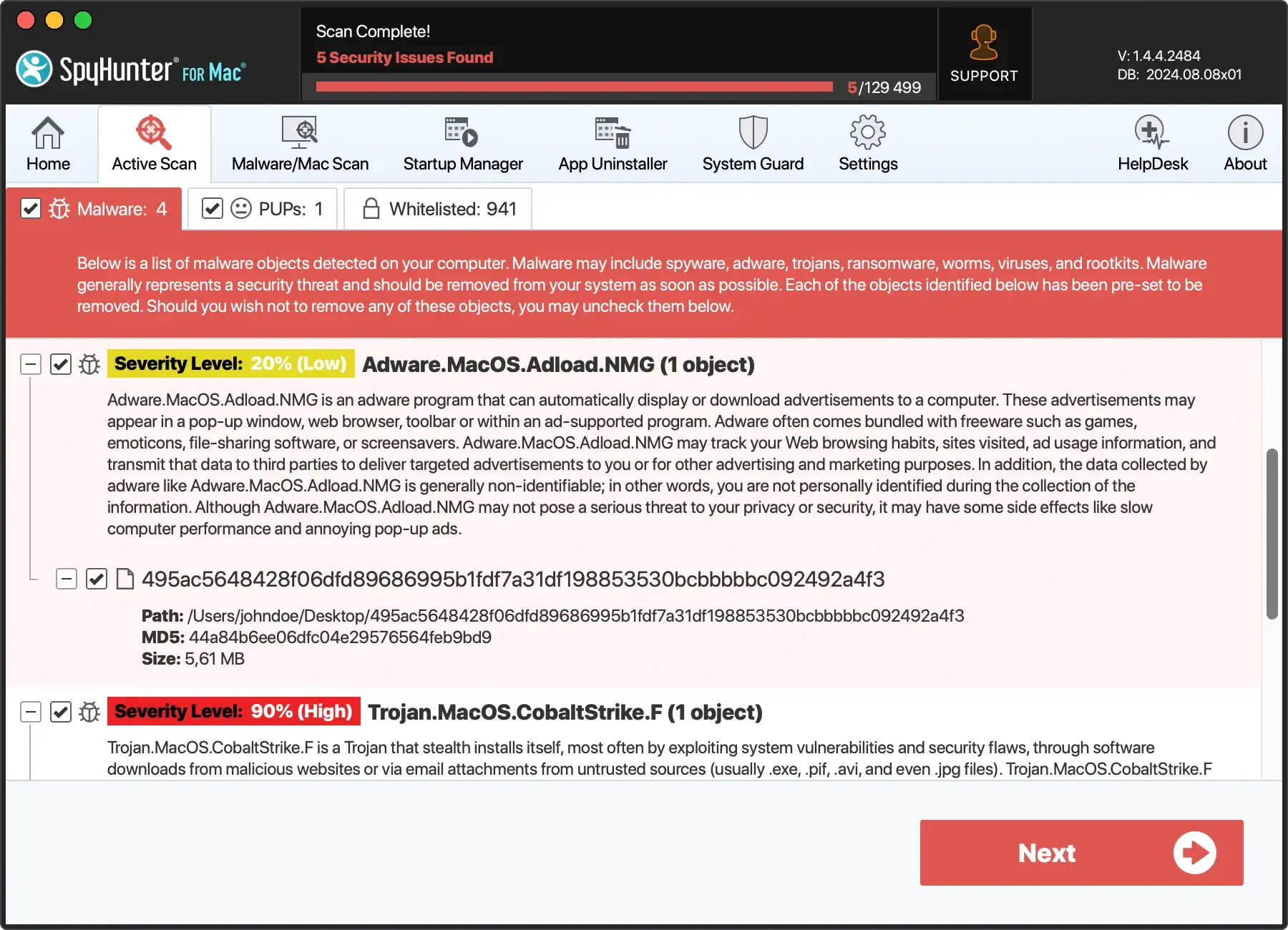
- Download SpyHunter from here and follow the installation instructions provided by the installer.
- Once installed, the app will initiate an automatic scan to detect any malware or potentially unwanted programs on your Mac.
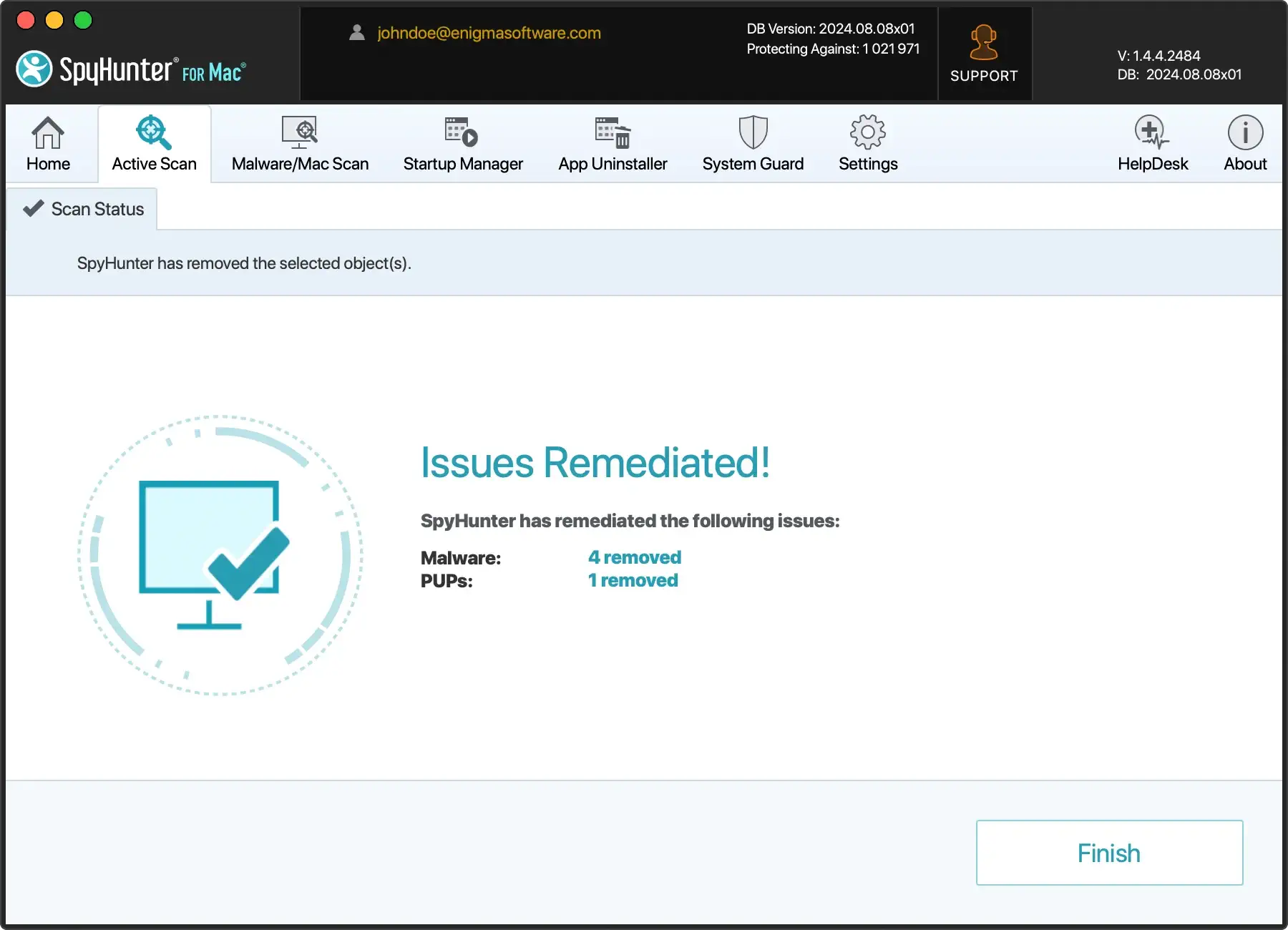
- Instruct SpyHunter to remove the threats.
Remove Scenic Tab from your browsers
Browser hijackers like Scenic Tab can significantly disrupt your browsing experience, altering settings without your consent and redirecting you to unwanted pages.
To restore control and remove Scenic Tab, follow these step-by-step instructions tailored to popular browsers:
For Safari
- Open Safari and click on Safari in the top menu.
- Choose
Preferencesand go to theExtensionstab. - Locate the Scenic Tab extension and click
Uninstallto remove it from Safari. - Navigate to the
Generaltab and set your preferred homepage. - Check the
Searchtab to ensure your desired search engine is selected.
For Google Chrome
- Launch Chrome and click on the three-dot menu in the top-right corner.
- Select
More toolsand then go to theExtensionsoption. - Locate the Scenic Tab extension and remove it.
- In the same menu, go to
Settings - Under
On startupensureOpen a specific page or set of pagesis selected, and set your choice page. - In the
Search enginesection, choose your desired search engine.
For Mozilla Firefox
- Open Firefox and click on the three horizontal lines in the top-right corner.
- Choose
Add-onsand go to theExtensionstab. - Find the Scenic Tab extension and remove it.
- Navigate to
Optionsand go to theHometab. - Set your preferred homepage and ensure the selected search engine aligns with your choice.
After performing these steps, clearing browsing data is advisable to eliminate any remnants of Scenic Tab. Restart your browsers to finalize removal and enjoy a hijacker-free online experience.
Regularly monitor your browser extensions and settings to prevent similar intrusions in the future, ensuring a secure and personalized browsing environment.
How to stay safe online
Becoming a victim of malware or online threats such as Scenic Tab can be frustrating. Here are some essential tips to help you maintain a secure online presence and avoid such threats:
Use a good and updated antivirus software
It’s crucial to have quality antivirus software installed on your device and keep it up-to-date. The role of antivirus software is to detect and eliminate threats before they cause harm.
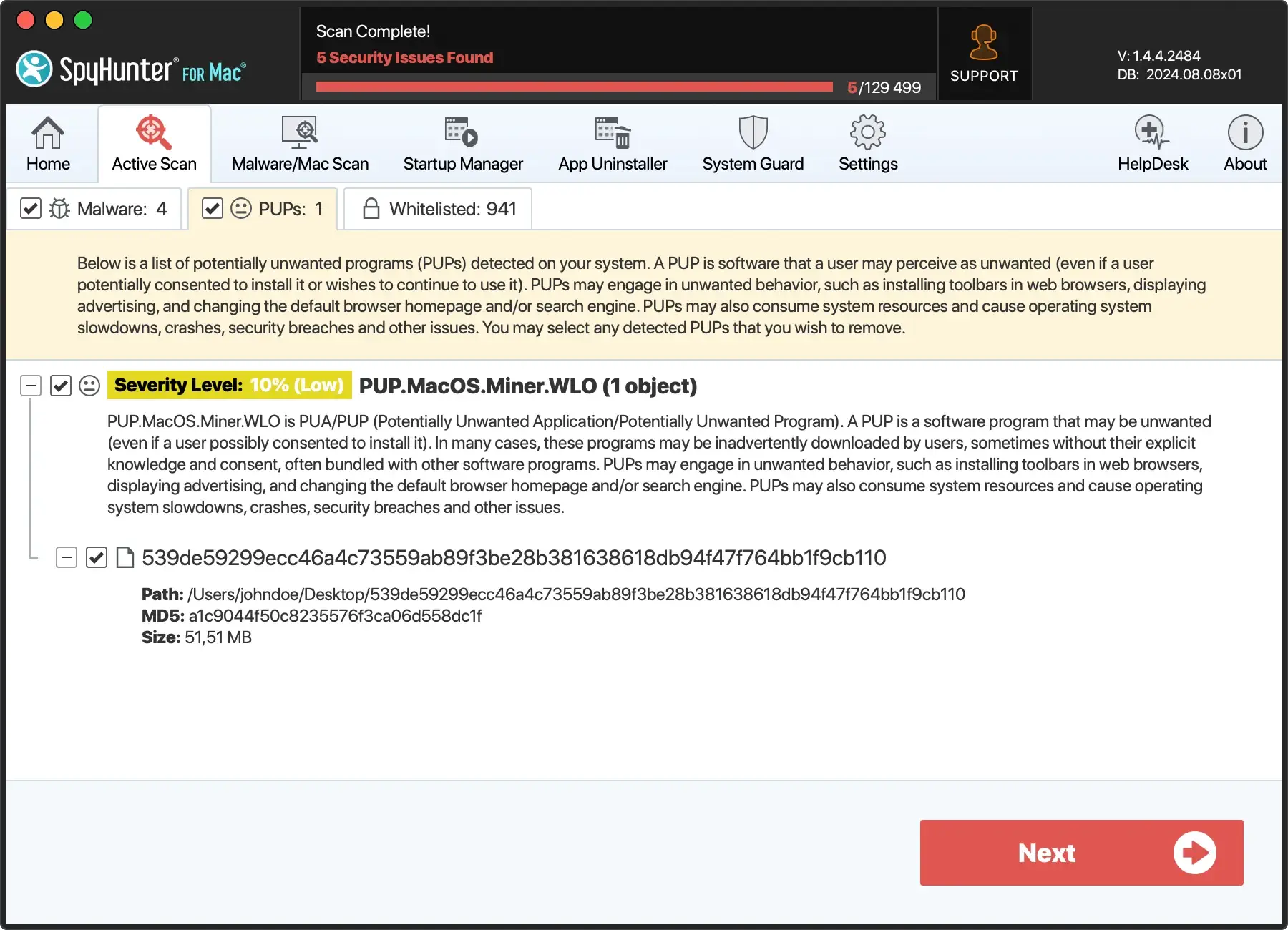
Consider using SpyHunter for Mac for comprehensive protection, which fills in any gaps in your traditional defenses and provides extra protection against sneakier security threats.
Download SpyHunter for free here and start protecting your Mac today!
Keep software and OS updated
Keep your device’s operating system and installed applications up-to-date. Updates often include security patches and fixes for vulnerabilities, making them critical to maintaining online safety.
Install programs and apps with caution
When installing new applications or programs on your device, pay close attention to installation screens and license agreements. Always select ‘custom’ or ‘advanced’ installation options that allow you to notice if any additional unwanted software is also being installed.
Install an ad blocker
An ad blocker helps block malicious ads, phishing attempts, and other harmful content that antivirus products might miss. For this purpose, you can use a browser-based content blocker.
Be careful when downloading software
Be vigilant about the software and apps you download. Prioritize downloading applications exclusively from reputable and verified sources to mitigate the risk of unwittingly introducing potential threats to your system.
Trusted platforms and official developers’ websites are your go-to options, as they adhere to stringent security standards.
Be alert against tricksters
Be wary of suspicious emails, messages, and phone calls that might trick you into clicking harmful links or revealing sensitive information. Remember, a familiar sender name or contact doesn’t necessarily make a message trustworthy.
Regularly backup your data
Make it a habit to back up your data regularly. Frequent backups protect you from data loss and help counter threats like ransomware. Ensure your backup data can be restored, and avoid connecting the backup drive to a potentially infected computer.
Use strong passwords and enable 2FA
Enhancing the security of your online presence demands implementing robust measures, starting with managing your passwords.
Adopt crafting unique and formidable passwords for each account, preventing a security breach in one account from compromising others. Strive for complexity by combining uppercase and lowercase letters, numbers, and symbols.
In tandem with solid passwords, elevate your security posture by enabling two-factor authentication (2FA) whenever available.
This additional layer of protection requires not only the knowledge of a password but also the possession of a secondary verification method, such as a temporary code sent to your mobile device.
Avoiding using pirated software
Steer clear of pirated software, cracks, and keygens, which could carry malware or compromise your privacy and data security. Stick to legitimate and trusted sources for your software needs.
